
Future Kiln Technology: 5 Trends Shaping Industrial Firing

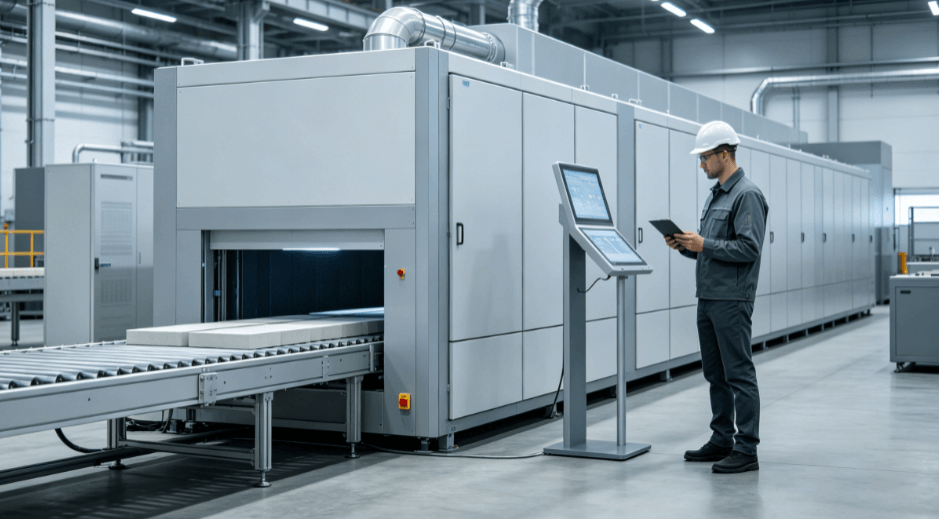
The industrial thermal processing sector is currently undergoing its most significant transformation since the invention of the continuous tunnel kiln. For decades, kiln technology focused primarily on throughput and basic heat containment. However, the convergence of stringent carbon-neutrality mandates, volatile energy markets, and the rise of Industry 4.0 is pushing manufacturers toward a new era of firing systems.
Future kiln technology is no longer just about reaching a target temperature; it is about thermal precision, fuel flexibility, and rapid deployment. Whether in heavy clay, technical ceramics, or metallurgical applications, the shift from traditional, site-built masonry structures to high-efficiency, digitally integrated systems is accelerating.
Decarbonization: Transitioning to Hydrogen and Electrification
The most urgent trend in future kiln technology is the transition away from fossil fuels. As carbon taxes increase globally, the heavy clay and ceramic industries are exploring two primary pathways: hydrogen combustion and full electrification.
Hydrogen-ready kilns are designed to handle the unique thermodynamic properties of hydrogen, which has a higher flame temperature and different moisture-release characteristics than natural gas. Engineering consultants are increasingly specifying “dual-fuel” burner systems that allow a gradual transition as hydrogen infrastructure matures.
Electrification, on the other hand, utilizes high-performance heating elements or plasma technology. While electricity has traditionally been viewed as too expensive for high-mass firing, the integration of on-site renewable energy and improved refractory insulation makes electric kilns a viable future for high-purity technical ceramics where combustion byproducts must be eliminated.
Modularization and the Rise of Prefabricated Designs
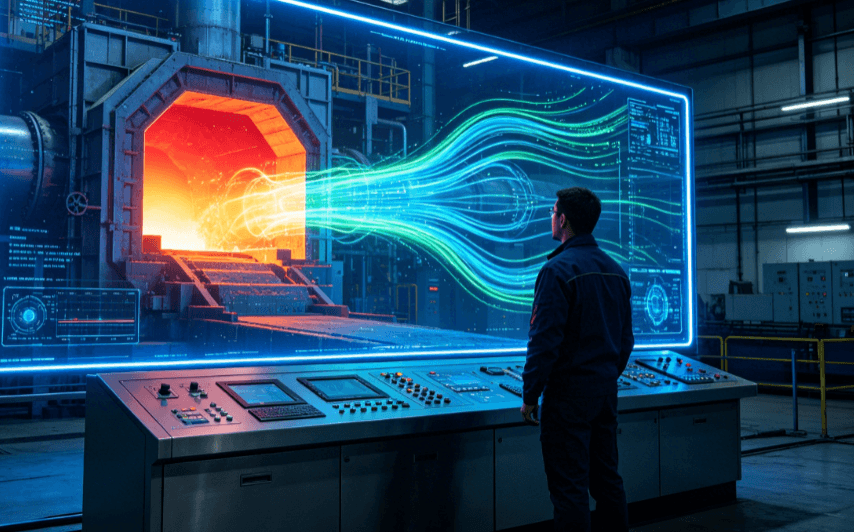
Traditionally, constructing a kiln was a multi-month, labor-intensive civil engineering project involving massive amounts of masonry and on-site welding. One of the most disruptive trends in future kiln technology is the shift toward prefabricated modularity.
Prefabricated tunnel kilns are engineered in a controlled factory environment and shipped in sections. This approach offers several technical advantages over traditional builds:
- Precision Tolerances: Factory assembly allows for tighter seals and better alignment of the kiln car tracks, reducing mechanical wear.
- Superior Insulation: Using advanced ceramic fiber modules instead of heavy firebricks reduces the thermal mass of the kiln itself, allowing for faster heat-up and cool-down cycles.
- Rapid ROI: Installation time is reduced by up to 70%, allowing plants to reach production capacity months ahead of schedule.
Modern solutions, such as those seen in Yaxin’s prefabricated tunnel kilns, demonstrate how modularity is becoming the benchmark for the construction and brick-making industries, providing a mobile and scalable asset rather than a static piece of real estate.
Digital Twins and Real-Time Thermal Mapping
The integration of the “Digital Twin” is revolutionizing how kiln operators manage energy efficiency. A digital twin is a virtual replica of the physical kiln that uses real-time data from IoT sensors to simulate firing conditions.
Future kiln technology leverages these simulations to predict “cold spots” or “hot spots” before they affect product quality. By utilizing high-velocity burners connected to a centralized SCADA (Supervisory Control and Data Acquisition) system, the kiln can automatically adjust gas-to-air ratios in specific zones. This level of automated Isothermal control ensures that every unit, whether at the top or center of the kiln car, receives identical thermal treatment, significantly reducing waste rates.
Advanced Waste Heat Recovery (WHR) Systems
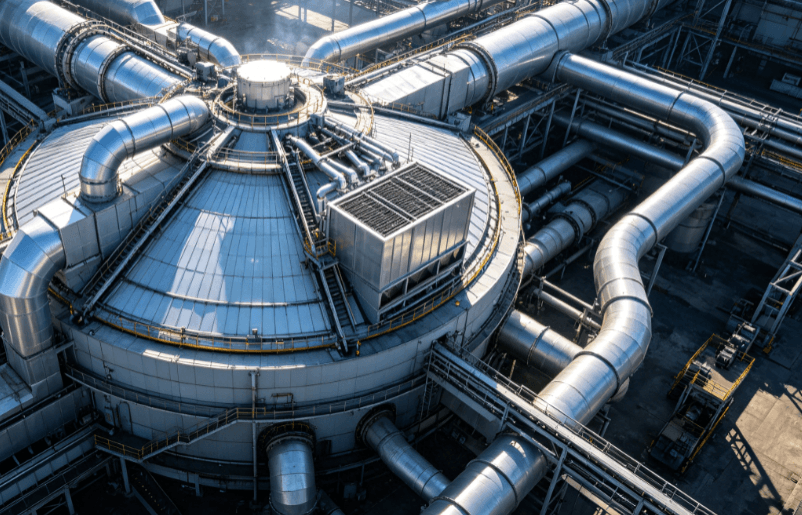
In a traditional kiln, nearly 30% to 50% of the energy consumed is lost through the exhaust stack or during the cooling phase. Future kiln technology focuses on closing this energy loop through sophisticated Waste Heat Recovery (WHR) systems.
Newer designs utilize high-efficiency heat exchangers to capture energy from the cooling zone and redirect it back to the burners as pre-heated combustion air or to the dryers for raw material preparation. Some advanced facilities are even implementing Organic Rankine Cycle (ORC) systems, which convert waste heat into electricity to power the plant’s auxiliary fans and conveyor systems. This “circular thermal economy” is essential for facilities aiming for ISO 50001 energy management certification.
Comparison: Traditional Masonry vs. Future Modular Kilns
| Feature | Traditional Masonry Kiln | Future Prefabricated Kiln |
| Construction Time | 6–12 Months | 2–4 Months |
| Thermal Mass | High (consumes more energy to heat) | Low (energy efficient) |
| Digital Integration | Often Retrofitted | Native IoT/AI Ready |
| Flexibility | Static Structure | Modular/Relocatable |
| Heat Loss | High through joints/bricks | Minimal (fiber module seals) |
The Role of High-Velocity Burners in Temperature Uniformity
As we look toward future kiln technology, the mechanics of heat transfer are shifting from radiation to convection. High-velocity burners create massive turbulence within the kiln chamber, forcing the heated air into the center of the setting.
This is particularly critical in large-scale tunnel kilns where “core” temperatures often lag behind surface temperatures. By increasing the velocity of the combustion gases, manufacturers can achieve a more uniform temperature profile, which allows for shorter firing cycles and higher product density. This engineering shift is a key component of modern prefabricated kiln designs, where burner placement is optimized through Computational Fluid Dynamics (CFD) modeling before the kiln is even built.
FAQ
What is the main advantage of future kiln technology compared to older models?
The primary advantages are energy efficiency and precision. Modern kilns use low-thermal-mass materials and automated control systems to reduce fuel consumption by 20% to 40% while improving product consistency.
Can old kilns be retrofitted with future technologies?
Yes, many existing kilns can be retrofitted with high-velocity burners, waste heat recovery systems, and IoT sensors. However, the structural heat loss of old masonry cannot be fully corrected without a complete rebuild using modular prefabricated sections.
Why is modularity important in kiln manufacturing?
Modularity allows for factory-controlled quality, significantly faster on-site installation, and the ability to relocate or expand the kiln in the future as production demands change.
How does hydrogen fuel impact kiln design?
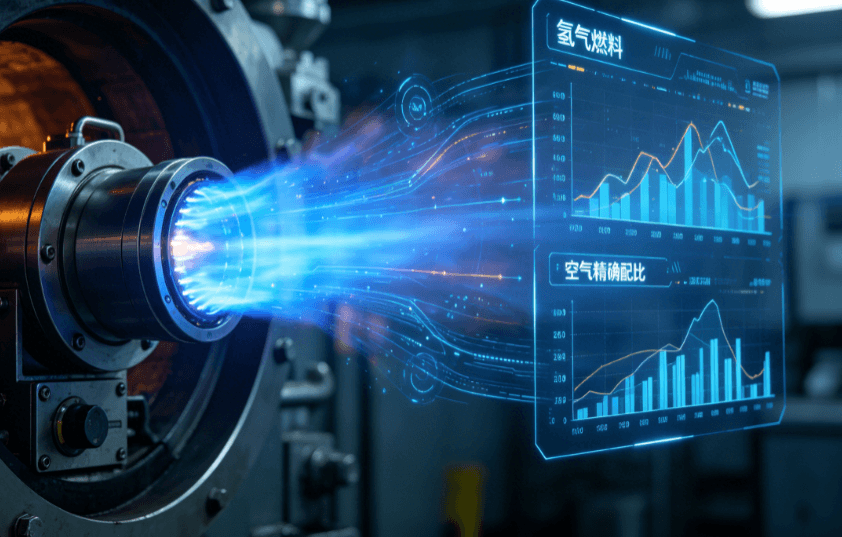
Hydrogen burns differently than natural gas, producing more water vapor and a different flame shape. Future kilns must use specialized burners and refractory materials that are resistant to hydrogen-induced degradation.
What role does AI play in kiln operations?
AI algorithms analyze historical firing data to optimize the kiln’s internal atmosphere in real-time, compensating for changes in ambient temperature or raw material moisture content without human intervention.
Reference Sources
- ISO 50001: Energy Management Systems – Standards for industrial thermal efficiency.
- The European Ceramic Society (ECerS): Technical reports on the decarbonization of the ceramic industry.
- CFD Modeling Whitepapers: Research on Computational Fluid Dynamics for isothermal kiln zones.
- Yaxin Kiln Engineering: Technical Specifications for Prefabricated Modular Tunnel Kilns.
- IEA (International Energy Agency): Industry roadmap for net-zero heat processing in manufacturing.