
Custom Rotary Kiln That Pays Off

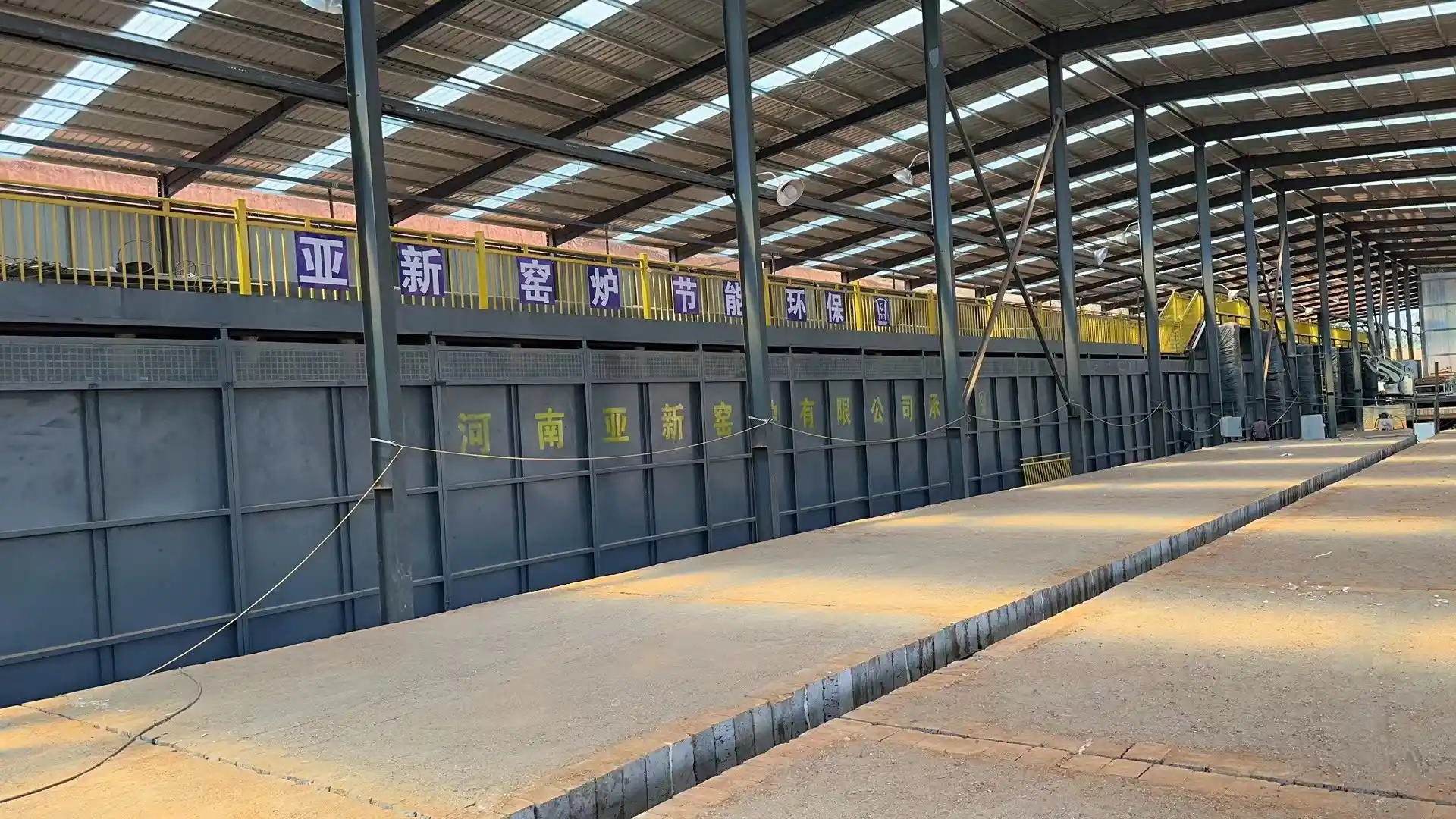
Ordering a custom rotary kiln is less like buying a machine and more like designing the financial future of your brickyard. The right configuration locks in low fuel consumption, minimal labor, and 15–20 years of steady output. The wrong one becomes a perpetual drain on coal, electricity, and maintenance budgets. At Yaxin Kiln, every rotary and tunnel kiln project begins with your raw material, your site, and your market—not a catalogue model.
Why Off-the-Shelf Kilns Fall Short
Most standard kilns are built around average assumptions: average moisture, average brick size, and average fuel price. But your plant rarely runs on averages.
- Your feedstock might be coal gangue, shale, construction waste, fly ash, or various types of sludge—each with distinct moisture and particle behavior.
- Your fuel economics might favor natural gas, coal, or heavy oil, and that preference can shift over the kiln’s 20-year life.
- Your site might demand a 10.8m cross-section for 300,000 bricks/day or a 17.3m ultra-large cross-section for 700,000+ bricks/day.
A custom rotary kiln engineered around these realities performs dramatically better than any “standard” unit. That is why our process always starts with in-depth technical assessment before a single steel beam is cut.
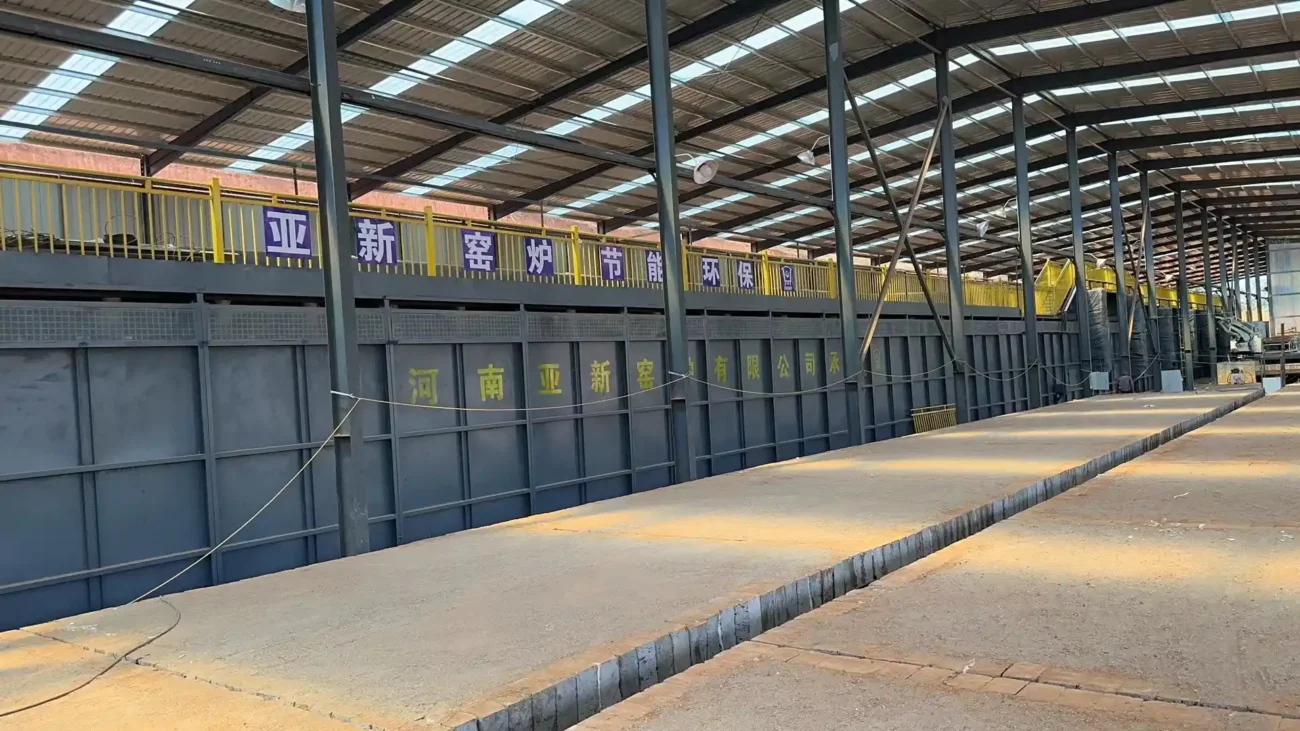
The Six Pillars of a Properly Customized Rotary Kiln
1. Raw Material Adaptability
A genuinely customized kiln begins with your material profile. Our rotary kiln systems are designed and adjusted according to different material characteristics to ensure that materials roll forward evenly and are heated uniformly. This adaptability extends to solid waste streams—urban construction slag, silt, coal gangue, fly ash, tailings, and various sludge types can all be processed into sintered bricks.
💡 Tip: Always send a representative raw material sample to your supplier’s lab before finalizing the design. At Yaxin, our engineers bring back client samples for laboratory analysis as part of the pre-sales workflow.
2. Cross-Section Width Matched to Target Output
For mobile rotary tunnel kilns, the sectional width ranges from 10.8m up to 17.3m, with the ultra-large 17.3m cross-section representing the top of our range. The daily output scales accordingly:
| Cross-Section | Daily Output (sintered clay bricks) |
|---|---|
| 10.8 m | 300,000 |
| 12.98m | 400,000 |
| 17.1 m | 500,000–600,000 |
| 17.3m | 600,000–700,000 |
Choosing the right width is not about going biggest—it is about matching your true market demand plus realistic 5-year growth. Overbuilding wastes capital; underbuilding caps your revenue.
3. Multi-Fuel Combustion Flexibility
Energy markets are volatile. A custom rotary kiln from Yaxin can be configured for coal, natural gas, or heavy oil as burning fuel—protecting your plant when local fuel economics change. Our mobile rotary tunnel kilns achieve coal consumption of just 250–280 kcal/kg, saving at least 100 kcal/kg compared to the 380–450 kcal/kg typical of traditional tunnel kilns.
4. Energy Recovery Built Into the Design
Modern rotary kiln designs incorporate recuperative preheaters and waste heat recovery systems that drastically reduce fuel consumption. The mobile rotary tunnel kiln goes further: it dries by positive pressure at the drying section, flue gas is recycled by micro-negative pressure, moisture is eliminated by concentration, and waste flue gas is purified by mobile-type equipment—guaranteeing clean working conditions and no additional corrosion on the steel structure of your workshop.
5. Automation That Reduces Crew to 2 Operators
Traditional tunnel kilns require 7–10 workers to manage ferry cars, hydraulic pushers, drawing machines, and kiln car maintenance. A properly customized mobile rotary tunnel kiln needs only 2 operators.
The intelligent burning system automatically reads and calculates sensor signals for temperature, humidity, and pressure. By adjusting the frequency converter to control air blowing volume intelligently, the system achieves one-button start-up intelligent control and optimal matching of blowing air, bricks, and internal burning.
6. Structural Durability That Reshapes Maintenance Planning
Custom engineering pays off most clearly in the maintenance schedule:
- No major repairs to the kiln structure for 10 years
- No major repairs to refractory insulation materials for 5 years
- Detachable H-steel and steel plate combination structure for easy installation and maintenance
- No fan on top of the kiln body, with refractory insulation materials inside ensuring smooth operation
Compare this to traditional tunnel kilns, where kiln car maintenance alone costs 50,000–100,000 per year. Over a 20-year service life, that single difference funds a significant portion of your kiln investment.
The Custom Rotary Kiln Delivery Process
When you partner with Yaxin Kiln, customization is not limited to the equipment—it extends across the entire project lifecycle:
- Professional Site Consultation — In-depth technical assessment to design the optimal kiln layout based on your local site conditions.
- Custom Engineering & Design—Tailored structural and thermal blueprints ensuring the equipment meets your specific brick or material requirements.
- Precision Manufacturing & Logistics — High-standard modular fabrication followed by secure international shipping to your project site.
- On-site Assembly & Commissioning — Expert engineering teams manage complete installation and rigorous testing to ensure seamless, high-efficiency production startup.
- Ongoing Training & Maintenance — Comprehensive local staff training and 24/7 technical support to guarantee long-term operational success.
With 20 subordinate enterprises covering kiln research, machinery manufacturing, and kiln construction, plus 8 chief engineers, 32 senior engineers, and 1,000+ construction engineers, we bring technical depth that overseas projects demand.
Proof Across Climates and Continents
A custom rotary kiln must perform wherever you build it. Our track record spans diverse and demanding environments:
- Kaifeng Dakang Kiln, China—high-capacity production
- Bishkek, Kyrgyzstan—cold climate adaptation
- Tashkent, Andijan, and Samarkand, Uzbekistan—large cross-section kilns
- Jakarta, Indonesia—humid tropical conditions
- Hoang Quy & Quang Binh, Vietnam—regional brick market demands
- Vientiane, Laos — EPC turnkey delivery
- Harare, Zimbabwe — African construction waste processing
With 11+ landmark projects across China, Uzbekistan, Vietnam, Kyrgyzstan, Indonesia, Laos, and Zimbabwe, we have navigated the full spectrum of site challenges—from sub-zero winters to high-humidity tropics.
Bringing It All Together
The right answer to specifying a custom rotary kiln is never a single parameter. It is the intersection of your raw material profile, true daily capacity needs, cross-section width, fuel flexibility, automation depth, and supplier track record. A properly customized kiln—engineered around your actual feedstock and market—outperforms any standard unit on nearly every metric that affects your margin.
If you are planning a new firing line or replacing an aging kiln, we invite you to explore the full range of rotary and prefabricated tunnel kiln solutions at https://yaxinkiln.co.za/. Share your raw material characteristics, target daily output, and site conditions with our engineering team, and we will help you determine the most suitable configuration for your plant—so your investment in a custom rotary kiln pays back faster and lasts longer.