Brick Production Line Cost: Equipment and Capacity Factors

Brick production line cost depends on what the quotation includes and what output the equipment must sustain. Two offers may use the same headline capacity while covering different preparation, forming, drying, kiln, handling and automation equipment. A meaningful comparison begins with a common product specification and a clear battery limit for each supplier. To compare brick production line cost fairly, match the equipment scope and rated output across supplier offers.
Define the line output and product mix
Specify the saleable products, dimensions, mass, holes, strength or appearance requirements, annual mix and working schedule. State whether the target is green output, gross fired output or accepted finished product. The forming machine, dryer and kiln must all support the same rate; otherwise the nominal line capacity can be higher than the plant’s practical output.
Equipment that shapes the quotation
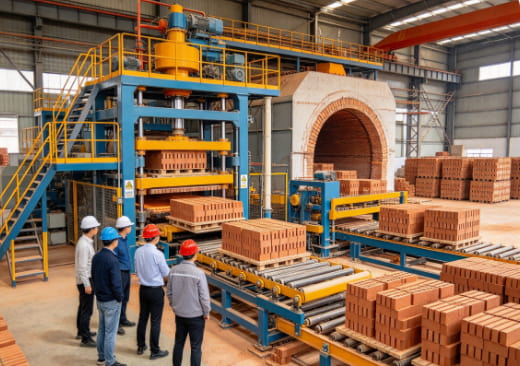
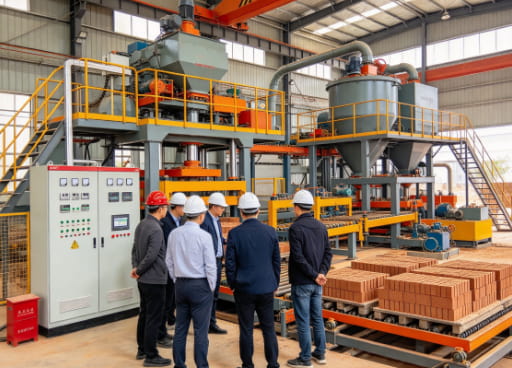
A clay brick production line may include raw-material reception and storage, crushing and screening, feeders and mixers, extrusion or pressing, cutting, green-brick handling, dryer, kiln, setting and unloading systems, inspection and packing. Controls, conveyors, dust collection, fuel preparation, substations and spare parts may be part of the offer or listed separately.
Automation changes more than the purchase price. It can affect labor requirements, line balance, control hardware, service skills and the need for stable utilities. Ask for the operator tasks that remain manual, the speed at each machine, the planned buffers and the equipment that stops the line if it fails.
Compare cost on a like-for-like basis
Request a cost schedule with equipment model and quantity, rated versus expected output, installation responsibility, freight and insurance, taxes, civil works, electrical and fuel interfaces, commissioning, training, warranty and exclusions. Ask suppliers to price optional automation and emissions-control equipment separately so the base scope remains comparable.
The CCAC tunnel-kiln project assessment guideline recommends assessing productivity with investment and operating factors such as fuel, land and emissions. For a complete new-plant budget, see the brick factory setup cost guide; the production-line article itself should stay centered on process equipment and scope.
The Yaxin rotary kiln page describes a kiln system for brick production, while thecompany’s project updates provide examples of different installation contexts. These pages are useful starting points for an RFQ, not a substitute for a project-specific equipment list and commercial quotation.
Check the interfaces that often change the quote
Ask the supplier to show the process flow and rated capacity at each major stage, not only the overall line figure. Compare forming output with dryer loading, kiln setting capacity, unloading and finished-product handling. Confirm product changeover time and whether dies, molds, setters or special conveyors are included for each format. These details affect usable capacity and staffing.
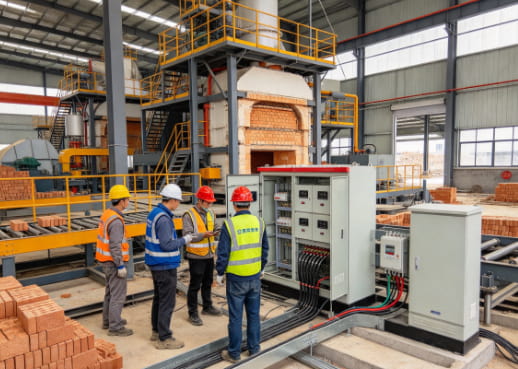
The commercial comparison should identify controls and sensors, electrical cabinets, cables, foundations, platforms, dust collection, fuel preparation, emissions equipment, installation supervision, commissioning and training. Request a utility list with connected load and consumption assumptions, then ask local contractors to check the site interfaces. Imported equipment may need adaptation for voltage, safety rules, climate or spare-parts access.
Define an acceptance plan that names the product, raw-material basis, operating hours, quality limits, measurement method and conditions for the capacity test. If a supplier quotes a theoretical maximum, ask for the expected sustained rate and its assumptions. Review commercial terms and technical performance side by side.
Review the handover and service plan
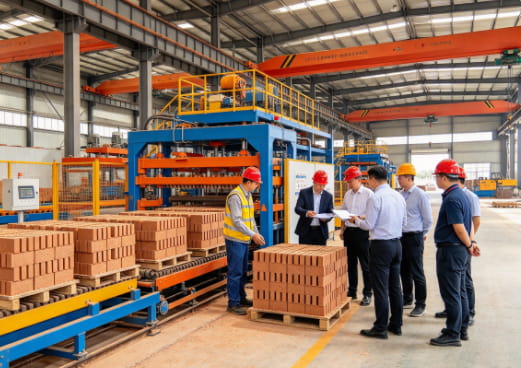
Ask what documentation arrives with the line: equipment manuals, wiring diagrams, lubrication schedules, recommended spares, commissioning records and operator instructions. Confirm the supplier’s training scope and whether training covers normal production, changeovers, fault response and routine care. A line that is difficult to operate or maintain can lose practical capacity even when its rated output is adequate.
Review the delivery sequence against site readiness. Foundations, power, fuel, compressed air, access roads and storage areas may need to be complete before installation begins. Ask which milestones depend on buyer-provided services and which require supplier supervision. Put the dependency list beside the schedule so delays have an identified owner.
Make the acceptance test part of the quotation
A buyer can ask every bidder to propose a sustained-output trial using the same brick drawing, clay data, fuel specification and working shift. The test should record pieces formed, fired and accepted; downtime causes; staffing; and the utilities actually used. State who provides raw material and who pays for consumables during commissioning. When equipment comes from several vendors, name the party responsible for proving that conveyors, dryer, kiln and handling equipment work at the agreed line rate. This turns an attractive capacity figure into a testable procurement term.
Frequently Asked Questions
What information do suppliers need to estimate line cost?
Provide product drawings, raw-material data, target saleable output, site layout, utilities, local fuel, automation expectations and installation boundary. Brick production line cost should also account for commissioning and local interface work.
Is a higher-capacity line always more expensive per brick?
Not necessarily. Capacity, utilization, product mix, energy use, yield, maintenance and financing all affect unit economics. Ask for the assumptions behind any cost-per-brick estimate.
How should suppliers be compared?
Use the same product data and project boundary for each RFQ. Compare included equipment, sustained capacity, energy assumptions, staffing, service access, delivery milestones, warranty terms and exclusions. Score the differences that matter to the owner instead of choosing on price alone.
Self-review
Focuses on line equipment and quotation scope, while the setup-cost article handles whole-project budgeting; no generic price claim is used.