
Industrial Rotary Kiln That Cuts Fuel Bills

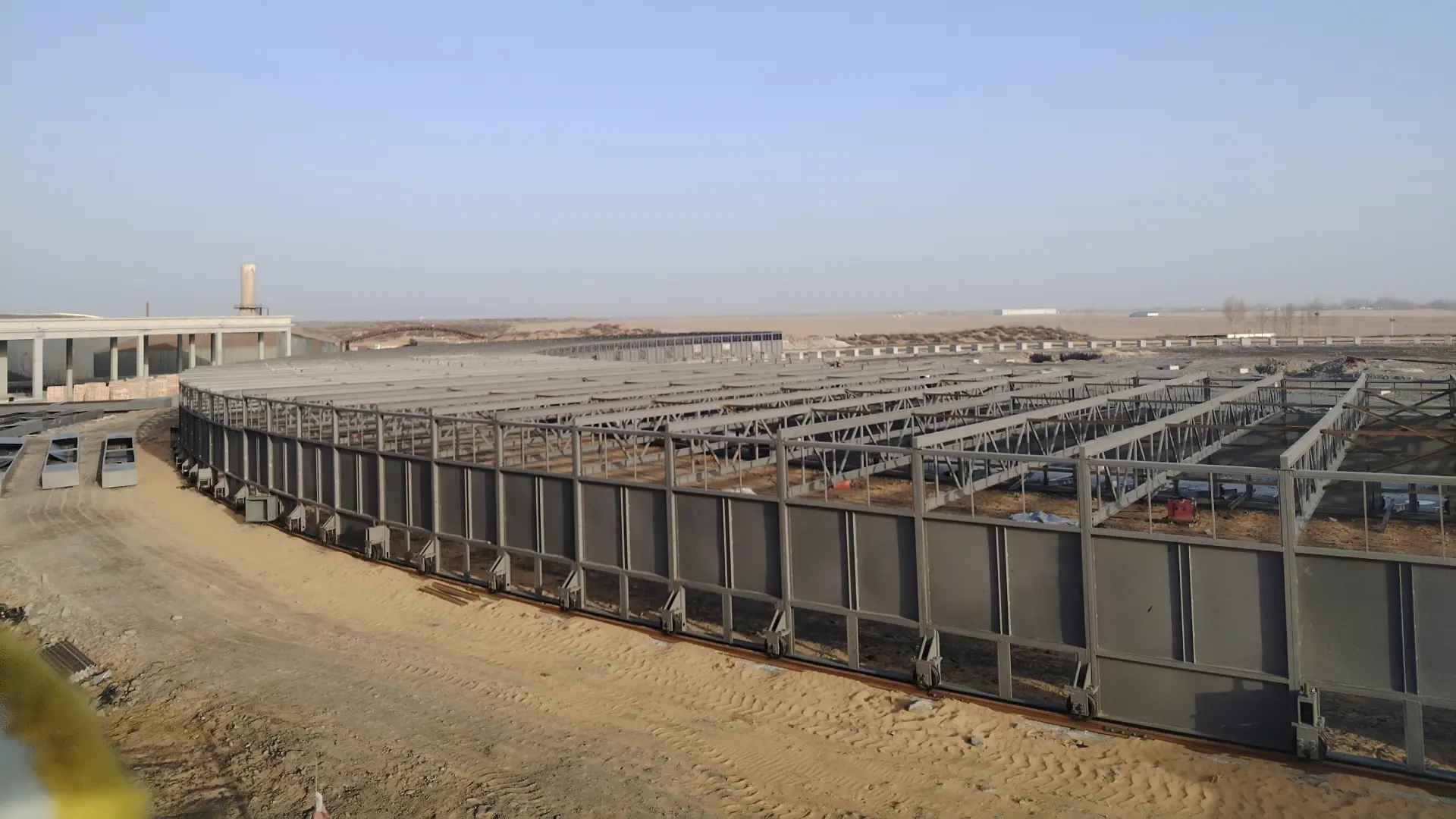
Selecting the right industrial rotary kiln determines whether your brick plant enjoys 15 to 20 years of low-cost firing or struggles with runaway coal consumption and constant maintenance. For high-capacity operations targeting 300,000 to 700,000 bricks per day, the design choices you make today—cross-section width, fuel flexibility, automation depth, and structural durability—compound into millions of dollars of difference over the kiln’s service life.
Why Large-Section Design Changes the Economics
Traditional narrow kilns restrict how much product you can fire in a single cycle. A modern industrial rotary kiln built on the ultra-large cross-section principle flips that constraint entirely.
At Yaxin Kiln, the sectional width ranges from 10.8 meters to 17.3 meters, with corresponding daily capacities:
- 10.8 m section—300,000 bricks per day
- 12.98 m section—400,000 bricks per day
- 17.1m section—500,000–600,000 bricks per day
- 17.3m ultra-large section—600,000–700,000 bricks per day
Wider cross-sections maximize heat utilization per unit, improve airflow uniformity through PLC-controlled pulse firing, and drastically reduce per-brick energy consumption and labor costs.
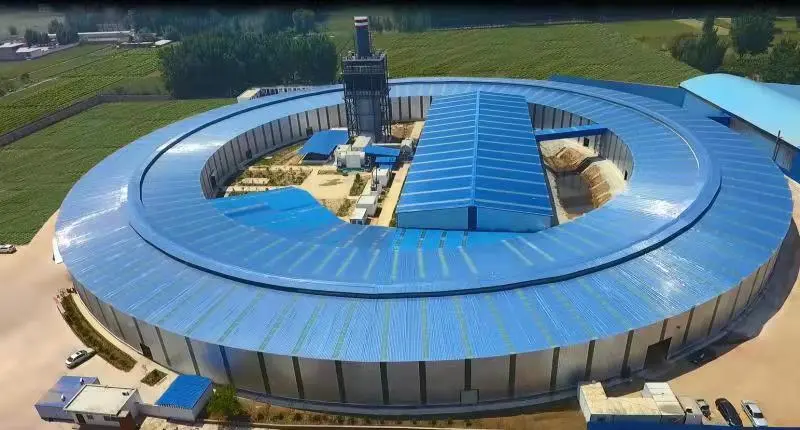
Five Engineering Decisions That Define a Superior Industrial Rotary Kiln
1. Raw Material Adaptability Across Solid Waste Streams
A genuinely capable industrial rotary kiln must handle more than uniform clay. Our systems are engineered for coal gangue, shale, construction waste, fly ash, and various types of sludge—turning industrial byproducts into marketable sintered bricks.
This adaptability matters because raw material availability and pricing shift over time. A kiln locked to one feedstock becomes a liability when local material economics change.
2. Multi-Fuel Combustion Compatibility
Energy markets are volatile. The right kiln supports coal, natural gas, or heavy oil as burning fuels, with combinational configurations available to ensure continuous production regardless of which fuel is most economical in your region.
This flexibility protects your operating margins when energy prices swing—a capability traditional single-fuel kilns simply cannot match without expensive retrofitting.
3. Waste Heat Recovery Built Into the Architecture
Integrated waste heat recovery systems maximize thermal performance while drastically reducing fuel consumption. In the mobile rotary design, flue gas is recycled by micro-negative pressure, moisture is eliminated by concentration, and waste flue gas is purified by mobile-type equipment.
The result is clean working conditions, no additional corrosion on the steel structure of your workshop, and dramatically lower fuel consumption per brick.
4. Automation That Reduces Crew Size to 2 Operators
Traditional firing systems demand 7–10 workers to manage ferry cars, hydraulic pushers, drawing machines, and kiln car maintenance. A modern industrial rotary kiln with sophisticated PLC automation and precision thermal control needs only 2 operators.
The intelligent burning system automatically reads and adjusts temperature, humidity, and pressure signals collected by sensors throughout the kiln. By adjusting the frequency converter to control air volume intelligently, the system matches blowing air, bricks, and internal burning for optimal efficiency—achieving real one-button start-up intelligent control.
5. Structural Durability That Reshapes Maintenance Planning
Custom engineering pays off most clearly in the maintenance schedule:
- No major repairs to the kiln structure for 10 years
- No major repairs to refractory insulation materials for 5 years
- Detachable H-steel and steel plate combination structure for easy installation and maintenance
- No fan on top of the kiln body, with refractory insulation materials inside ensuring smooth operation
Compare this to traditional tunnel kilns, where kiln car maintenance alone adds a massive recurring expense. Over a 20-year service life, that single difference funds a significant portion of your kiln investment.
The Five-Stage EPC Delivery Process
When you partner with Yaxin Kiln, customization extends across the entire project lifecycle:
- Professional Site Consultation — In-depth technical assessment to design the optimal kiln layout based on your local site conditions.
- Custom Engineering & Design—Tailored structural and thermal blueprints ensuring the equipment meets your specific brick or material requirements.
- Precision Manufacturing & Logistics — High-standard modular fabrication followed by secure international shipping to your project site.
- On-site Assembly & Commissioning — Expert engineering teams manage complete installation and rigorous testing to ensure seamless, high-efficiency production startup.
- Ongoing Training & Maintenance — Comprehensive local staff training and 24/7 technical support to guarantee long-term operational success and stability.
With 20 subordinate enterprises covering kiln research, machinery manufacturing, and kiln construction, plus 8 chief engineers, 32 senior engineers, and 1,000+ construction engineers, we bring the technical depth that overseas projects demand.
Proven Across Continents and Climates
A high-capacity industrial rotary kiln must perform wherever you build it. Our track record includes:
- Kaifeng Dakang Kiln, China—high-capacity production at scale
- Bishkek, Kyrgyzstan—cold climate adaptation
- Tashkent, Andijan, and Samarkand, Uzbekistan—large cross-section kilns serving Central Asian markets
- Jakarta, Indonesia—humid tropical conditions
- Hoang Quy & Quang Binh, Vietnam—regional brick market demands
- Vientiane, Laos — EPC turnkey delivery
- Harare, Zimbabwe — African construction waste processing
With 11+ landmark projects across China, Uzbekistan, Vietnam, Kyrgyzstan, Indonesia, Laos, and Zimbabwe, we have navigated the full spectrum of site challenges—from sub-zero winters to high-humidity tropics.
What Sets a Modern Industrial Rotary Kiln Apart
The advantages that distinguish a properly engineered system include:
- Less investment and lower maintenance cost through modular prefabricated construction
- Energy saving and less coal consumption via waste heat recovery and large cross-section design
- Fully automatic operation with PLC-controlled pulse firing and digital thermal control
- Easy maintenance through detachable steel structure and individual component replacement
- Environmentally friendly operation with no leakage of waste flue gas
- Simple structure and easy installation using standardized, factory-produced modules
- Short kiln construction time compared to traditional masonry approaches
These advantages compound across the kiln’s 15–20 year service life, turning smart upfront decisions into sustained competitive advantage.
Making the Right Investment Decision
The lowest quoted price for an industrial rotary kiln is rarely the cheapest in the long run. A slightly higher upfront investment in modular construction, larger cross-section, multi-fuel capability, and digital automation typically delivers:
- Faster commissioning and revenue start
- Drastically reduced per-brick fuel consumption
- Minimal maintenance burden over the kiln’s lifetime
- Adaptability to shifting raw material and fuel economics
- Continuous output without production-stopping repairs
- Dramatically reduced labor costs with 2-operator operation
When you calculate the true cost of ownership across 15–20 years, these advantages dwarf the modest premium for superior engineering.
Let’s Engineer Your Kiln Together
Every industrial rotary kiln investment should be as unique as your raw material, your site, and your market. Generic price lists from brochures rarely reflect your actual installed cost and lifetime operating expense. The most reliable path is to share your project specifics with an experienced engineering team that can model your complete cost structure—equipment, civil works, utilities, automation, and lifetime fuel consumption.
At Yaxin Kiln, we specialize in high-capacity rotary and prefabricated tunnel kilns with daily output ranging from 100,000 to 700,000+ standard bricks. Our EPC service covers everything from geological site analysis and custom design to manufacturing, on-site installation, and 24/7 technical support. Share your raw material characteristics, target capacity, and site conditions with our team, and we will prepare a tailored configuration and transparent cost breakdown—so you can make an informed investment decision with confidence.
Explore the full range of rotary kiln solutions at https://yaxinkiln.co.za/ and take the first step toward a firing system that pays for itself for decades.