
Brick Kiln Refractory Lining: Materials, Wear and Care

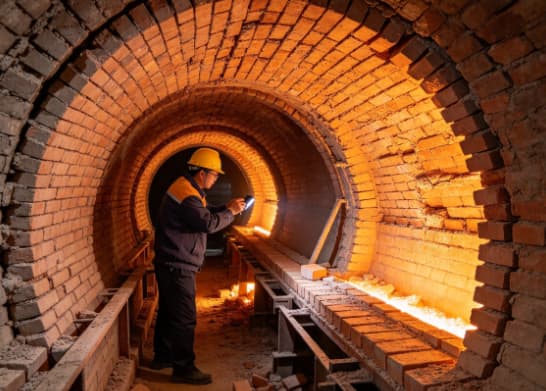
A brick kiln refractory lining has to contain heat while tolerating repeated thermal cycling, gas flow, abrasion and the chemical conditions created by the fuel and clay body. The right specification depends on where the material is installed and how the kiln is operated. A material selected only by its maximum service temperature may not match the actual failure mechanism. A brick kiln refractory lining should be selected against the actual temperature, atmosphere and wear conditions in each zone.
Understand the lining by location
The roof, sidewalls, burner zones, ducts, doors, joints and moving interfaces can face different temperatures and mechanical stresses. Dense refractory brick, insulating brick, ceramic-fiber products and castable systems each have distinct properties. In many installations, layers combine a hot-face material with insulation and structural support. Verify suitability against the supplier’s technical data and the kiln’s design conditions.
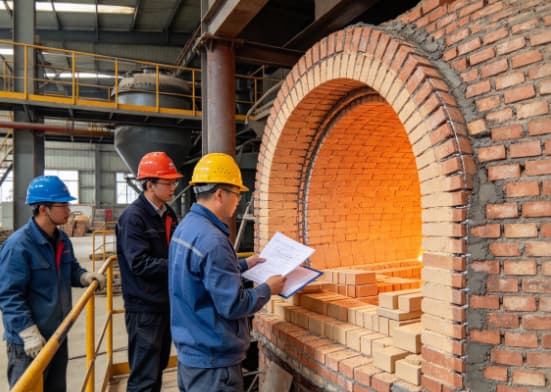
Key selection variables include operating and peak temperature, thermal conductivity, heat capacity, thermal-shock behavior, abrasion resistance, chemical compatibility, compression or anchoring needs, installation method and local repair capability. Product data should be reviewed for the expected atmosphere and thermal cycles, not just a headline temperature rating.
Track wear before it becomes an outage
During planned inspections, look for cracking, open joints, loose or displaced modules, spalling, erosion near burners, hot spots on the shell, damaged anchors and dust or fragments in the kiln. Map each observation by zone and photograph it consistently. A shell-temperature change can be an early warning, but it does not by itself identify the failed layer.
Compare inspection notes with operating records: temperature excursions, start-up and shutdown frequency, pressure changes, fuel ash or contaminants, maintenance work and product contamination. If deterioration repeats in the same area, investigate the design, installation and operating cause rather than replacing the same material without review.
Plan replacement around the whole system
A lining repair can affect heat-up time, burner settings, seals and commissioning. Confirm dry-out requirements for castables or mortars, anchor condition, expansion joints, installation tolerances and access. Keep material batches and installation records so future repairs can be compared. Ask suppliers for compatibility data, storage instructions and a written repair procedure.
Yaxin’s rotary kiln product description refers to refractory and insulation components in its kiln design. Buyers should request the actual material schedule and drawings for their configuration; the product page alone does not define every project specification. The CCAC project assessment guideline is also useful when considering the relationship between kiln investment, operating performance and lifespan.
Build an inspection plan around the hot-face zones
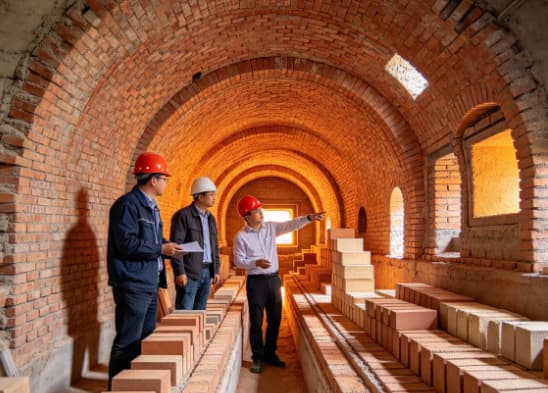
Start with a zone map. Label burner areas, transitions, doors, joints, arches or roofs, supports and other locations where temperature, abrasion or chemical exposure may differ. During planned inspections, use the same reference points and photographs to distinguish new damage from older conditions. Record operating hours and unusual events such as rapid cooling, fuel changes or long shutdowns.
Inspect supporting structures and interfaces as well as the lining. Look for open joints, damaged seals, deposits, casing hot spots and evidence of gas leakage. A surface crack does not automatically mean the lining must be replaced; depth, movement, location and trend matter. Decisions should follow the kiln drawings, refractory specification and site safety procedure.
Before replacement, collect the condition of the old lining and operating history. Ask the refractory supplier to state temperature range, chemical compatibility, installation method, curing requirements, expansion allowance and inspection criteria. Confirm how workmanship will be checked before the kiln returns to service.
Decide between monitoring and repair
Not every finding requires an immediate rebuild. Compare the condition with prior inspections, operating symptoms and the consequence of failure in that zone. A stable, superficial mark may be monitored under an approved procedure, while progressing damage, exposed anchors, hot spots or gas leakage needs prompt technical assessment. Record the basis for the decision and the next inspection date.
Plan repairs around the production calendar, but do not extend operation beyond a safe condition simply to protect output. Before work, confirm isolation, cooling, access, waste handling and the installation method. After repair, retain material batch details, installation records, curing or dry-out steps and return-to-service approval. This history is valuable when assessing future lining performance.
Document the repair boundary before ordering materials
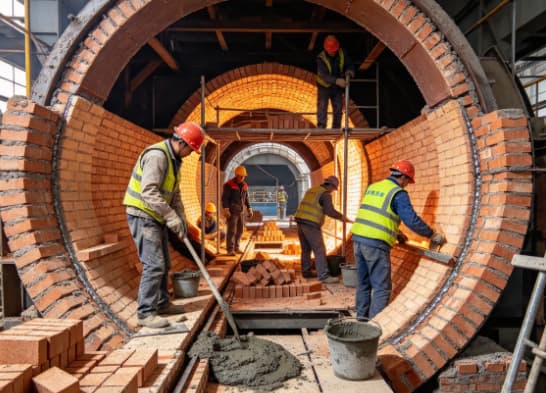
For a localized lining repair, mark the damaged zone on an as-built drawing and photograph adjacent sound material. Agree how far removal will extend, which anchors and joints will be inspected, and who may approve an expanded repair if hidden damage appears. Record the replacement batch, installation conditions and the approved heat-up schedule. The Yaxin prefabricated tunnel kiln product page describes a modular configuration; a plant considering that design should request its actual lining drawings and replacement procedure rather than assume modules can be exchanged under all operating conditions.
Frequently Asked Questions
How often should a brick kiln refractory lining be inspected?
Set the interval from operating severity, access, prior inspection findings and the kiln maker’s maintenance guidance. Inspect after abnormal temperature events or suspected lining damage.
Can a higher-rated refractory automatically last longer?
No. Wear also depends on thermal cycling, atmosphere, installation quality, mechanical stress and the material’s compatibility with the zone.
What belongs in a refractory inspection log?
Record the date, kiln zone, visible condition, crack or spall dimensions where measurable, photographs, operating context, recommended action, responsible person and follow-up date. The history supports planned repairs and helps distinguish installation issues from wider process stress.