
Future Kiln Technology: 5 Trends Shaping Thermal Processing

The global thermal processing landscape is undergoing a fundamental shift. Driven by decarbonization mandates and the pursuit of operational efficiency, future kiln technology is moving away from traditional combustion toward electrified, digitized, and modular systems. For engineers and facility managers, staying ahead of these trends is no longer optional; it is a requirement for maintaining a competitive edge in sectors ranging from ceramics and metallurgy to advanced material synthesis.
1. The Transition to Electrification and Hybrid Firing
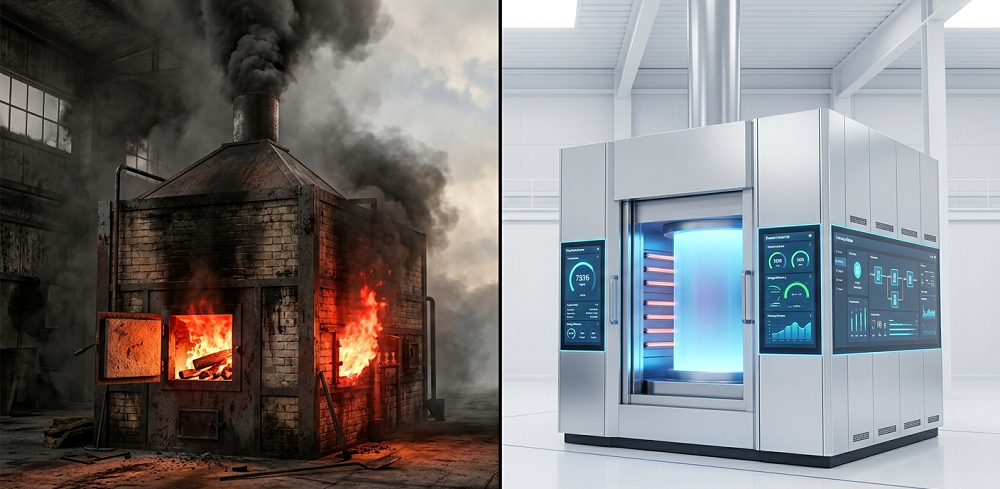
The most significant trend in future kiln technology is the move toward carbon-neutral energy sources. Traditionally, industrial kilns relied heavily on natural gas or coal. However, the push for “Net Zero” has accelerated the development of high-capacity electric kilns.
Electric heating elements, particularly those using advanced Silicon Carbide (SiC) or Molybdenum Disilicide (MoSi2), allow for precise temperature control that gas burners cannot match. This precision reduces “hot spots” within the chamber, leading to more uniform product quality. In regions where the power grid is decarbonizing, switching to electric kilns immediately reduces a facility’s Scope 1 emissions.
For processes requiring massive thermal energy, hybrid systems are emerging. These kilns utilize electricity for base loading while using green hydrogen or bio-syngas for peak temperature requirements, offering a flexible bridge toward full decarbonization.
2. Industry 4.0: Digital Twins and AI-Driven Thermal Curves
Future kiln technology is becoming “self-aware.” The integration of Industrial Internet of Things (IIoT) sensors allows for real-time monitoring of oxygen levels, pressure differentials, and thermal gradients.
- Predictive Maintenance: AI algorithms now analyze vibration and thermal data to predict heating element failure or refractory wear before they cause downtime.
- Digital Twins: Engineers can now create a virtual replica of the kiln’s internal environment. By simulating different loading patterns, manufacturers can optimize “thermal inertia”—ensuring the kiln uses the minimum amount of energy to reach the required temperature.
- Automated Atmosphere Control: Advanced oxygen probes and mass flow controllers allow kilns to maintain specific reducing or oxidizing atmospheres with surgical precision, which is critical for technical ceramics and battery cathode materials.
3. Advanced Refractories and High-Efficiency Insulation
As kilns become more efficient, the materials used to contain the heat are evolving. Traditional heavy firebricks are being replaced by Low Thermal Mass (LTM) materials.
Modern kilns utilize:
- Polycrystalline Wool (PCW): This material can withstand temperatures up to 1600°C while offering significantly lower heat storage than traditional bricks.
- Microporous Insulation: These materials provide exceptionally low thermal conductivity, allowing for thinner kiln walls and increased internal capacity without increasing the equipment’s footprint.
The shift toward LTM materials allows for faster heating and cooling cycles (fast-firing), which increases throughput and reduces energy consumption per unit of production.
4. Modular and Micro-Kiln Architectures
The era of the “one-size-fits-all” massive tunnel kiln is evolving toward modularity. Modular kilns consist of pre-assembled sections that can be added or removed based on production demand.
This trend provides several advantages:
- Scalability: Facilities can expand capacity incrementally without the capital expenditure of a new full-scale kiln.
- Ease of Repair: A single module can be taken offline for maintenance while the rest of the line remains functional.
- Specialized Production: Small-batch “Micro-Kilns” are becoming popular for high-value items like dental ceramics or specialized electronics, where precision is more valuable than volume.
5. Integration of High-Performance Assembly Components
Modern kiln manufacturing isn’t just about the furnace; it’s about the durability of the peripheral systems—control panels, sensor housings, and external cladding. Industrial environments are harsh, characterized by vibration, residual heat, and chemical exposure.
During the assembly of kiln control units and exterior labeling, manufacturers are moving away from mechanical fasteners that can rattle loose or corrode. Instead, high-performance bonding solutions are used. For instance, applying a high-tack adhesive like the F5015 Ultra Viscosity Tissue Double Sided Tape ensures that nameplates, insulation gaskets, and cable management clips stay secured even in high-vibration manufacturing environments. The ultra-high viscosity of such tapes is essential for bonding to the slightly irregular or textured powder-coated surfaces often found on industrial kiln housings.
| Technology Feature | Traditional Kilns | Future Kiln Technology |
| Primary Fuel | Natural Gas / Coal | Electricity / Green Hydrogen |
| Control Logic | Manual / PID Loops | AI-Optimized / Digital Twins |
| Insulation | Heavy Refractory Brick | Polycrystalline Wool / Microporous |
| Maintenance | Reactive (Fix when broken) | Predictive (AI-driven alerts) |
| Footprint | Fixed / Massive | Modular / Scalable |
The Path Forward: Decarbonization and Data
The future of kiln technology is defined by the marriage of thermal physics and data science. As carbon taxes rise and energy costs fluctuate, the ability to operate a kiln with 99.9% precision will be the differentiator between profitable and obsolete manufacturing facilities.
For OEM manufacturers, this means focusing not only on the heat source but on the total system integrity—using advanced insulation, smart sensors, and high-strength assembly materials to ensure the equipment survives the rigors of the modern factory floor.
FAQ
What is the most energy-efficient kiln for the future?
Electric kilns utilizing Low Thermal Mass (LTM) insulation and heat recovery systems are currently considered the most energy-efficient, especially when powered by renewable energy.
Can existing gas kilns be converted to hydrogen?
Yes, many manufacturers are developing “hydrogen-ready” burners. However, because hydrogen burns at a different temperature and speed than natural gas, the refractory lining and control systems often require significant upgrades.
How does AI improve kiln operations?
AI optimizes the “firing curve” by adjusting energy input based on real-time sensor data, reducing waste and ensuring that every batch meets quality standards regardless of external ambient temperature or humidity.
Why is bonding strength important in kiln peripheral assembly?
Kilns create significant thermal expansion and contraction in the surrounding metal structures. Using high-viscosity tapes (like the F5015) for labels and light components prevents failure caused by the constant “breathing” of the metal housing.
Reference Sources
- International Energy Agency (IEA): Decarbonising Industrial Heat
- The American Ceramic Society (ACerS): Advances in Dielectric Materials and Electronic Devices
- ASTM International: Standard Classification of Insulating Firebrick (C155)
- IEEE Xplore: IoT Applications in High-Temperature Industrial Furnaces
- SGS: Industrial Equipment Certification Standards