
Impact of Kiln Design on Industrial Wall Material Quality

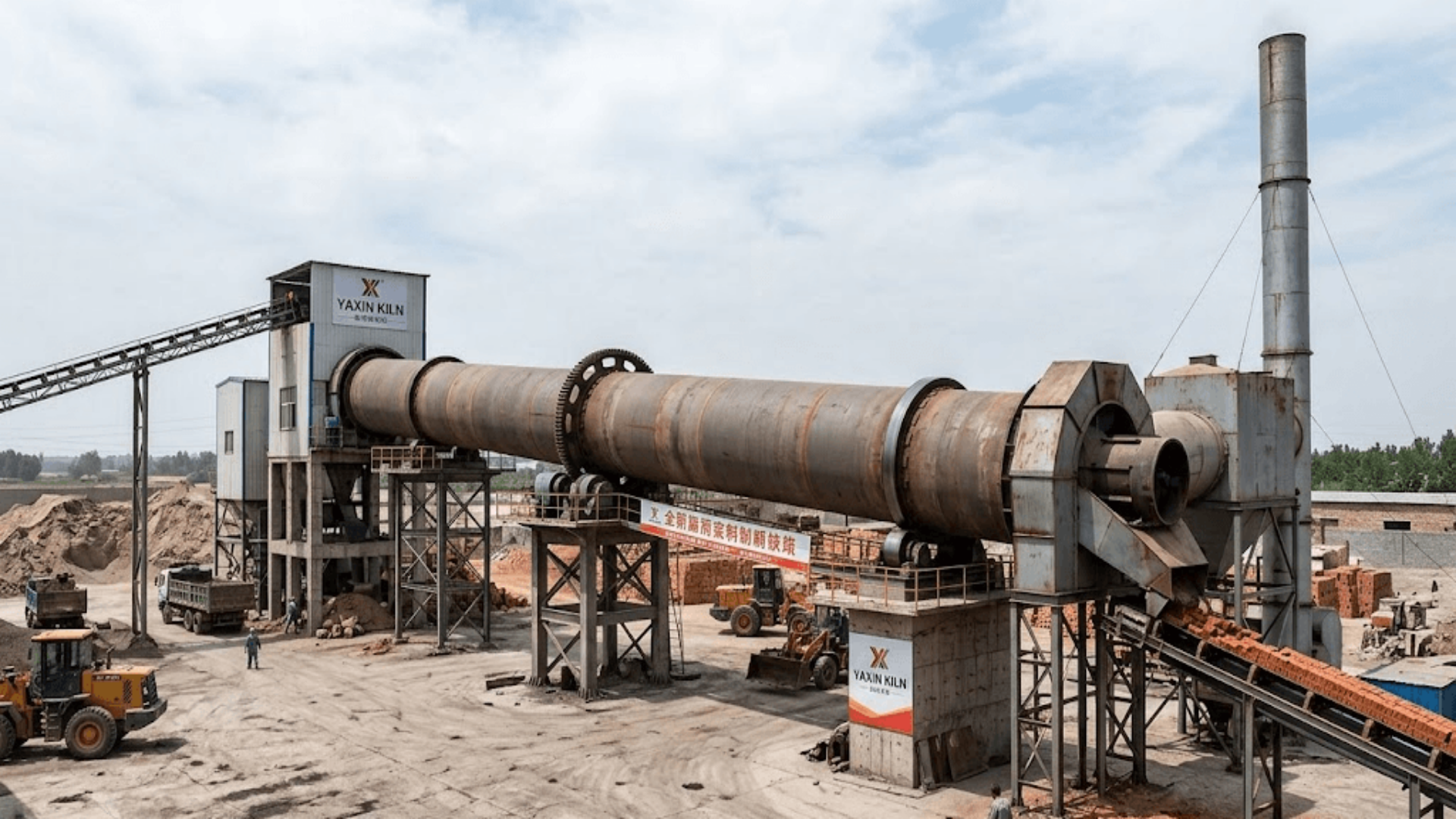
The production of high-performance wall materials depends on the precision of the thermal process. Kiln design serves as the architectural foundation for this transformation. Every structural choice in a kiln influences the final density, strength, and chemical stability of the product.
Wall materials like sintered bricks and ceramic blocks require specific temperature gradients. A poorly designed kiln leads to uneven heat distribution. This results in structural internal stresses that cause micro-cracking during the cooling phase.
At Yaxin Kiln, we recognize that the relationship between thermodynamics and geometry defines product success. Our engineering focuses on maximizing heat recovery while maintaining strict atmospheric control. This ensures every unit of material meets rigorous construction standards.
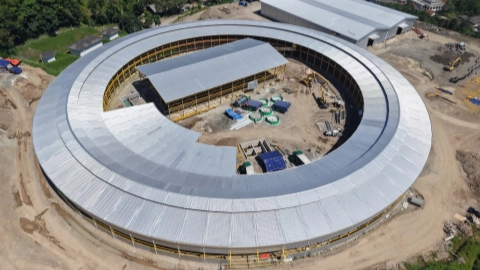
Why does kiln design dictate wall material integrity?
Kiln design determines how heat transfers from the fuel source to the raw material. In wall material production, the “soaking time” at peak temperature is critical. If the design lacks proper insulation, heat loss forces the burners to overcompensate.
This overcompensation creates “hot spots” within the firing chamber. Materials near these spots may over-vitrify, becoming brittle. Conversely, materials in cooler pockets remain under-fired and lack necessary compressive strength.
We design our thermal systems to eliminate these temperature variances. By optimizing the internal volume and refractory lining, we ensure a stable environment. This stability is the primary driver of consistent material hardness and long-term durability.
Critical design factors influencing thermal distribution?
Airflow dynamics represent the most complex aspect of kiln design. The placement of burners and exhaust fans dictates the movement of gases. Proper movement ensures that heat reaches the core of the material stack.
Counter-current heat exchange is a hallmark of efficient design. This method uses the heat from cooling products to preheat incoming combustion air. It reduces fuel consumption while providing a gentler temperature ramp-up for the greenware.
| Design Feature | Impact on Wall Material | Quality Outcome |
| Refractory Lining | Thermal Retention | Uniform Sintering |
| Burner Placement | Flame Geometry | Reduced Hot Spots |
| Exhaust Systems | Pressure Control | Consistent Color |
| Automated Sensors | Real-time Adjustment | Low Defect Rate |
Internal pressure control also prevents cold air infiltration. Even a small leak can drop local temperatures significantly. This drop causes “black hearts” in bricks, where the core fails to oxidize completely.
How rotary kiln geometry affects material homogenization?
For specialized wall materials and aggregates, the rotary motion provides unique advantages. The continuous tumbling action ensures every particle experiences the same thermal history. This is vital for materials used in lightweight concrete or decorative wall cladding.
At Yaxin Kiln, we have refined the rotary kiln to handle diverse raw material compositions. The slope and rotation speed of the drum are calculated to manage “residence time” precisely. If the material moves too fast, the chemical bond formation remains incomplete.
Our designs incorporate internal lifters that prevent material clumping. By lifting and showering the material through the hot gas stream, we achieve superior heat transfer. This results in a highly homogenous product with predictable mechanical properties.
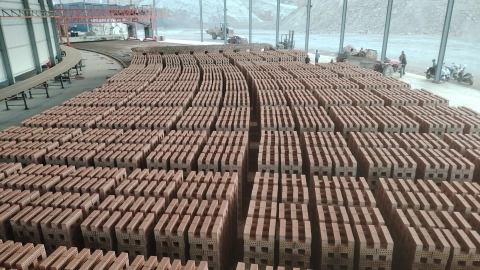
Can kiln atmosphere control prevent structural defects?
The chemical atmosphere inside a kiln is as important as the temperature. Oxidizing and reducing atmospheres change the mineral state of the clay or cement. Design features must allow for precise control of oxygen levels.
If the kiln design fails to manage combustion byproducts, sulfur or carbon can become trapped. This leads to efflorescence, where white salts appear on the wall surface after installation. This is a major quality failure in the construction industry.
We integrate advanced flue gas recirculating systems to stabilize the internal chemistry. This allows manufacturers to produce materials with specific aesthetic finishes. Consistent color and texture are only possible when the kiln design prevents atmospheric fluctuations.
Industrial applications for precision-designed kilns?
Modern construction requires wall materials with high thermal resistance and low weight. Achieving this balance requires precision firing cycles that traditional kilns cannot provide. High-tech insulation materials often require multi-stage cooling to prevent thermal shock.
We provide solutions for manufacturers producing autoclaved aerated concrete (AAC) and high-density refractory bricks. These applications demand kilns that can hold specific temperatures within a five-degree margin. Our structural designs use modular components to maintain this level of accuracy.
The choice of kiln design also impacts the scalability of production. A well-engineered kiln allows for faster throughput without sacrificing the quality of the individual units. This efficiency is what separates market leaders from standard manufacturers in the B2B sector.
FAQ
Q1: How does kiln design affect the water absorption rate of wall materials?
A: Proper kiln design ensures total vitrification of the silicates within the material. This closes the pores, significantly reducing water absorption and increasing frost resistance in cold climates.
Q2: Why is the cooling zone design just as important as the heating zone?
A: If wall materials cool too rapidly, they undergo “quartz inversion” stress. A precision-designed cooling zone manages the temperature drop to prevent internal fracturing and structural failure.
Q3: Can a rotary kiln be used for traditional clay brick production?
A: While traditional bricks usually use tunnel kilns, we adapt rotary technology for expanded clay aggregates and specialized wall powders. These materials require the constant movement provided by the rotary design for uniformity.
Q4: How does kiln insulation thickness impact product quality?
A: Thicker, high-quality insulation prevents external shell heat loss. This keeps the internal “thermal mass” stable, which is essential for preventing the warping or bowing of large-format wall panels.
Q5: What role does moisture removal play in initial kiln design?
A: The pre-heating zone must be designed to evacuate water vapor efficiently. If moisture is trapped too long, it can cause “spalling,” where the surface of the wall material literally explodes during the high-heat phase.
Reference Sources
ASTM C1262/C1262M‑24: Standard Test Method for Evaluating the Freeze‑Thaw Durability of Dry‑Cast Segmental Retaining Wall Units and Related Concrete Units.
https://store.astm.org/c1262_c1262m‑24.html
ISO 19023:2015 for Refractory Material Thermal Conductivity.
https://www.iso.org/standard/63738.html
The Brick Industry Association (BIA) Technical Notes.
https://www.gobrick.com/