
Prefabricated vs Traditional Kiln Cost Comparison Guide

The global brick and ceramic manufacturing landscape is shifting from heavy, site-built masonry structures toward high-efficiency modular systems. For plant managers and investors, the primary question often revolves around the total cost of ownership. While traditional kilns have been the industry standard for decades, the prefabricated kiln cost structure offers a different financial logic. Understanding these differences requires looking beyond the initial purchase price to evaluate long-term operational efficiency and construction timelines.
What Factors Drive Prefabricated Kiln Cost Efficiency?
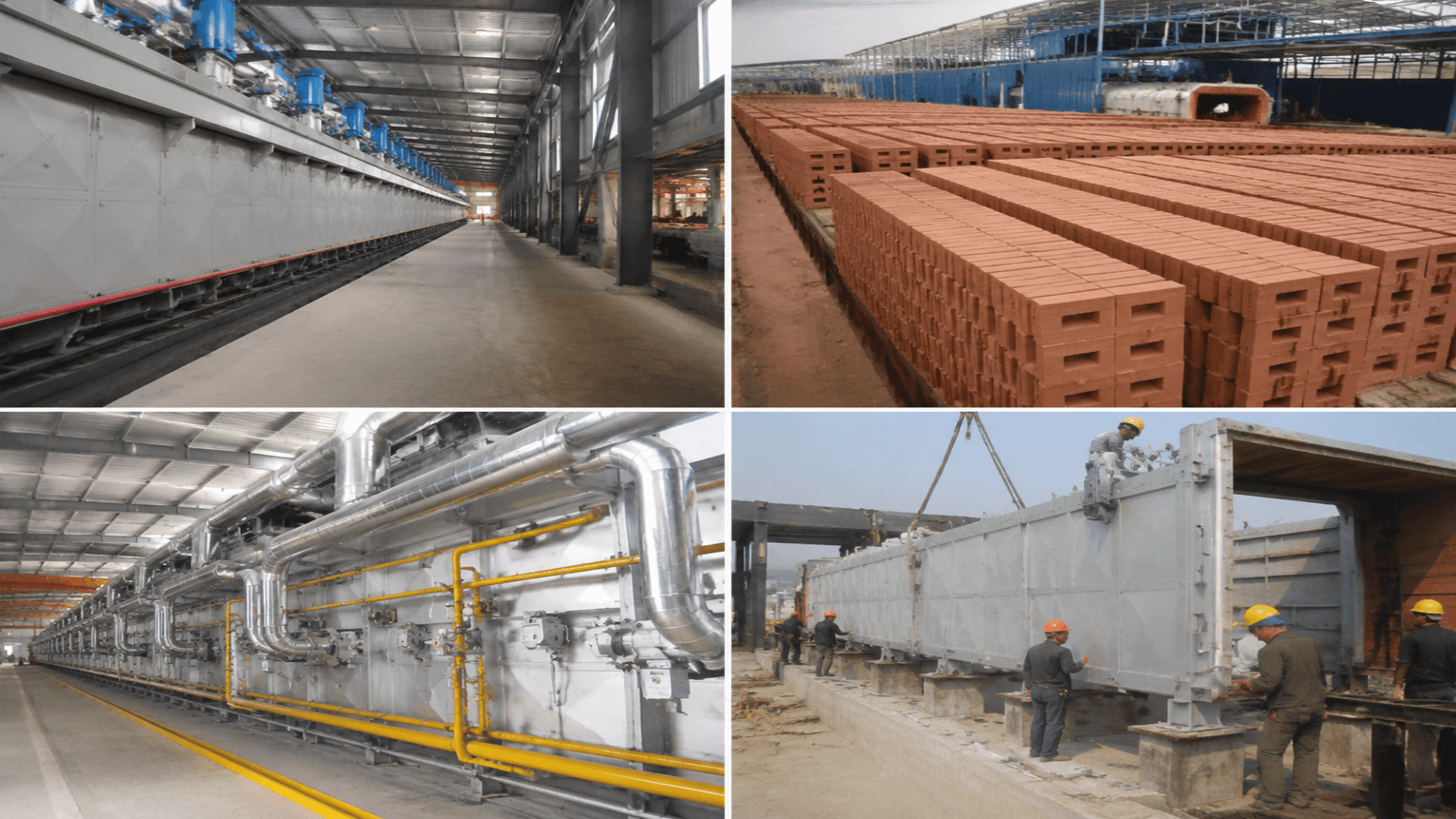
The cost of a prefabricated kiln is primarily driven by its modular engineering and high-grade material selection. Unlike traditional kilns built from heavy firebricks and local clay on-site, we manufacture our prefabricated units in a controlled factory environment. This allows us to use advanced lightweight refractory fibers and high-strength steel frames that reduce the total weight of the structure.
A significant portion of the cost efficiency comes from the reduction in site preparation. Traditional kilns require massive, reinforced foundations to support the weight of thousands of masonry bricks. Our modular designs distribute weight more effectively, often requiring simpler foundation work. This lowers the civil engineering budget for the project. Additionally, factory-controlled assembly ensures that every component fits perfectly, eliminating the expensive “on-site adjustments” common in traditional construction.
Construction Timelines: The Hidden Cost of Traditional Kilns?
Time is perhaps the most overlooked variable in the kiln investment equation. Building a traditional Hoffmann or tunnel kiln on-site can take six months to a year, depending on weather conditions and local labor availability. During this period, the capital is locked up, and the plant generates zero revenue. This “opportunity cost” can be devastating for new businesses or those looking to scale quickly.
At Yaxin, we focus on accelerating the path to production. When we deploy our prefabricated tunnel kiln solutions, the on-site installation phase is reduced to approximately 45 to 60 days. Since the kiln is shipped in pre-assembled sections, our engineers can oversee a rapid assembly process regardless of local weather. This allows manufacturers to start firing bricks and generating cash flow months earlier than they would with a traditional masonry build.
Operating Expense (Opex) and Energy Consumption Analysis?
Initial capital expenditure (Capex) is only part of the story; the real financial impact is seen in the daily operating costs. Traditional kilns have high thermal mass, meaning they absorb a vast amount of energy just to reach operating temperature. They also tend to leak heat through the masonry joints over time. In contrast, prefabricated systems utilize precision-sealed joints and high-efficiency insulation blankets that minimize thermal bridging.
We engineer our systems with integrated heat recovery modules. These modules capture waste heat from the cooling zone and redirect it to the drying chambers. In a traditional setup, this heat is often lost, requiring extra fuel for the dryers. By optimizing the air-to-fuel ratio through automated control systems, prefabricated kilns typically consume 20% to 30% less fuel per kilogram of finished product. Over a ten-year period, these fuel savings often exceed the original purchase price of the kiln.
Performance Comparison: Prefabricated vs. Traditional Kilns?
To understand which technology fits your production goals, it is helpful to view the technical trade-offs side-by-side. The following table highlights the key performance indicators we monitor during project evaluation.
| Feature | Prefabricated Tunnel Kiln | Traditional Masonry Kiln |
| Construction Period | 45–60 Days | 6–12 Months |
| Thermal Insulation | High-grade ceramic fiber/rock wool | Heavy firebrick/Red brick |
| Foundation Requirements | Moderate (Steel frame support) | Heavy (Massive masonry weight) |
| Automation Level | High (PLC integrated) | Low to Medium (Manual control) |
| Energy Efficiency | 85% – 92% | 60% – 75% |
| Portability | Possible (Modular disassembly) | None (Fixed structure) |
| Maintenance Frequency | Low (Replaceable modules) | High (Masonry crack repair) |
Why Industrial Scale Matters for Your Investment Choice?
The choice between these two systems often depends on the intended scale of production and the local regulatory environment. For large-scale industrial operations, the precision of a prefabricated kiln is vital for maintaining product quality. Consistent temperature distribution ensures that every brick meets the required compressive strength standards, reducing the “reject rate” that plagues traditional masonry kilns.
In regions with strict environmental regulations, the prefabricated kiln cost is justified by its lower emissions. We integrate advanced filtration and scrubbing systems directly into the modular design. Traditional kilns are often difficult to retrofit with modern emission controls due to their irregular airflow patterns. If your project requires compliance with international environmental standards, the modular approach provides a much more predictable path to certification and long-term legal operation.
Future-Proofing Your Brick Plant with Modular Technology?
Industrial needs change, and a fixed masonry kiln can become a liability if the market shifts or the clay source moves. One of the greatest financial advantages we offer is the ability to dismantle and relocate the kiln. Since the structure is composed of bolted steel sections and modular refractories, it can be moved to a new site with minimal loss of materials.
Furthermore, scalability is built into the design. If a manufacturer needs to increase capacity, we can often extend the tunnel by adding additional prefabricated sections. This “pay-as-you-grow” model prevents the need for a massive upfront investment in a kiln that might be oversized for current demand. By choosing a modular system, you are not just buying a furnace; you are investing in a flexible industrial asset that adapts to the economic climate.
FAQ
Q1: Is the initial prefabricated kiln cost higher than a traditional kiln?
A1: Generally, the upfront equipment cost for a prefabricated kiln is higher because of the high-quality steel and specialized refractories used. However, when you factor in the lower civil engineering costs and the significantly shorter construction time, the total project investment is often comparable or even lower.
Q2: How long does a prefabricated kiln last compared to masonry?
A2: A well-maintained prefabricated kiln has a service life of 20 to 30 years. While masonry kilns can last longer, they require frequent and expensive structural repairs. Our modular components can be replaced individually without shutting down the entire kiln for weeks.
Q3: Can a prefabricated kiln handle different types of fuel?
A3: Yes, we design our combustion systems to be multi-fuel capable. Our prefabricated kilns can be configured for natural gas, LPG, heavy oil, or even pulverized coal, providing manufacturers with the flexibility to switch fuels based on market pricing.
Q4: What is the ROI period for switching from traditional to prefabricated technology?
A4: Most of our clients see a full Return on Investment (ROI) within 24 to 36 months. This is driven by fuel savings, reduced labor costs due to automation, and the significantly higher yield of Grade-A products.
Q5: Does a prefabricated kiln require specialized labor to operate?
A5: While the technology is advanced, the automation makes it easier to operate than a traditional kiln. We provide comprehensive training for your local staff. The system manages the complex firing curves automatically, reducing the need for highly skilled “fire masters.”
Reference Sources
The European Ceramic Industry Association (Cerame-Unie)
https://cerameunie.eu/
Journal of Cleaner Production – Energy Efficiency in Brick Kilns
https://www.sciencedirect.com/journal/journal-of-cleaner-production