
Top Features to Look for in a Rotary Kiln

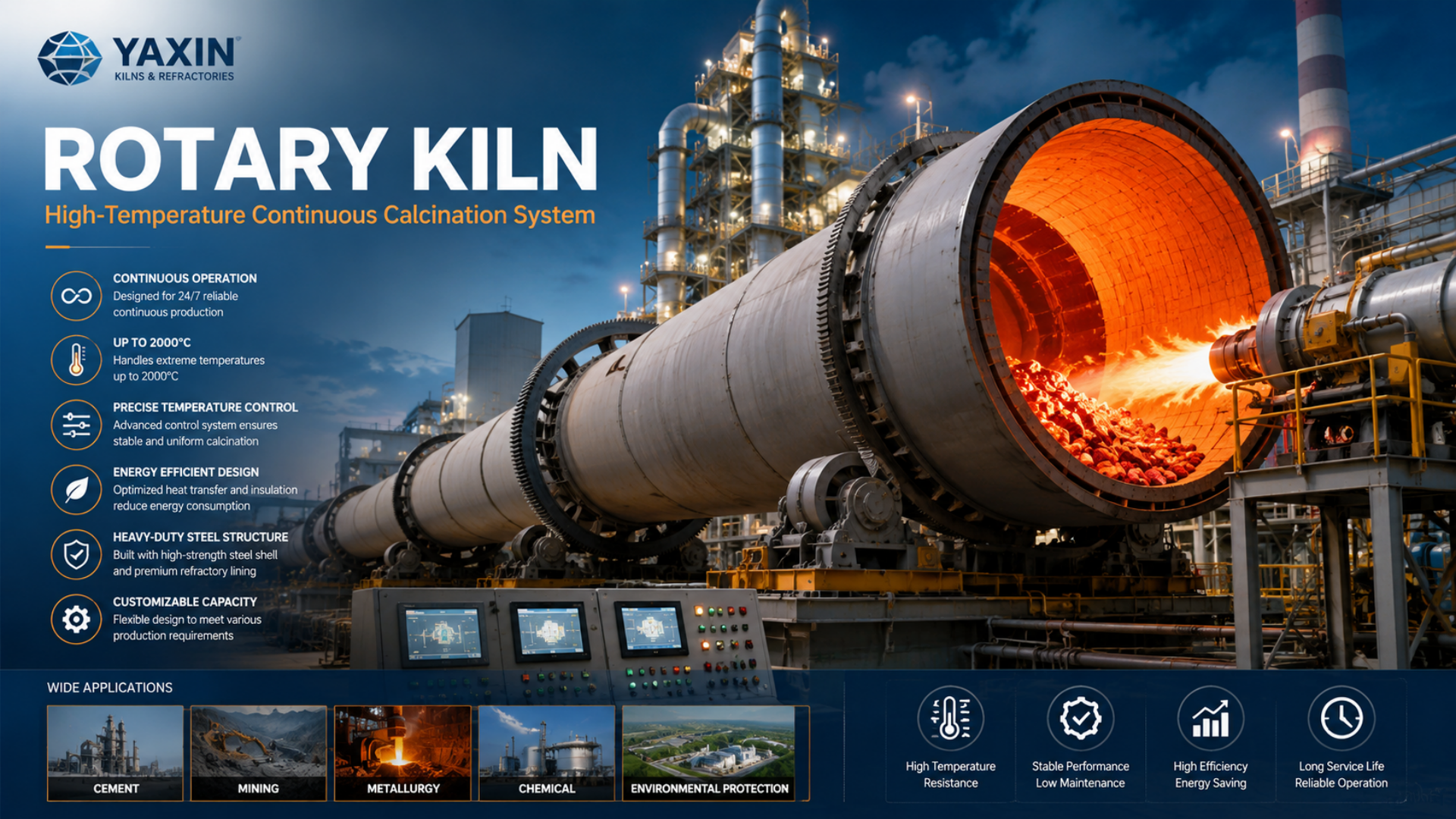
Selecting a rotary kiln is a pivotal decision for any industrial facility involved in pyroprocessing. These massive thermal processing units are the heart of cement, lime, and chemical production. As engineers and manufacturers at Yaxin Kiln, we understand that structural integrity and thermal efficiency are not optional. Choosing the right features determines your long-term operational costs and product quality. This guide breaks down the essential technical components that define a high-performance rotary kiln.
What are the Critical Structural Features of a Rotary Kiln?
The kiln shell is the primary structural component that must withstand extreme mechanical and thermal stress. We manufacture our kiln shells using high-quality carbon steel or alloy steel plates to ensure rigidity. The thickness of the shell must be precisely calculated based on the kiln’s diameter and weight distribution.
A well-designed shell prevents “kiln bend” or warping during high-temperature operations. We utilize advanced welding techniques and stress-relief processes to maintain perfect circularity. This structural precision is vital for the longevity of the internal refractory lining.
- High-grade steel construction for maximum thermal resistance.
- Precision-machined riding rings (tires) to support the rotating mass.
- Optimized length-to-diameter (L/D) ratios for specific material dwell times.
The interface between the shell and the tires is another area where engineering matters. We employ a floating-type mounting system for our tires. This allows for thermal expansion without distorting the kiln shell. This feature significantly reduces the risk of mechanical failure during start-up and shut-down cycles.
How Does the Sealing System Impact Thermal Efficiency?
Thermal efficiency in a rotary kiln depends heavily on the integrity of the seals. Air leakage at the kiln head or tail can lead to significant heat loss. We focus on advanced sealing solutions to prevent cold air ingress and dust emissions.
Our rotary kilns typically feature specialized graphite block seals or labyrinth seals. These systems are designed to accommodate the kiln’s axial and radial movement. Effective sealing reduces fuel consumption by maintaining a stable internal atmosphere and temperature.
| Seal Type | Primary Benefit | Ideal Application |
| Graphite Block Seal | Low friction and high heat resistance | High-temperature cement and lime kilns |
| Labyrinth Seal | Simple maintenance and durable structure | Mineral processing with high dust loads |
| Friction Plate Seal | High sealing tightness | Chemical kilns requiring precise atmosphere control |
In our engineering practice, we often recommend dual-stage sealing for hazardous material processing. This ensures that no toxic gases escape the system during the calcination process. High-performance seals also protect the surrounding environment and ensure compliance with emission standards.
Why are Drive and Supporting Mechanisms Vital for Reliability?
The drive system is responsible for the smooth and continuous rotation of the kiln. We provide heavy-duty girth gears and pinions that are precision-ground for minimal vibration. A smooth drive system prevents shock loads that can damage the internal refractory bricks.
Supporting rollers must be designed to carry the immense weight of the kiln and its contents. We use forged steel for our rollers and high-strength shafts to ensure durability. Proper alignment of these rollers is the most critical factor in preventing uneven shell wear.
- Variable Frequency Drives (VFD) for precise rotation speed control.
- Hydraulic thrust roller systems to manage the kiln’s axial drift.
- Automatic lubrication systems for gears and support bearings.
At Yaxin Kiln, we integrate auxiliary drive systems into our designs. These small backup motors rotate the kiln during power outages. This prevents the shell from sagging or “bowing” while it cools down. This feature is a standard safety requirement for large-scale industrial kilns.
Which Material-Specific Features Enhance Performance?
Different materials require unique kiln configurations to achieve optimal chemical reactions. For example, metallurgical kilns often require specific internal heat exchangers or lifters. These features increase the contact surface between the hot gases and the raw material.
If you are processing lime, the kiln must handle high temperatures and specific cooling requirements. We design our lime kilns with integrated preheaters to recover waste heat. This significantly lowers the energy footprint of the entire production line.
Our product range at Yaxin Rotary Kilns covers various specialized applications. We customize the internal refractory zones based on the chemical aggressiveness of your feedstock. This prevents premature wear and extends the time between maintenance shutdowns.
- Integrated preheaters for improved energy efficiency in cement production.
- Internal flights or lifters for better heat transfer in low-temperature drying.
- Customized discharge cooling systems to stabilize product quality.
Choosing the right internal diameter and slope is also critical for material throughput. We calculate the kiln slope based on the material’s angle of repose and required retention time. This ensures a consistent flow and uniform heat treatment of every particle.
How Do Modern Monitoring Systems Improve Operation?
In the era of Industry 4.0, a rotary kiln is no longer just a piece of mechanical equipment. High-end kilns now feature integrated sensors and automated control systems. We equip our systems with infrared scanners to monitor the shell temperature in real-time.
Thermal imaging allows operators to identify “hot spots” where the refractory lining might be thinning. This proactive monitoring prevents catastrophic shell melt-throughs and unplanned downtime. Our control interfaces allow for remote adjustments of fuel-to-air ratios and kiln speeds.
- Infrared shell scanners for continuous refractory health monitoring.
- Oxygen and CO sensors for combustion optimization.
- Vibration sensors on the drive train to predict mechanical wear.
We believe that data-driven operation is the key to maximizing kiln lifespan. By monitoring the torque on the drive motor, we can detect build-ups or “rings” forming inside the kiln. Addressing these issues early saves thousands of dollars in maintenance costs.
Summary of Essential Rotary Kiln Components
When evaluating a rotary kiln, look beyond the basic dimensions and focus on engineering details. A robust shell, precision drive components, and superior sealing are the foundations of success. These features work together to ensure thermal efficiency and structural longevity.
At Yaxin Kiln, we combine decades of manufacturing experience with modern thermal technology. We focus on providing solutions that meet specific industrial standards like ISO and local environmental regulations. Investing in high-quality features today ensures a more profitable and stable production process for years to come.
FAQ
Q1: What is the most common cause of rotary kiln shell damage?
A1: The most common causes are uneven heating and poor refractory maintenance. When the internal lining fails, “hot spots” occur, leading to localized warping or melting of the steel shell.
Q2: How often should the kiln sealing system be inspected?
A2: We recommend a visual inspection every month and a comprehensive check during every scheduled maintenance shutdown. Even small leaks can increase fuel consumption by 5% to 10% due to heat loss.
Q3: Can a rotary kiln be customized for specific materials?
A3: Yes, customization is essential. We adjust the kiln slope, rotation speed, and internal lifters based on the material’s density, moisture content, and chemical reaction requirements.
Q4: What is the benefit of a hydraulic thrust roller?
A4: A hydraulic thrust roller controls the axial movement of the kiln. It ensures that the kiln moves up and down evenly across the supporting rollers, preventing concentrated wear on the tires and gears.
Q5: Why is the auxiliary drive system necessary?
A5: It serves as an emergency backup. If the main power fails, the auxiliary drive keeps the kiln turning slowly, which prevents the hot shell from bending under its own weight as it cools.
Reference Sources
ASTM International Standards for Steel and Refractory Materials
https://www.astm.org/
International Organization for Standardization (ISO) Industrial Machinery
https://www.iso.org/home.html
Global Cement and Concrete Association (GCCA) Technical Guidelines
https://gccassociation.org/
IEEE Industrial Applications Society – Cement Industry Committee
https://ias.ieee.org/