
Mobile Rotary Kiln Advantages: Cut Fuel Cost, Lift Output

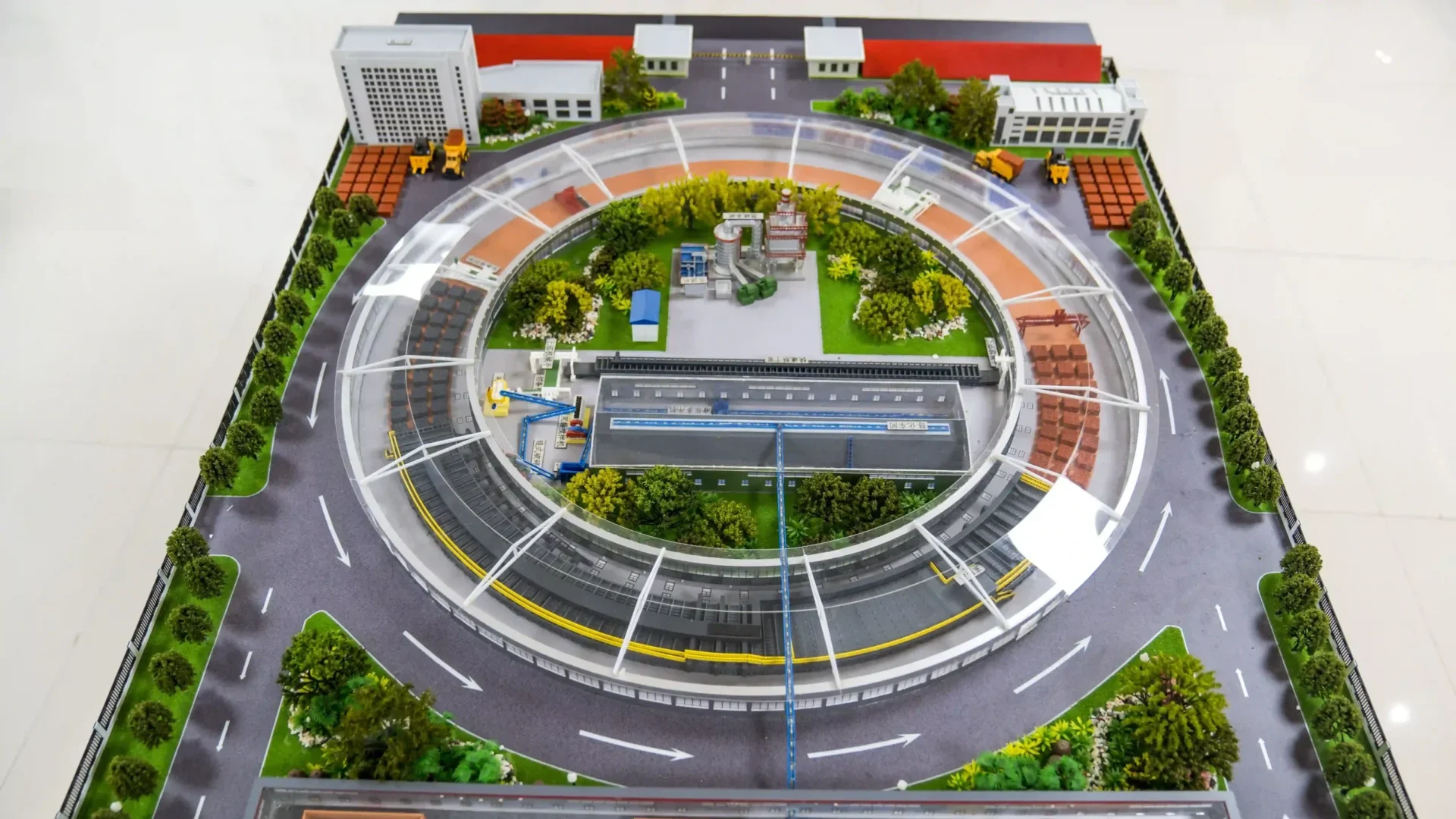
A mobile rotary tunnel kiln fires bricks from a different direction than most plants expect. The kiln body travels on a circular rail, while the brick stack stays on the ground. The bricks do not move; the furnace moves around them.
For brick manufacturers, the mobile rotary kiln advantages are mostly economic. Expect lower fuel consumption, no kiln-car fleet, faster construction, and a wider firing section than a conventional tunnel kiln can reach.
What is a mobile rotary tunnel kiln — and why does it fire differently?
A conventional tunnel kiln pushes bricks through a fixed tunnel on kiln cars. A mobile rotary tunnel kiln reverses that logic. The kiln body is divided into four connected sections: drying and moisture elimination, preheating, burning, and insulation and cooling. The whole body rotates around a circular track over bricks set directly on the ground.
The reversal removes two weak points of a traditional line. Kiln cars no longer shake stacked bricks, so collapse risk drops sharply. The patented fan-free structure removes roof-mounted fans, eliminating the vibration that gradually damages refractory linings and insulation.
Airflow works differently too. A desulfurizing fan pulls flue gas through the kiln and drives both drying and burning. Because the burning section connects directly to the drying section, hot gas moves across without a check gate, so less heat is lost between zones. Green bricks reach roughly 200 °C in the drying section before entering the preheating zone.
This order matters for brick quality, not just cost. Slow, even drying to around 200 °C drives out moisture before firing begins, which is exactly the window where surface cracking and core defects form. A kiln that controls that step tightly produces a straighter, more uniform product.
Because the kiln sections are prefabricated and standardized in the factory, dimensional control stays consistent from unit to unit. In practice, that means fewer surprises during assembly and a more predictable firing profile from day one. The same logic drives prefabricated steel structures over poured concrete — repeatable quality beats site improvisation.
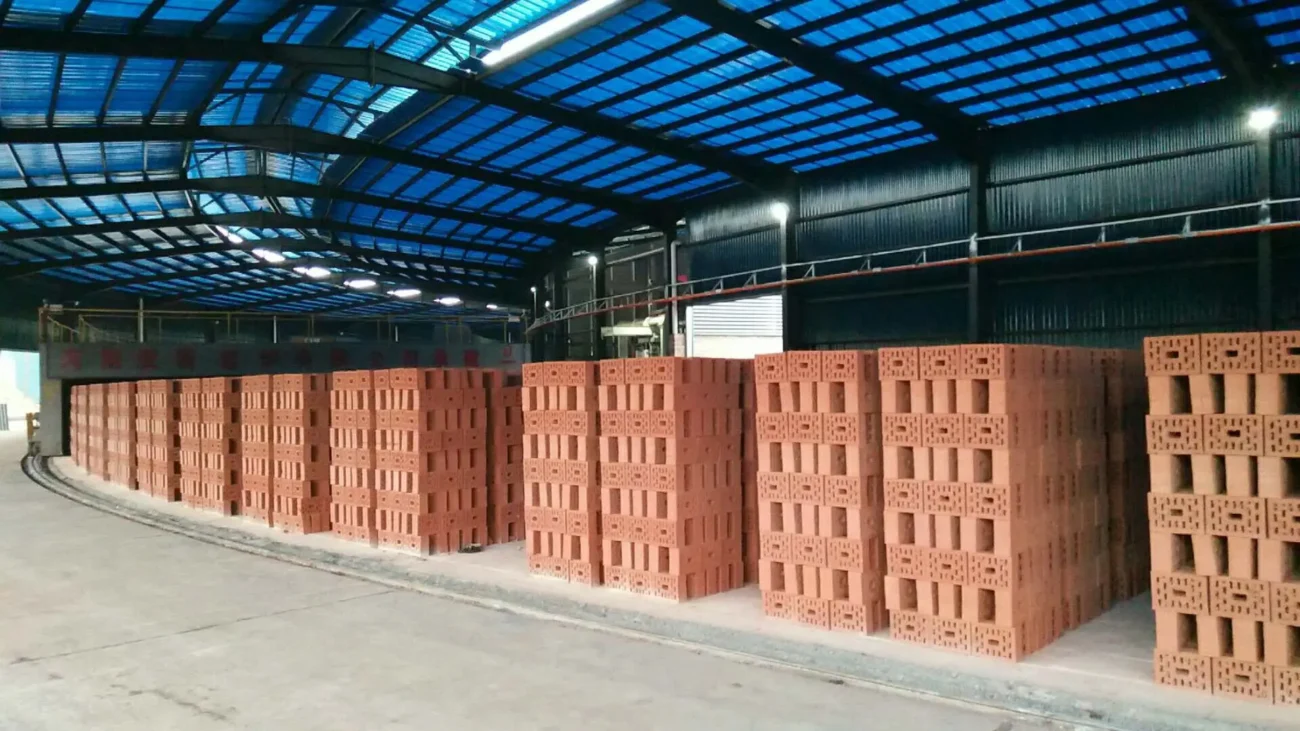
Mobile rotary kiln advantages that change your operating cost
The savings are measurable, not theoretical. Manufacturer documentation puts coal consumption of the mobile rotary design at 250–280 kcal per kilogram of fired brick. A conventional tunnel kiln typically burns 380–450 kcal/kg, so the design gap is at least 100 kcal/kg.
What you avoid in practice:
- Kiln-car repairs — eliminated, since there are no cars; traditional lines often spend
50,000–100,000 a year keeping the car fleet running. - Extra labor — about 2 operators run the kiln, against 7–10 workers for car handling, pushers, and transfer equipment.
- Bake-out before start-up — prefabricated sections contain no masonry moisture, so the kiln goes into production straight after assembly.
- Construction materials — no clay brick, sand, or cement needed for the kiln shell itself.
- Stack collapses — bricks stay put on the ground, so car-induced shake and collapse are largely avoided.
- Routine overhauls — no kiln-body overhaul is expected within 10 years, and refractory insulation holds without reline for about 5 years.
None of these are minor line items. On a traditional line, kiln-car maintenance alone can eat most of a year’s margin improvement. On a mobile rotary kiln, that cost class simply disappears.
Traditional tunnel kiln vs mobile rotary tunnel kiln: side-by-side
The table below condenses the comparison most plant owners actually run before budgeting for a new firing line.
| Criterion | Traditional tunnel kiln | Mobile rotary tunnel kiln |
| Maximum firing section width | About 7.5 m | 7.2–18.8 m |
| Kiln length | Varies by design | 150–170 m |
| Kiln cars | Required, with a repair fleet | None; bricks stay on the ground |
| Operating staff | 7–10 workers | About 2 operators |
| Construction time | 6+ months on-site masonry | About 4 months, prefabricated |
| Start-up | Bake-out required | Direct operation after assembly |
| Coal consumption | 380–450 kcal/kg | 250–280 kcal/kg |
| Kiln-body overhaul | Periodic | Not required within 10 years |
One caution: these are published design figures, not site guarantees. Actual fuel use depends on clay moisture, mix design, and firing discipline, so treat the table as a comparison framework rather than a quote.
Why fuel savings are larger than they look
Three mechanisms stack up. Recycled high-temperature flue gas dries the bricks, so the drying section needs no separate fuel input. Direct heat transfer from the burning section to the drying section cuts losses that fixed kilns accept at the drying–burning interface. And a fan-free shell keeps the refractory tight, which limits air infiltration and radiant losses.
Put numbers on it. At 3.5 kg per brick, saving 100 kcal/kg means about 350 kcal per brick. A plant producing 30 million bricks a year saves roughly 2,100 tonnes of coal annually, using 5,000 kcal/kg coal as the reference. Electricity also drops, because fewer fans and no car-moving hydraulics mean less power demand across the shift.
Spread over a 30-year asset life, that fuel delta compounds into a different business rather than a lower utility bill. The saved coal at current industrial prices often exceeds the original kiln investment within the first operating years. That is why fuel, not purchase price, should anchor the feasibility study.
Waste-heat recovery is not a bolt-on extra in this design; it is the core layout. The circular flue and drying room connect directly, so the leakage paths that fixed kilns tolerate are simply not present.
Savings are real but not automatic. Clay moisture, mix design, and firing discipline all move the final figure. Run the payback calculation on your own raw materials and fuel price, and treat published numbers as a baseline rather than a guarantee.
What mobile rotary kiln advantages mean in a working brick plant
For a mid-size producer running 20–40 million bricks a year, the gains show up in three places. Staffing drops to a small crew per shift. Maintenance shifts from scheduled car-fleet overhauls to monitoring the kiln body and refractory. Capacity planning gets easier, because section widths from 7.2 m to 18.8 m can be matched to demand instead of a fixed tunnel width.
Site layout deserves separate attention. A circular track needs a clear radius on the plant yard, which differs from the straight-line footprint of a fixed tunnel. Plants on tight or irregular plots should check turning clearance and access for prefabricated sections before committing.
Emissions handling is built in rather than bolted on. The circular flue connects to a desulfurizer, and because the kiln has no roof fans, smoke is not discharged in an unorganized way. That matters more each year as air-quality rules tighten around brick production.
Weather also shapes the drying load. In humid or rainy seasons, green bricks leave the yard wetter, and the recycled-flue-gas drying section absorbs that variation without a separate dryer building. Plants that used to idle drying capacity in winter report steadier throughput.
Plant teams running these lines report that predictability is the quietest benefit. No car fleet means no night-shift breakdown calls at the car return. Fewer moving parts mean the small crew stays ahead of routine checks, and that operational stability shows up in year-end output numbers.
The design is not a universal answer. Very small plants with tight capital, or operations already running a modern fixed kiln with recovered waste heat, may see a smaller delta. The mobile rotary kiln advantages narrow to a specific set of plants: aging lines, scarce labor, or fuel cost that dominates the balance sheet.
What to evaluate before adopting a mobile rotary tunnel kiln
Treat the decision as an engineering review, not a brochure read. Work through these checks in order:
- Raw material — clay type, moisture, and plasticity set the drying time and firing curve your kiln must handle.
- Fuel — local coal calorific value and ash content determine the real cost per brick.
- Output target — match a section width to confirmed demand; widths run from 7.2 m to 18.8 m.
- Site — circular-rail footprint, turning radius, and delivery access for prefabricated sections.
- Emissions — confirm the desulfurizer setup matches local air-quality limits.
- Supplier evidence — design patents, ISO 9001, ISO 14001, and ISO 45001 (or OHSAS 18001) certification, plus installation references with published performance data.
Certification matters more than claims. Look for ISO 9001 quality management, ISO 14001 environmental management, and ISO 45001 occupational health and safety. Verify each one, because energy equipment attracts its share of inflated marketing.
A short documentation request helps you separate engineers from resellers. Ask for a process flow diagram, refractory specification with lining thickness, fan duty tables, and a fired-brick quality report. If a supplier cannot produce these within a week, treat that as a red flag.
Yaxin Kiln is one supplier worth benchmarking against. Its rotary kiln page publishes the kiln structure, fuel figures, and width options cited in this article. The company also holds Chinese utility-model patents for the fan-free design and documents ISO 9001, ISO 14001, and OHSAS 18001 certification. Use that documentation as a baseline, then verify against your own raw materials and a visit to a reference plant. A pilot or reference site in your region tells you more than any spec sheet.
FAQ
How much coal can a mobile rotary tunnel kiln save per brick?
At least 100 kcal per kilogram of fired brick, which equals about 350 kcal for a typical 3.5 kg brick. A 30-million-brick plant can therefore save roughly 2,100 tonnes of coal per year, assuming 5,000 kcal/kg coal. Actual savings vary with clay moisture and firing practice.
Why does a mobile rotary kiln not need kiln cars?
The kiln moves and the bricks stay set on the ground, so nothing has to roll through the tunnel. That removes car-related shake and collapse risk, plus the annual repair cost of a car fleet — often 50,000–100,000 on a traditional line.
Is a mobile rotary tunnel kiln faster to install than a conventional tunnel kiln?
Yes, in most cases. Sections are prefabricated and standardized at the factory, so on-site assembly takes about four months, compared with six or more months of masonry work for a fixed tunnel kiln. The kiln also starts producing directly after assembly, with no bake-out period.
Which brick types can a mobile rotary tunnel kiln fire?
Clay brick, hollow brick, and fly-ash brick are typical applications. Drying to about 200 °C with recycled flue gas suits most common clay bodies, but a lab test of your specific mix is the responsible step before commitment.
Reference Sources
- Yaxin Kiln — Mobile Rotary Tunnel Kiln product page (source of the structural, fuel, and certification figures cited above)
- ISO 9001:2015, Quality management systems — requirements
- ISO 14001:2015, Environmental management systems
- ISO 45001:2018, Occupational health and safety management systems (supersedes OHSAS 18001)
- ASTM C62, Standard Specification for Building Brick (Solid Masonry Units Made from Clay or Shale)
- IFC Environmental, Health, and Safety Guidelines (manufacturing emissions framework)