Brick Firing Defects: Diagnose Causes and Kiln Solutions

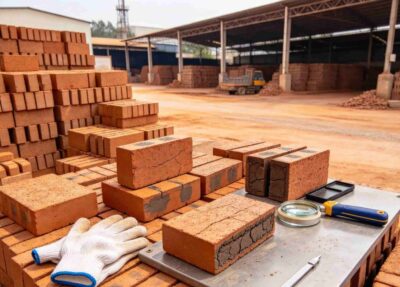
Brick firing defects include unwanted cracking, black cores, bloating, deformation, and uneven firing that affect product appearance or performance. Their causes can involve raw materials, drying conditions, kiln atmosphere, temperature distribution, and cooling.
The useful question is where the fault begins and which process change addresses it. A higher firing temperature may help an underfired brick, yet worsen deformation elsewhere in the same load.
For plant managers considering kiln adjustments or upgrades, diagnosis should come before equipment selection. Start with the defect pattern, compare production records, and verify improvements through controlled trials.
What Do Common Brick Firing Defects Reveal?
A finished brick provides clues, but appearance alone rarely establishes the cause. Use the following table to select an initial investigation rather than prescribe an immediate correction.
| Defect | Typical evidence | Possible causes | First investigation |
|---|---|---|---|
| Underfiring | Friable edges, inadequate strength, or unusually high absorption | Insufficient temperature or residence time; cold load positions | Compare physical tests and firing exposure across the load |
| Overfiring and warping | Excessive shrinkage, bent units, sticking, or collapsed edges | Excessive heat exposure; local hot spots; unsuitable support | Compare dimensions, load position, and laboratory firing results |
| Black core | Dark interior beneath a different-colored outer layer | Incomplete oxidation involving carbonaceous matter and iron chemistry | Examine sections and review atmosphere conditions |
| Bloating | Swollen faces or internal cavities | Gas trapped as the ceramic body becomes less permeable | Compare bloated and normal sections |
| Cracking or spalling | Open cracks, split units, or detached surface fragments | Drying damage, residual moisture, or thermal stress | Establish when damage first appears |
| Unwanted color variation | Bands or patches outside the approved appearance range | Material variation, atmosphere differences, or uneven firing | Map affected positions and compare clay batches |
Practical Action’s brick production troubleshooting guide connects several visible faults with upstream preparation and drying problems. Its guidance also identifies rapid heating and trapped moisture as possible causes of surface damage.
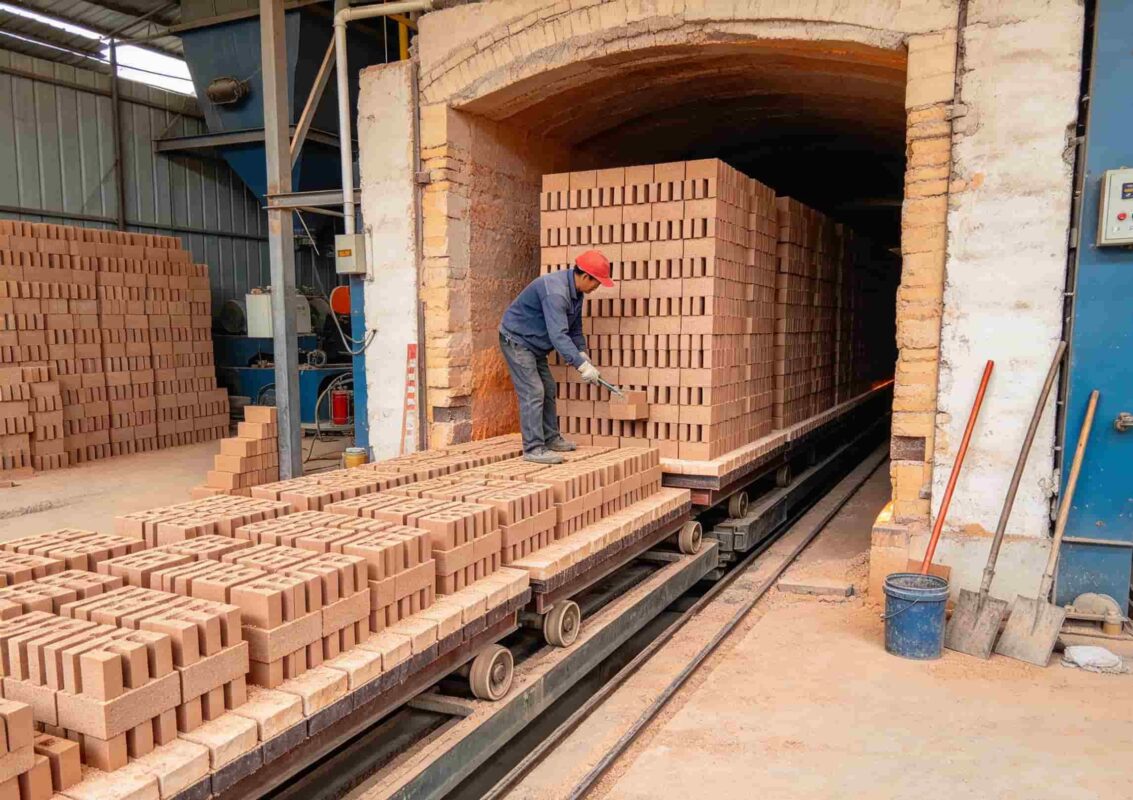
Distinguish unwanted variation from an intentional product finish. Likewise, assess dark cores against product requirements and test results before classifying every affected unit as structurally defective.
How to Diagnose the Cause Before Changing Kiln Settings
The following workflow is a practical investigation sequence. It helps separate material changes, loading effects, and equipment limitations.
- Retain representative samples. Collect defective and acceptable bricks from the same production period, including different load positions.
- Record their locations. Mark the kiln car, layer, side, and position within the setting.
- Inspect before firing. Check dried bricks for cracks, distortion, handling damage, and inconsistent residual moisture.
- Compare operating records. Review clay blends, fuel changes, push intervals, temperatures, pressures, and available oxygen or carbon monoxide measurements.
- Run a controlled trial. Change one defined factor where practical, then compare equivalent samples after the kiln stabilizes.
Treat repeated location patterns as diagnostic clues. Defects concentrated beside one wall justify checking local airflow, seals, and heat distribution.
Defects appearing throughout the load after a clay change justify investigating the material first. Neither pattern proves the cause without supporting measurements.
Verify sensor condition before interpreting trends. A stable controller reading does not establish that every brick experienced the same thermal history.
For measurable comparisons, ASTM C67/C67M provides methods covering strength, absorption, dimensions, warpage, and other properties. Acceptance limits must come from the applicable product specification or agreed requirements.
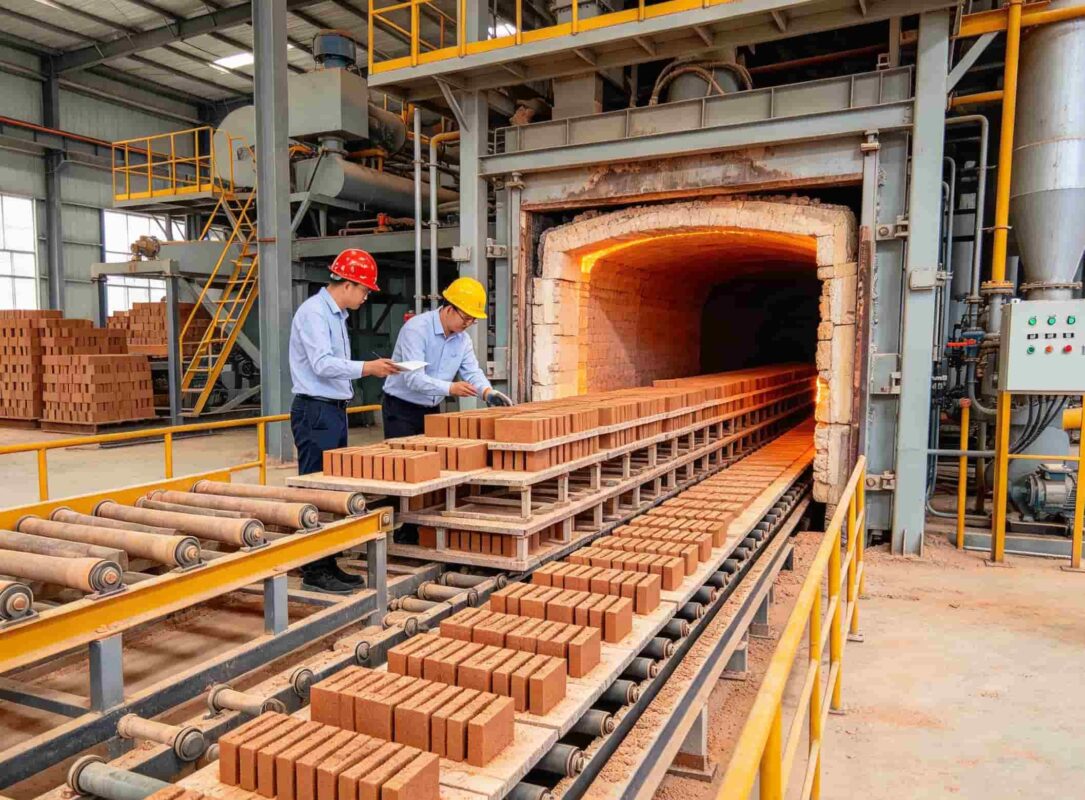
Troubleshooting Continuous Red Brick Production
Continuous production links the dryer, loading system, firing zones, and cooling section. Investigate those connections when defects appear after output increases or changes in brick geometry.
The Brick Development Association’s manufacturing guide explains why firing schedules depend on clay behavior, atmosphere, and reaction time. Consequently, a successful curve from another factory provides a starting reference rather than a transferable operating recipe.
Black cores and bloating need separate checks
Black coring involves oxidation conditions within the brick, including the oxidation state of iron. Carbonaceous material can contribute, but the dark region should not automatically be described as unburned carbon alone.
Research on black coring in structural clay products examined time, temperature, and atmosphere together. This supports investigating oxygen access and reaction time rather than relying on peak temperature alone.
Bloating occurs when gases become trapped as the body develops a glassy phase and becomes less permeable. General Shale describes this mechanism in its technical bulletin on bloating.
For a controlled investigation, compare:
- Core appearance at different load positions.
- Heating rates through the oxidation period.
- Gas circulation around densely packed bricks.
- Recent changes in organic content or internal fuel addition.
Avoid increasing combustion air indiscriminately. Assess any adjustment alongside temperature, pressure balance, fuel use, and measured product response.
Underfiring and deformation can coexist
One load can contain insufficiently fired centers and overheated outer positions. Raising the overall setpoint may increase deformation while leaving the underlying distribution problem unresolved.
The Brick Industry Association’s manufacturing guidance distinguishes useful vitrification from excessive fusion that causes deformation. It also explains that raw materials and manufacturing methods affect the relationship between firing and physical properties.
Compare load positions before deciding between a longer firing exposure, revised setting pattern, burner balancing, or airflow correction. Check whether deformation already exists after drying.
For broader process context, see Tunnel Kiln for Red Brick Production.
Cracks require a timeline
Inspect samples after forming, after drying, and after firing. A crack discovered at unloading may have started earlier and widened during heating.
When cracks first appear after firing, investigate heating and cooling gradients alongside material behavior. Compare damaged locations with air entry points and changes in cooling operation.
Delayed surface pop-outs require another line of investigation. Coarse lime-bearing inclusions can expand after moisture exposure, making raw material preparation relevant to the diagnosis.
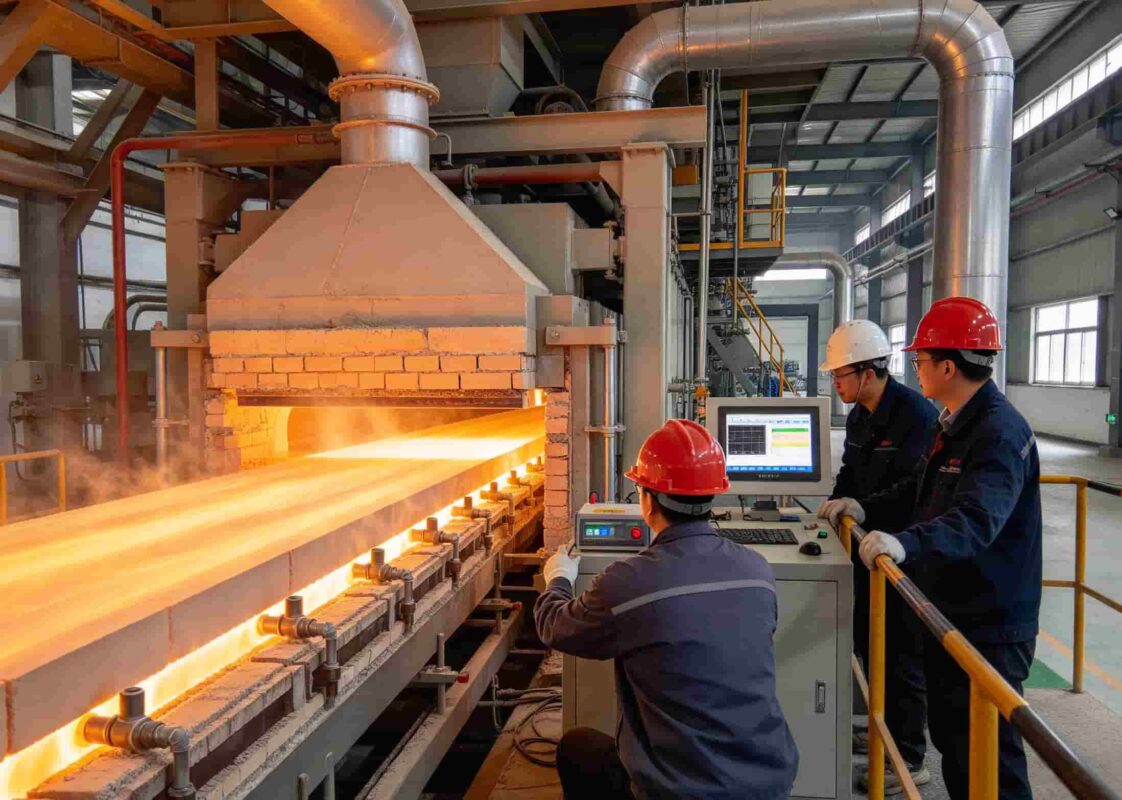
Preventing Brick Firing Defects Through Targeted Kiln Changes
Choose an intervention that addresses a demonstrated limitation. The following options are evaluation paths, with performance to be confirmed through plant trials.
| Verified limitation | Potential intervention | Evidence of improvement |
|---|---|---|
| Uneven firing across the setting | Adjust loading passages, heat distribution, or circulation | Lower variation in dimensions and physical test results |
| Unstable pressure or air leakage | Repair seals and balance extraction | More stable pressure and atmosphere records |
| Insufficient oxidation time | Revise the heating profile or residence time | Improved sections without increased deformation |
| Uneven cooling | Rebalance cooling air and leakage paths | Reduced cracking under comparable production conditions |
These changes should be assessed against saleable output. A lower reject rate achieved through slower movement may carry a capacity cost.
Compare fuel consumption per tonne of accepted bricks, maintenance requirements, and production stability. This gives a more useful commercial picture than fuel consumption alone.
For the relationship between process variables and finished properties, consult the guide to tunnel kiln firing.
Yaxin’s prefabricated tunnel kiln page describes modular construction, digital firing control, double-channel sealing, and heat reuse in drying. These features provide relevant areas for technical evaluation.
For an upgrade assessment, establish which zones are independently controlled and what operating data can be recorded. Confirm how sealing and airflow arrangements address the measured defect pattern.
Validate the proposed configuration using representative clay, brick geometry, and loading conditions. Agree on product quality and saleable output criteria before evaluating the result.
FAQ
Does a black core always mean a brick is underfired?
No. Core color involves oxidation chemistry and cannot independently establish strength or durability. Evaluate physical properties and appearance against the intended product requirements.
Can increasing firing temperature eliminate defects?
It may help confirmed underfiring, but excessive heat can cause deformation. Check distribution and residence time before increasing the overall setpoint.
When should a plant consider kiln modification?
Consider modification when trials identify an equipment limitation that routine adjustment cannot resolve. Examples include persistent distribution problems, inadequate control range, or recurring sealing failures.
Reference Sources
- Brick Industry Association — Manufacturing of Brick
- Brick Development Association — The UK Clay Brickmaking Process
- Practical Action — Assessing the Technical Problems of Brick Production
- ASTM C67/C67M — Sampling and Testing Brick and Structural Clay Tile
- Brownell — Black Coring in Structural Clay Products
- General Shale — Technical Bulletin: Bloating