
Inside a Rotary Kiln: Components, Structure & Working Process

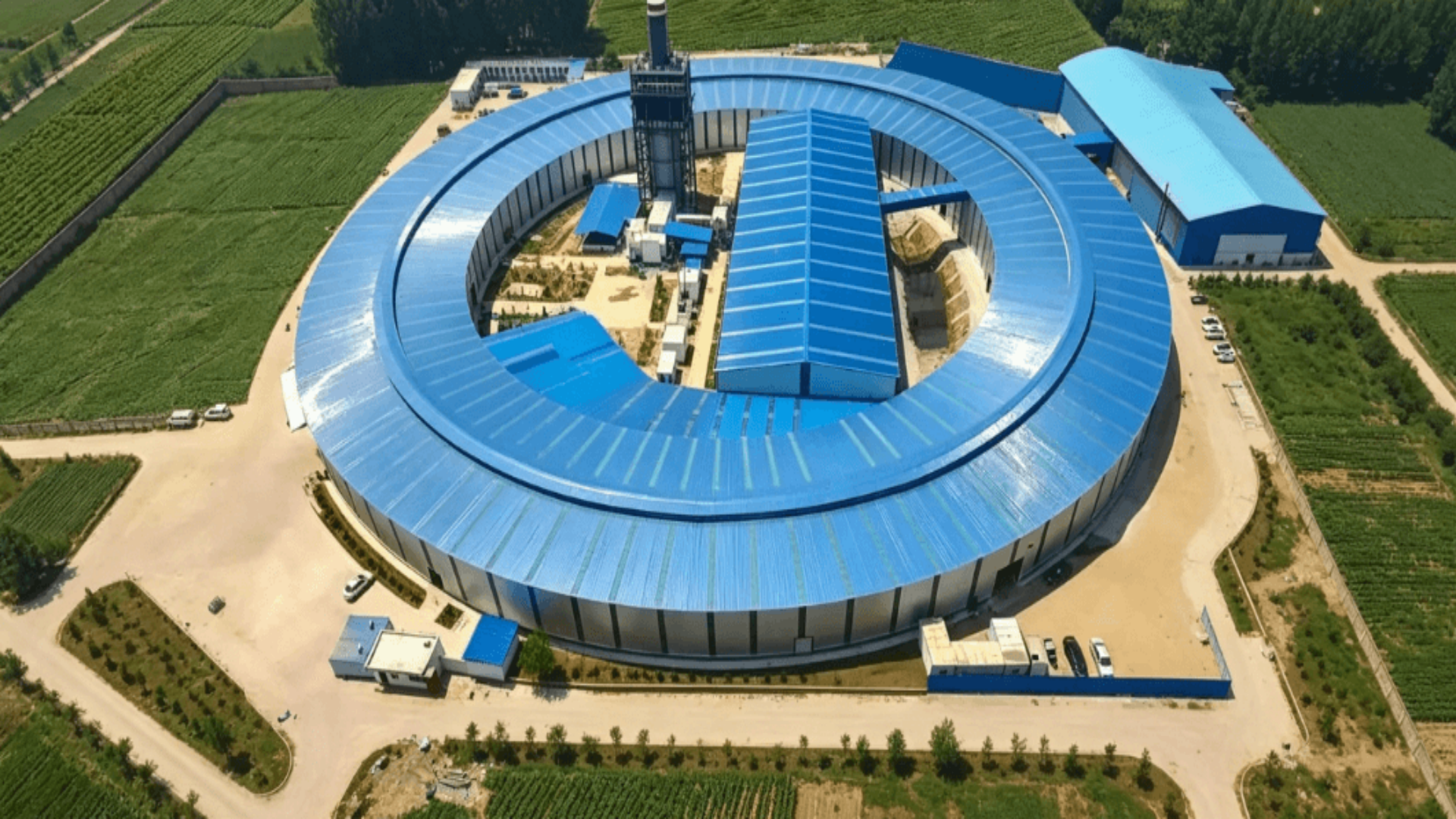
The rotary kiln is often described as the “workhorse” of modern industrial processing. From cement production and lime calcination to hazardous waste incineration and mineral ore roasting, these massive thermal cylinders facilitate chemical reactions and phase changes at temperatures often exceeding 1,500°C. To an outside observer, a rotary kiln appears to be a simple rotating pipe. However, the engineering complexity hidden within—the “rotary kiln inside”—is a sophisticated balance of thermodynamics, mechanical stability, and material science.
Understanding the internal structure of a rotary kiln is essential for plant engineers and project managers tasked with optimizing throughput and extending the lifecycle of the equipment. The efficiency of a kiln is determined not just by its size, but by how effectively its internal components manage heat transfer and material flow.
The Anatomy of a Rotary Kiln: Core Internal Components
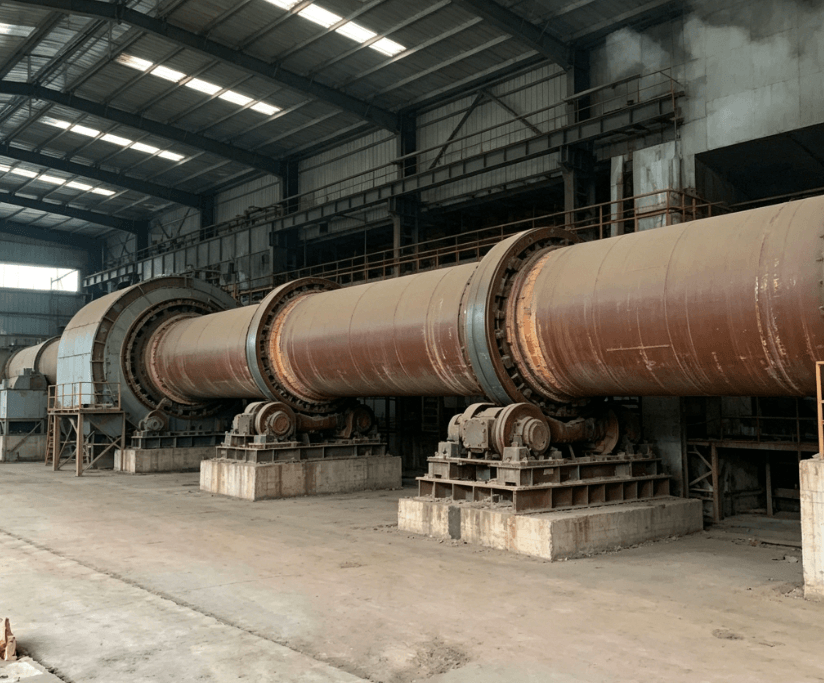
The internal environment of a rotary kiln is a high-temperature, abrasive, and often chemically corrosive atmosphere. To withstand these conditions, the structure is divided into several critical layers and mechanical assemblies.
1. The Steel Shell
The outermost layer is the kiln shell, typically fabricated from thick carbon steel plates. While technically the exterior, its design dictates the internal volume and structural integrity. The shell must be rigid enough to support the internal refractory weight while remaining flexible enough to withstand thermal expansion without cracking. In high-performance systems, such as those engineered by Yaxin Kiln, the shell thickness is strategically varied along the length to account for different stress points.
2. Refractory Lining
The refractory lining is the most critical element inside a rotary kiln. It serves two primary purposes: protecting the steel shell from extreme temperatures and retaining heat to facilitate the chemical process.
- Refractory Bricks: Often used in the burning zone, these are high-alumina or magnesite-chromite bricks designed for maximum heat resistance.
- Castable Refractories: Often used in complex geometries like the kiln nose or tail, these are poured and set like concrete.
- Insulating Layers: Sometimes a secondary layer of insulation is placed between the brick and the shell to further reduce heat loss and lower the shell’s skin temperature.
3. Internal Heat Exchangers (Chains and Lifters)
In specific applications like wet-process cement or mineral processing, the “rotary kiln inside” features internal heat exchangers.
- Chain Systems: Heavy metal chains are hung in the inlet section. As the kiln rotates, the chains dip into the wet material and then hang in the hot gas stream, increasing the surface area for heat transfer and breaking up lumps.
- Lifters/Flights: These are metal or ceramic plates that “lift” the material and drop it through the hot gas stream (creating a “curtain” of material), significantly improving drying efficiency.
Thermal Zones and the Working Process
The working process inside a rotary kiln is defined by a counter-current flow. The raw material enters at the upper (cool) end, while the heat source (burner) is located at the lower (discharge) end. This ensures the material is gradually heated as it moves down the slope.
| Zone Name | Internal Temperature Range | Key Process Occurring |
| Drying Zone | 200°C – 400°C | Evaporation of free moisture in the raw feed. |
| Pre-heating Zone | 400°C – 800°C | Removal of chemically bound water and initial heating. |
| Calcining Zone | 800°C – 1,100°C | Decomposition of carbonates (e.g., CaCO₃ to CaO and CO₂). |
| Sintering/Burning | 1,200°C – 1,550°C | Chemical fusion and formation of final products (e.g., Clinker). |
| Cooling Zone | 1,000°C – 100°C | Initial cooling before material exits into the dedicated cooler. |
As the kiln rotates—typically at speeds of 0.5 to 4.5 RPM—the material undergoes a “tumbling” motion. This gravity-driven movement ensures that every particle is exposed to the hot gases and the radiant heat from the refractory walls.
Mechanical Support and Drive Systems
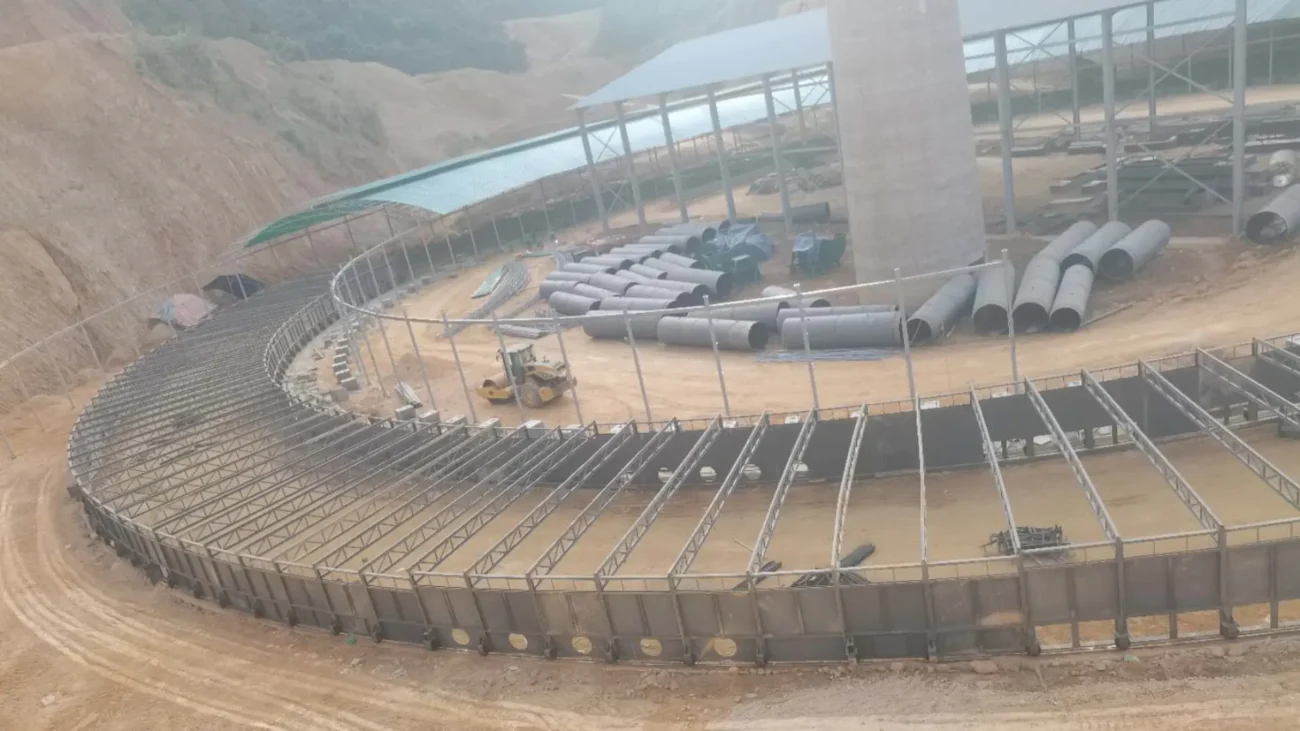
While the thermal process happens inside, it is enabled by external mechanical components that interface with the internal structure.
- Riding Rings (Tyres): These large steel rings encircle the shell and sit on roller assemblies. They allow the kiln to rotate with minimal friction.
- Girth Gear: A massive gear bolted to the shell that transmits the torque from the motor and gearbox.
- Thrust Rollers: These prevent the kiln from sliding off its supports due to its slight inclination (usually 3% to 5% slope).
For industrial operators, the alignment between the internal refractory weight and these external support points is vital. Misalignment can lead to “hot spots” on the shell, where the internal refractory has failed, allowing heat to deform the steel.
Application-Specific Internal Design Logic
The internal configuration of a rotary kiln changes based on the material being processed.
- Cement Kilns: These require a “coating” to form on the refractory bricks. This coating of semi-molten material protects the bricks from the intense heat of the sintering zone.
- Waste Incinerators: These kilns often lack internal heat exchangers to prevent clogging. They focus on high residence time and high turbulence to ensure complete destruction of hazardous molecules.
- Metallurgical Kilns: For processes like nickel ore reduction, the internal atmosphere must be strictly controlled (reducing vs. oxidizing), requiring specialized seals at both ends of the kiln.
Expert manufacturers like Yaxin Kiln specialize in tailoring these internal geometries. Whether it is adjusting the length-to-diameter (L/D) ratio or selecting the specific refractory chemistry, the “inside” of the kiln is engineered to match the specific thermal profile of the client’s raw material.
Critical Indicators of Internal Health
Maintaining the “rotary kiln inside” is a high-stakes task. Engineers monitor several signals to ensure the internal components are functioning correctly:
- Shell Temperature Scanning: Infrared scanners monitor the exterior of the shell. A sudden spike in temperature indicates a lost refractory brick or a thinning lining.
- Exit Gas Analysis: Monitoring CO, CO₂, and O₂ levels helps determine if the internal combustion is efficient.
- Pressure Differentials: Changes in internal pressure can signal “ringing” or “crusting,” where material build-up restricts the flow of gases.
Conclusion
The rotary kiln is more than just a rotating furnace; it is a precisely tuned thermal reactor. From the selection of refractory materials to the placement of internal lifters, every element inside the kiln serves a specific purpose in the conversion of raw materials into high-value industrial products. For organizations looking to implement this technology, focusing on the internal engineering—rather than just the external dimensions—is the key to long-term operational success.
FAQ
What is the primary purpose of the refractory lining inside a rotary kiln?
The refractory lining protects the steel shell from high temperatures and corrosive gases while acting as a heat reservoir to maintain the thermal energy required for the process.
Why is a rotary kiln tilted?
The kiln is installed at a slight angle (usually 3–5%) to allow gravity to assist in moving the material from the feed end to the discharge end as the cylinder rotates.
What causes “hot spots” on the kiln shell?
Hot spots occur when the internal refractory lining is damaged, thin, or has fallen out. This allows the high internal heat to reach the steel shell directly, which can lead to structural warping or failure.
How long does the internal refractory lining last?
Refractory life varies by industry. In cement kilns, the burning zone lining may last 6 to 12 months, while in less aggressive environments, it can last several years.
What is the difference between a direct-fired and indirect-fired rotary kiln?
In a direct-fired kiln, the flame and combustion gases come into direct contact with the material inside. In an indirect-fired kiln, the heat is applied to the outside of the shell, and the material is heated through the shell wall, often used for materials that must remain uncontaminated by combustion by-products.
Reference Sources
ASTM C155: Standard Classification of Insulating Firebrick.
ISO 12677: Chemical analysis of refractory products by X-ray fluorescence (XRF).
The Cement Plant Operations Handbook: Comprehensive guide on kiln zones and clinker chemistry.
SME Mineral Processing & Extractive Metallurgy Handbook: Technical standards for metallurgical kiln design.