
ISO and OHSAS18001 Kiln Manufacturing: A Quality Guide

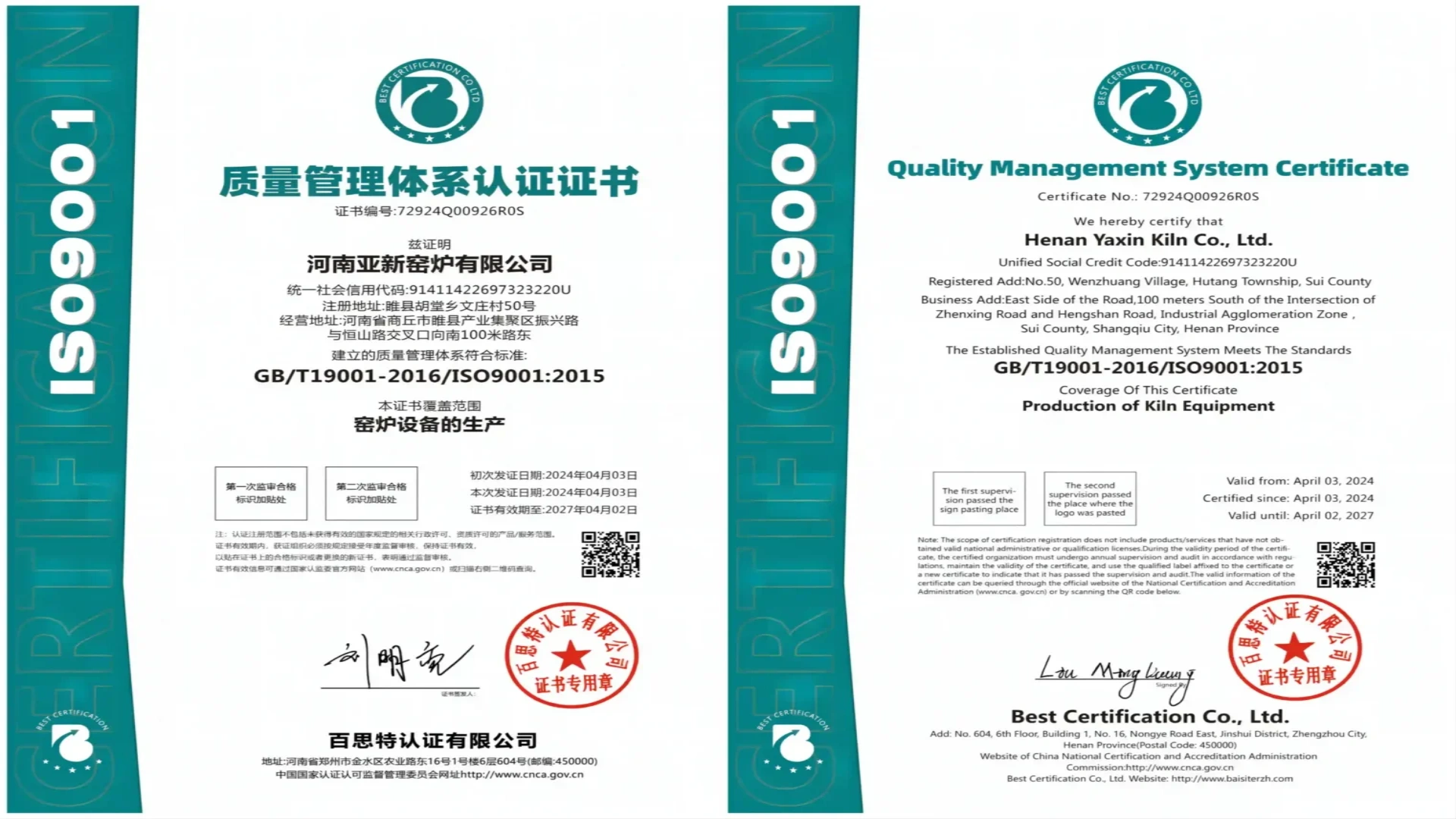
Industrial kiln manufacturing is a high-stakes engineering field involving extreme temperatures, structural pressure, and complex combustion systems. For manufacturers in China, adhering to international standards like ISO and OHSAS18001 is not merely about a certificate on the wall. These frameworks govern the integrity of the thermal equipment and the safety of the personnel building them.
When evaluating a kiln for ceramics, metallurgy, or chemical processing, technical compliance acts as a benchmark for operational reliability. A kiln is a long-term capital investment; its engineering must withstand decades of thermal cycling without structural fatigue.
The Impact of ISO 9001 on Thermal Engineering Quality
ISO 9001 serves as the backbone of quality management for kiln production. In a manufacturing environment, this standard ensures that every phase of the project—from the initial design of the refractory lining to the final assembly of the burner system—follows a documented, repeatable process.
For a kiln manufacturer, ISO 9001 compliance typically involves:
- Material Traceability: Ensuring the steel used for the kiln shell meets specific ASTM or GB grades.
- Welding Integrity: Standardizing welding procedures (WPS) to prevent leaks in pressurized systems.
- Precision Calibration: Testing PLC (Programmable Logic Controller) systems to ensure temperature accuracy within ±1°C.
By maintaining these standards, manufacturers reduce the risk of catastrophic failure during the “heat-up” phase. Traceability ensures that if a specific refractory brick fails prematurely, the source batch can be identified and corrected across the entire production line.
Transitioning from OHSAS18001 to ISO 45001 in Kiln Factories
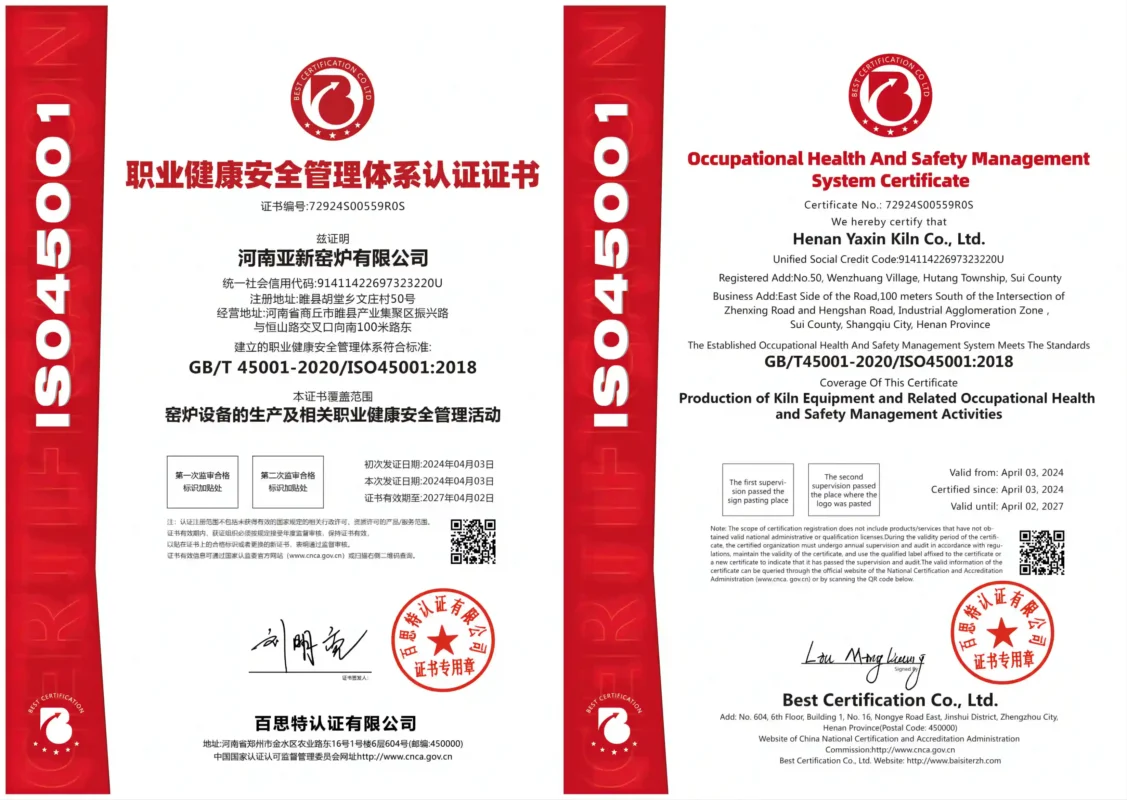
The “ISO and OHSAS18001 kiln” keyword combination often refers to the legacy health and safety standards that have now largely transitioned to ISO 45001. In the context of a China-based kiln factory, these safety protocols are critical due to the high-risk nature of the work environment.
| Feature | OHSAS 18001 / ISO 45001 Focus | Impact on Kiln Quality |
| Hazard Identification | Managing high-voltage testing and heavy lifting | Reduces factory accidents that delay lead times. |
| Operational Control | Strict protocols for handling hazardous insulation | Ensures the kiln is built without contaminating the workplace. |
| Risk Management | Preventive maintenance of manufacturing machinery | Guarantees the precision of CNC cutting for kiln components. |
A manufacturer committed to OHSAS18001 (or ISO 45001) demonstrates a culture of discipline. Engineers who work in a safe, controlled environment are significantly less likely to overlook critical tolerances during the fabrication of rotary kilns or tunnel kilns.
Technical Alignment: Safety Standards and Kiln Performance
The relationship between safety certification and kiln performance is direct. For example, a manufacturer following OHSAS18001 protocols will have rigorous testing phases for gas leak detection and electrical insulation. These are not just safety measures for the workers; they are performance indicators for the end-user.
In large-scale kiln projects, such as those involving advanced thermal insulation and energy-saving designs, the “Plan-Do-Check-Act” (PDCA) cycle inherent in ISO systems ensures that energy efficiency targets are actually met. At Yaxin Kiln, the integration of these quality systems allows for the development of high-performance kilns that prioritize both technical innovation and structural safety.
How Certifications Mitigate Risk for Global Buyers
Procuring industrial equipment from overseas involves inherent risks regarding material quality and engineering standards. ISO certifications provide a universal language of trust. When a manufacturer holds an ISO and OHSAS18001 (ISO 45001) certification, it indicates:
- Systematic Testing: The kiln will undergo factory acceptance testing (FAT) based on standardized checklists.
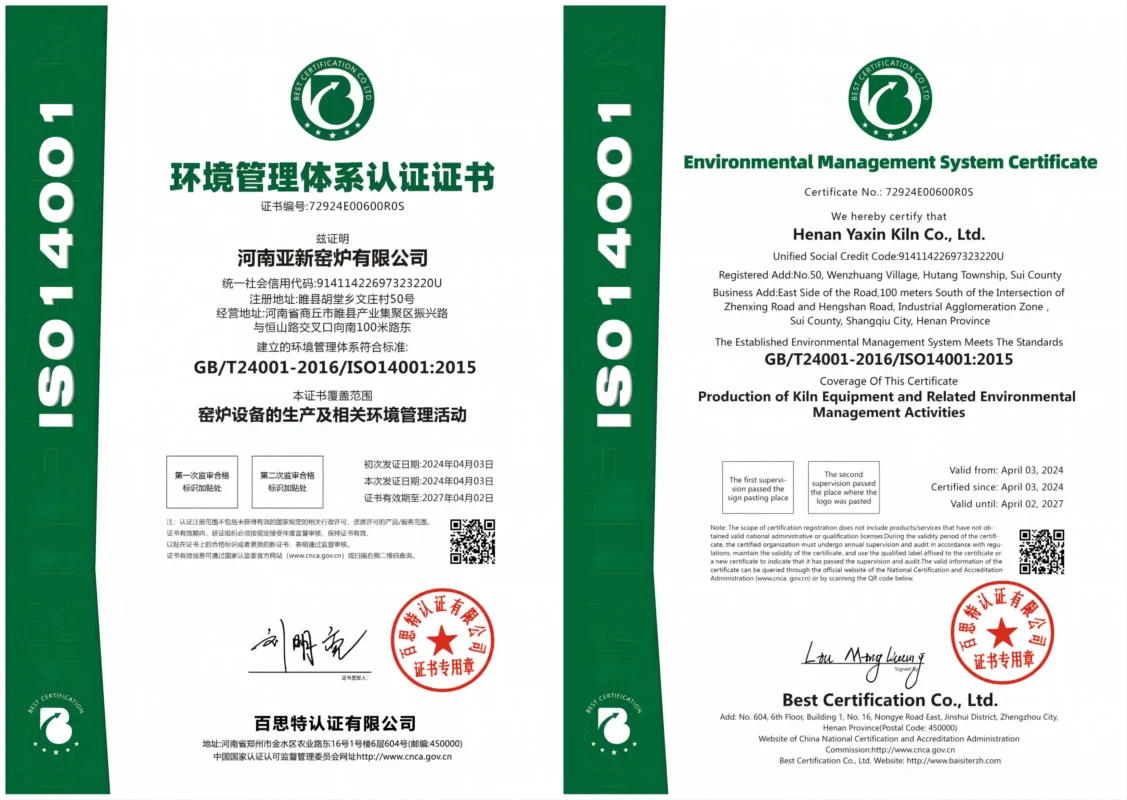
- Environmental Accountability: Many manufacturers also hold ISO 14001, which governs how waste (like discarded refractory materials) is handled.
- Consistency: Whether it is the first kiln or the tenth, the manufacturing tolerances remain consistent due to standardized SOPs.
Strategic Importance of Compliance in Thermal Equipment
In the industrial sector, “compliance” is often synonymous with “durability.” A kiln that is manufactured under a certified quality management system is more likely to feature superior thermal expansion joints, better-aligned drive systems (for rotary kilns), and more robust insulation layers.
Selecting a partner who adheres to these global benchmarks ensures that the equipment complies with international safety codes, which is essential for insurance and local regulatory approval in the buyer’s home country.
FAQ
What is the difference between OHSAS 18001 and ISO 45001 for kiln manufacturers?
OHSAS 18001 was the previous international standard for occupational health and safety. It has been replaced by ISO 45001. Both aim to reduce workplace injuries and ensure a safe manufacturing environment, which is crucial for the complex assembly of industrial kilns.
Why does ISO 9001 matter for the end-user of a kiln?
ISO 9001 ensures the manufacturer has a system to catch defects before the kiln leaves the factory. For the buyer, this means fewer on-site repairs, accurate temperature control, and a kiln shell that won’t warp due to poor welding or material selection.
How do these certifications affect the energy efficiency of a kiln?
While the certifications themselves are about processes, the “Plan-Do-Check-Act” cycle of ISO standards forces manufacturers to measure and improve their designs. This leads to more precise construction, which prevents heat loss and improves the overall thermal efficiency of the kiln.
Is OHSAS 18001 still valid in China?
Most reputable manufacturers in China have already migrated to ISO 45001. If a supplier still cites OHSAS 18001, it is advisable to ask about their transition plan to the newer ISO 45001 standard to ensure their safety systems are up to date.
Reference Sources
- ISO (International Organization for Standardization): ISO 9001 Quality Management
- ISO (International Organization for Standardization): ISO 45001 Occupational Health and Safety
- ASTM International: Standard Specifications for Refractory Materials
- SGS Global Services: Industrial Manufacturing Certification Overview