
How to Select Brick Making Machine Capacity for a Production Line

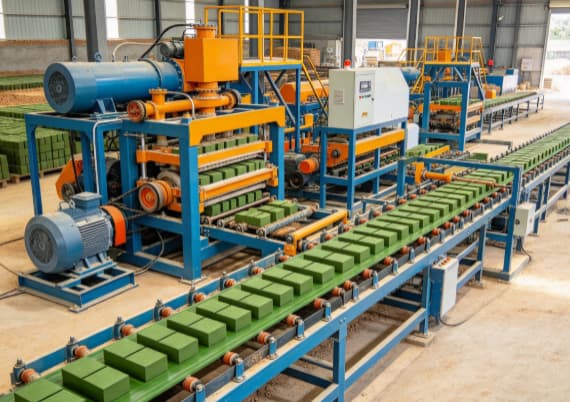
Selecting brick making machine capacity means matching the forming rate to the whole production route, not choosing the largest machine on a catalogue. The required rate depends on brick dimensions, green-body behaviour, working hours, changeovers and the capacity of drying, firing, unloading and packing. A machine that forms faster than the downstream plant can process may create work-in-progress rather than more saleable bricks.
Start with saleable output, not the machine nameplate
Define the output the business needs to ship: accepted bricks per day or per year, for each product format. Then work backwards through expected yield and planned operating time. Keep green-brick output, fired output and saleable output separate. At a target of 100,000 accepted bricks per day and a validated overall yield of 96%, the line must form roughly 104,200 units, with additional headroom for downtime. This is an illustration; actual yield must come from plant trials or comparable operating records.
The forming machine rating should also state the product size and operating conditions behind it. A rate quoted for a small solid unit cannot be transferred directly to a larger hollow product. Die design, extrusion pressure, moisture, vacuum conditions, cutting arrangement and green strength all affect practical output.
Check the process stages that limit the rate
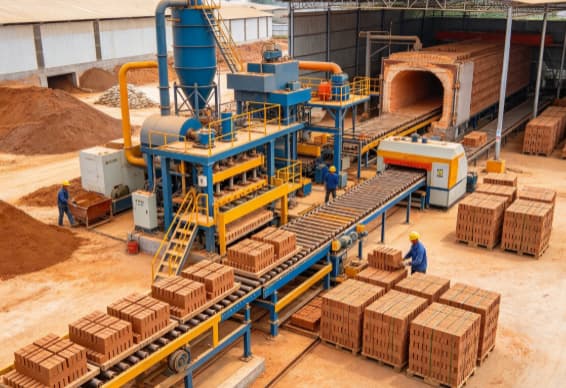
A useful capacity review follows the material from preparation to dispatch. Compare each stage on a common basis, such as pieces per hour for a defined brick format or tonnes of dry material per hour. Check the following interfaces:
- Preparation: Can feeders, crushers, mixers and reclaim systems deliver a stable feed at the required rate?
- Forming and cutting: Is the rated speed demonstrated with the specified clay body, die and product dimensions?
- Green handling: Can transfer equipment move soft units without distortion or damage?
- Drying: Is the chamber or tunnel dryer able to remove the required water within the available cycle?
- Firing and cooling: Does the kiln loading pattern and residence time support the same daily flow?
- Sorting and packing: Can inspection, stacking and dispatch keep pace with fired output?
Allow for product mix and operating reality
A plant making several brick formats needs a capacity schedule for each product, not one blended headline figure. Changeovers may involve dies, cutting wires, settings, stacking patterns or dryer schedules. Record the time needed for each change and whether the line can keep running during the adjustment. Seasonal clay moisture and changes in raw-material blend can also alter forming behaviour.
Ask for sustained production data under a defined product specification. A short demonstration at peak speed is not the same as a full shift with normal stops, rejects, cleaning and operator tasks. Capacity guarantees should identify the test duration, acceptable quality limits, raw-material basis and measurement point.
Connect forming capacity to kiln and dryer design
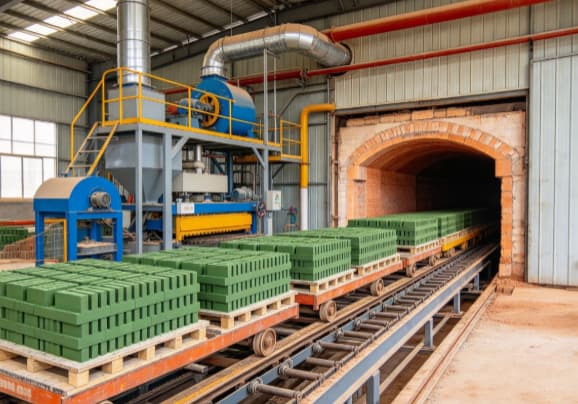
The dryer and kiln are often the most consequential downstream constraints. Drying capacity depends on water to be removed, product arrangement, airflow, temperature and humidity profile, and the sensitivity of the clay body to shrinkage. Kiln capacity depends on usable loading space, setting pattern, firing cycle, push or transfer interval and the product mix. These parameters need to be reviewed together rather than inferred from a single brick-per-day figure.
Yaxin describes itsMobile Rotary Tunnel Kiln and Prefabricated Tunnel Kiln as distinct kiln configurations. Their handling and layout interfaces should be checked against the proposed forming and drying line. The clay brick production process guide provides a useful overview of the linked process stages.
What to include in a capacity specification
Before comparing machine offers, prepare a short technical basis containing: product drawings and tolerances; target saleable output; clay test results and seasonal variation; expected working hours; product mix; forming method; downstream dryer and kiln details; automation level; and the agreed performance-test method. Ask suppliers to state rated output, expected sustained output and exclusions separately.
For a new plant, the capacity schedule should be part of the overall brick plant layout review, not a standalone equipment decision. If the kiln package is being selected at the same time, review the Yaxin kiln options against the project data and request a configuration-specific assessment.
A simple capacity worksheet
Create a stage-by-stage table with the machine, product basis, rated rate, expected sustained rate, operating hours, planned availability and measured yield. Keep the same unit throughout the table. If one supplier reports tonnes of wet clay and another reports finished pieces, convert the figures using the tested product mass and moisture basis before comparing them. Add a note beside every assumption showing whether it comes from a laboratory test, supplier guarantee, operating record or preliminary estimate. This makes the capacity model auditable when the product mix or shift pattern changes. It also helps identify where a modest improvement in handling or drying could release more saleable output than purchasing a larger extruder.
Frequently Asked Questions
Is a higher-capacity brick making machine always better?
No. A higher rating only adds value when preparation, handling, drying, firing and packing can process the additional output without lowering quality or increasing work-in-progress.
How should machine capacity be stated?
State pieces per hour for a named brick size and clay condition, together with operating hours, expected sustained rate, yield assumptions and downstream constraints.
Should kiln capacity determine the forming machine size?
Both should be sized together. The target saleable output sets the system requirement, while the dryer, kiln and forming machine must be balanced to that common target.
Suggested CTA
Discuss your project requirements with Yaxin Kiln. Contact the engineering team with your product drawings, raw-material information, target output and site details.