
Movable Tunnel Kiln Case Studies: Performance & ROI Analysis

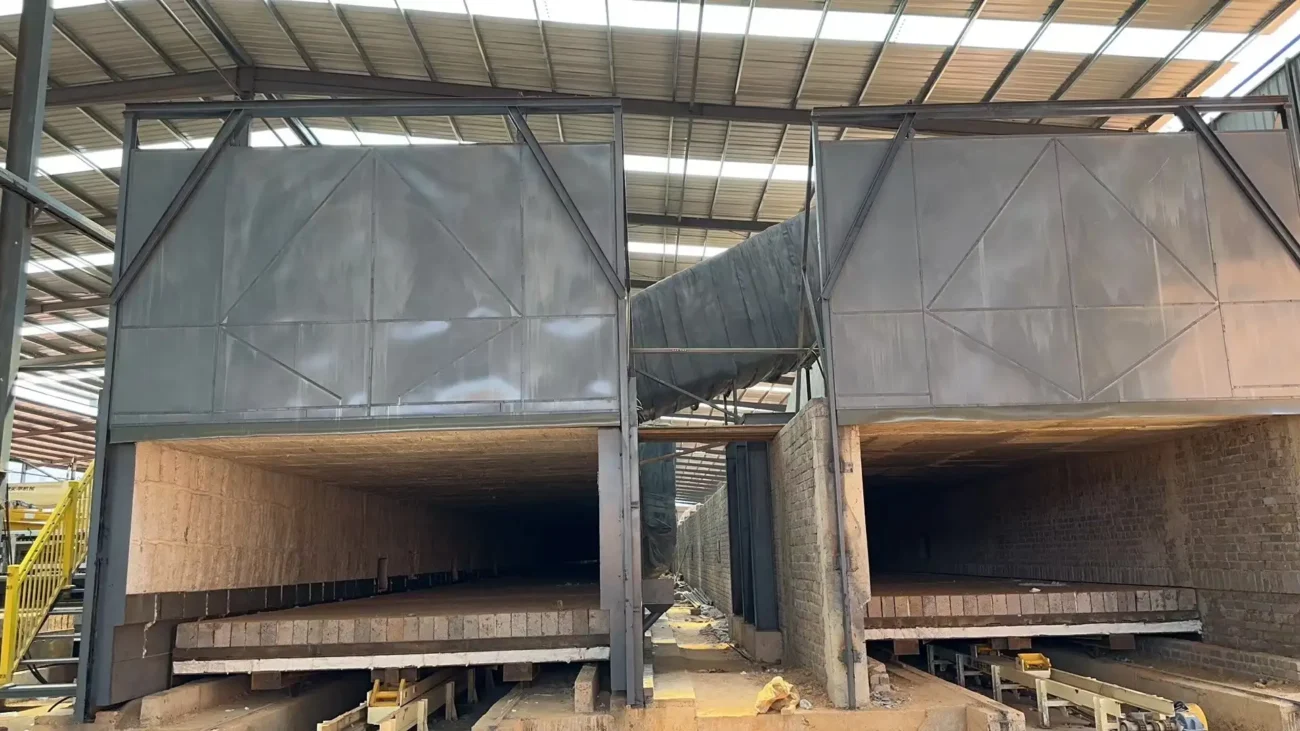
The industrial brick manufacturing sector is undergoing a fundamental shift from traditional fixed-structure kilns to automated, movable systems. A movable tunnel kiln operates on a unique thermodynamic principle: while traditional tunnel kilns move the product through a stationary heated tunnel, the movable kiln travels on tracks over stationary stacks of bricks.
For facility managers and investors, reviewing a movable tunnel kiln case study provides the necessary empirical data to justify the capital expenditure. These systems are engineered to address the three most significant bottlenecks in heavy clay production: energy consumption, labor intensity, and installation lead times.
The Engineering Logic of Movable Tunnel Systems
Traditional kilns require massive civil engineering works and months of on-site masonry. In contrast, movable kilns are often prefabricated in modular sections. This modularity allows for precision engineering in a controlled factory environment before being shipped to the site.
From a manufacturing standpoint, the movable kiln eliminates the need for kiln cars—a major source of thermal loss and maintenance costs. By firing bricks directly on the floor or a stationary base, the system maintains superior thermodynamic stability. Data from recent kiln project examples suggests that removing the mass of kiln cars from the heating cycle can reduce fuel consumption by up to 15-20%.
Case Study 1: Rapid Deployment in High-Volume Brick Plants
In large-scale infrastructure projects, the timeline for “first brick out” is a critical KPI. A prominent project example involved a facility requiring an annual output of 60 million standard bricks.
- Project Scope: Installation of a 120-meter movable tunnel kiln.
- Key Challenge: The site was located in a region with limited skilled masonry labor and a strict 4-month commissioning window.
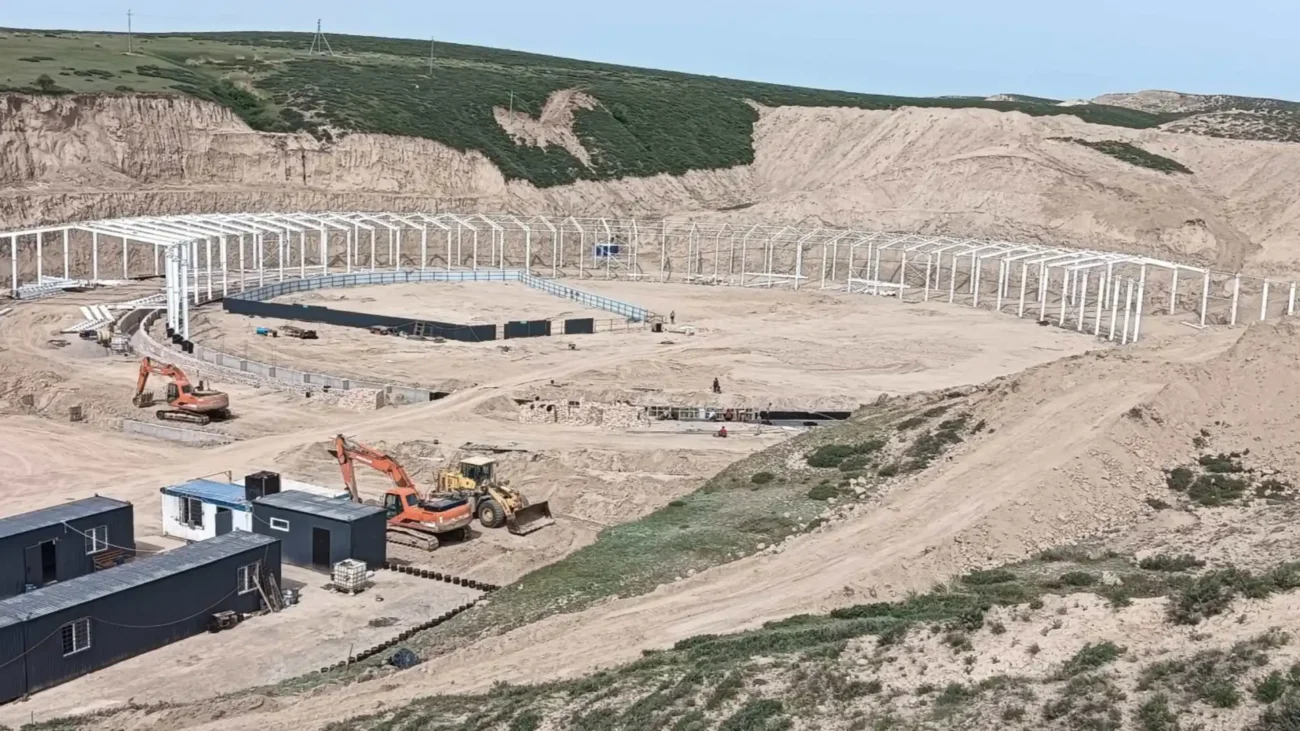
- Solution: The engineering team utilized a prefabricated modular setup. This allowed for parallel processing; while the site foundation was being poured, the kiln modules were being lined with refractory fiber in the factory.
- Results: The facility achieved full production capacity within 14 weeks of breaking ground, compared to the 12-month average for traditional fixed tunnel kilns.
Case Study 2: Energy Efficiency and Fuel Consumption Reduction
Energy is the single largest operational cost in brick making. A comparative movable tunnel kiln case study in a high-fuel-cost environment focused on the integration of advanced heat recovery systems.
| Performance Metric | Traditional Fixed Kiln | Yaxin Movable Tunnel Kiln | Improvement |
| Fuel Consumption (kJ/kg) | 1,800 – 2,100 | 1,400 – 1,550 | ~22% Reduction |
| Electricity Usage | High (Heavy car movement) | Moderate (Light kiln travel) | ~30% Reduction |
| Thermal Loss | High (Through cars/seals) | Low (Direct floor firing) | Significant |
| Labor Requirement | High (Car loading/unloading) | Low (Stationary stacking) | ~40% Reduction |
In this project, the use of high-velocity burners and a PLC-controlled air-balancing system allowed the plant to recycle 90% of the heat from the cooling zone back into the preheating zone. This “closed-loop” thermal logic is a hallmark of modern industrial kiln project examples.
Technical Constraints and Mitigation Strategies
While movable kilns offer high ROI, engineers must account for specific technical constraints. The “thermal bridge” at the base of the kiln where it meets the ground must be managed with high-precision sand seals.
Experienced project managers prioritize the “dry-out” phase. Because the kiln moves over stationary green bricks, the foundation must be perfectly level (typically within ±2mm tolerances). Any deviation in the track level can lead to uneven heat distribution or mechanical stress on the kiln’s drive system.
Furthermore, the refractory lining must be designed to handle the mechanical vibrations of travel. Utilizing lightweight ceramic fiber modules instead of heavy firebricks reduces the dead weight of the kiln, allowing for faster travel speeds and lower energy draw from the drive motors.
Evaluating ROI: Beyond the Initial CAPEX
When analyzing movable tunnel kiln case studies, B2B procurement advisors look at the “Total Cost of Ownership” (TCO). The financial advantages extend beyond simple fuel savings:
- Reduced Civil Works: Stationary firing bases are less expensive to build and maintain than high-tolerance kiln car tracks.
- Scalability: Modular kilns can be extended by adding sections if market demand increases, offering a level of future-proofing impossible with masonry kilns.
- Residual Value: Unlike fixed kilns, which are sunk costs, a movable kiln can be disassembled and relocated if a clay source is exhausted.
Actual project data indicates that for plants producing over 30 million bricks annually, the payback period for a movable system is typically 18 to 24 months shorter than a traditional alternative.
FAQ: Movable Tunnel Kiln Applications
How does a movable kiln handle different clay types?
Modern systems use automated firing curves managed via PLC. By adjusting the travel speed and burner intensity, the kiln can be calibrated for various clay compositions, including those with high carbon or moisture content.
What is the typical lifespan of a movable kiln?
With an ISO-compliant maintenance schedule, the structural steel and drive systems are rated for 20+ years. The internal refractory fiber modules typically require inspection every 3-5 years, depending on the firing temperatures.
Can a movable kiln be converted from coal to gas firing?
Yes. Most modular movable kilns are designed with “multi-fuel” burner housings. Switching from solid fuel to natural gas or biomass involves swapping the burner manifolds and updating the control software, which can often be done in under 48 hours.
What are the foundation requirements for a movable kiln?
The system requires a reinforced concrete track bed. Because the kiln weight is distributed across multiple wheels on the tracks, the point-load pressure is often lower than that of a loaded kiln car in a traditional setup.
Reference Sources
- ISO 13577: Industrial furnaces and associated processing equipment — Safety and energy efficiency standards.
- ASTM C155: Standard Classification of Insulating Firebrick (Critical for refractory evaluation in case studies).
- IEA (International Energy Agency): Industrial Energy Efficiency Reports — Ceramic and Brick Manufacturing Sector.
- SGS Industrial Inspections: Technical whitepapers on modular thermal equipment commissioning.