
Smarter Tunnel Kiln Temperature Control for Profitable Plants

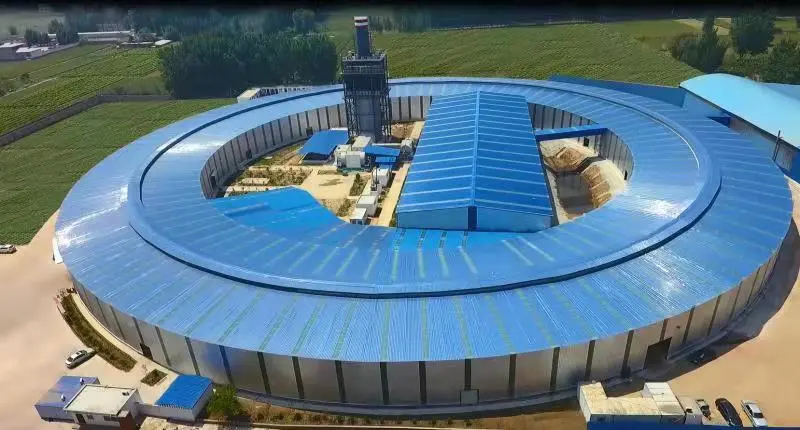
The effective temperature control of a tunnel kiln is the biggest factor in determining whether a brick manufacturing enterprise achieves stable quality, lower fuel consumption, and stronger economic returns. With the move away from manual periodic kilns to highly mechanized and automated continuous lines, the ability to control the thermal conditions at every stage of firing is the backbone of a truly modern, profitable operation.
The Impact of Temperature Accuracy on Plant Performance
Traditional brick firing involves manual control of heating and monitoring of conditions. The result is an increase in labor intensity, uneven firing, cracking, and color variation. In contrast, a modern automated tunnel kiln uses zoned temperature control for preheating, firing, and cooling sections with a PLC-based system with distributed temperature-measuring points. The result is a production process that is not so dependent on the experience of the operator.
Three-Zone Control: Constant Firing
The principle of the counter-current heat exchange in the prefabricated tunnel kiln, with the products passing through a linear route, is divided into three digitally controlled thermal stages:
Pre-Heating Zone – Products are introduced gradually to remove residual moisture and prevent thermal shock. The hot exhaust gases are distributed uniformly by top-blowing fans and side flue adjustments so that the bricks in the center of the kiln car heat up at the same time as the bricks on the edges.
Firing Zone: Groups of automated burners use proportional adjustment technology to maintain the peak firing temperature within a tight preset range. Arrays of burners are staggered at different levels that dynamically adjust air-fuel ratio and jet velocity to instantaneous micro-pressure variations to deliver the same thermal energy to top-deck bricks and bottom-deck bricks.
Cooling Zone: Cool air from the kiln exit flows in counterflow to cool hot clinker. The cooling rate is controlled accurately to avoid wind-shock cracking during the quartz inversion stage and to recover high-energy residual heat for the preheating zone.
How Prefabrication Improves Temperature Stability
Unlike traditional kilns that are built on site, a prefabricated tunnel kiln is made from components that are fabricated in advance, allowing for better quality control and faster installation. The steel framework, the insulated panels, and the rail system make it a structurally stable environment with homogeneous temperature fields.
Some key structural advantages include:
• Uniform temperature distribution through the kiln cross section
• Excellent thermal insulation properties, which minimizes heat loss
• High throughput, able to handle large volumes continuously
• Modular architecture for easy assembly, expansion, and maintenance
High-density, lightweight refractory linings incorporated into steel frames provide great resistance to thermal shock. The continuous production model avoids the violent thermal expansion and contraction cycles of intermittent operation, so both the main kiln lining and the internal kiln furniture are in a state of constant thermal equilibrium, safely increasing the primary maintenance life of the entire system to 5 to 7 years.
Changing work conditions and economic results
Tunnel kilns’ high mechanization and automation functions can greatly change the production process of brick enterprises. It greatly improves the working conditions of employees, reduces the labor intensity of operators, and helps the brick-making enterprise to become a truly modern enterprise with better economic benefits.
The business case for procurement decision-makers is clear:
• Reduced dependence on skilled labor
• Increased product consistency and reduced defects
• Continuous operation for large-scale production
• Optimize heat exchange and insulation to reduce fuel consumption
Selecting the Appropriate System for Your Process
It’s important to consider your production capacity needs, product variety, fuel type and availability, and your team’s maintenance capabilities when evaluatin