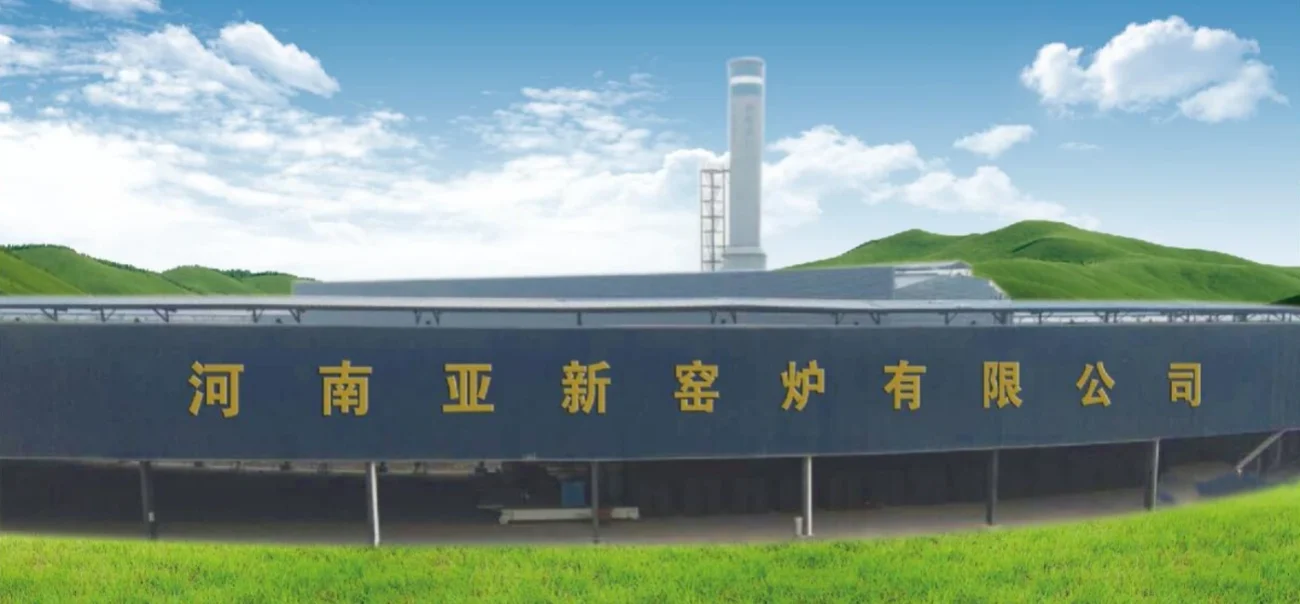
What Is a Mobile Rotary Tunnel Kiln: A Modern Solution for Brick Production

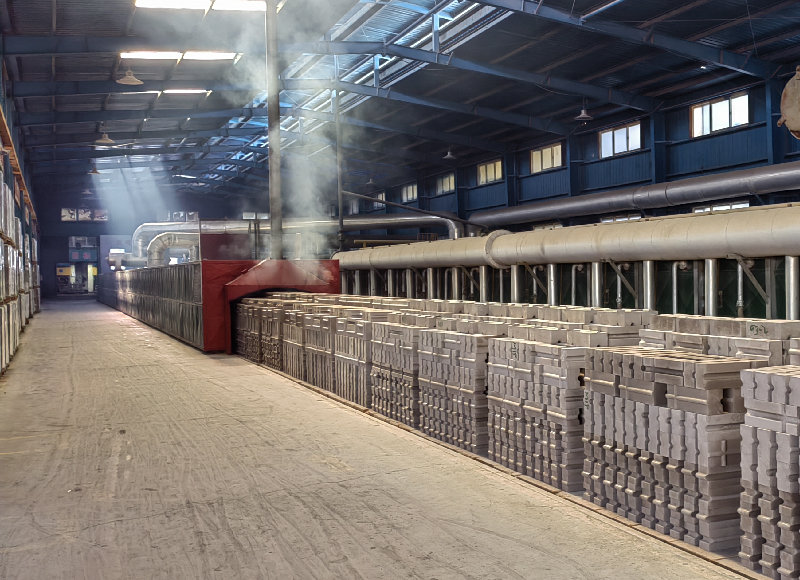
If you are evaluating firing equipment for a brickmaking operation, you may have encountered the term mobile rotary tunnel kiln. Unlike conventional fixed kilns, this concept combines the continuous firing efficiency of a tunnel kiln with the flexibility of a movable, modular structure. In practice, a true mobile rotary tunnel kiln does not physically rotate the entire kiln body; instead, it refers to a prefabricated, sectionalized tunnel kiln that can be disassembled, relocated, and reassembled at a new site—effectively offering “rotational” deployment across multiple projects. Our prefabricated tunnel kiln embodies this principle, delivering high mechanization, automation, and the ability to adapt to changing production locations.
Defining the Mobile Rotary Concept
Traditional tunnel kilns are massive, stationary structures built on site with refractory bricks and concrete. Once constructed, they cannot be moved without demolition. A mobile rotary tunnel kiln breaks this limitation. It is manufactured in standardized modules—typically double assembly, triple assembly, or even five assembly configurations—that bolt together on a prepared foundation. The “rotary” aspect comes from the ability to rotate the kiln’s orientation or to redeploy the same set of modules to different sites, much like rotating equipment between job sites. This makes it ideal for brickmakers who operate temporary plants near raw material sources or who need to relocate after resources are exhausted.
Key Characteristics of Our Prefabricated Tunnel Kiln
Our company’s design philosophy treats the kiln as a precision-engineered product rather than a one-off construction project. Here are the defining features:
- Large cross-section, modular production—Each module is factory-built with standardized molds, ensuring consistent dimensions and quality. Assembly on site takes 30–40 days with only 20 general workers, compared to 70–80 days and 50 skilled bricklayers for a conventional kiln.
- Double sealing design—Eliminates multiple side kiln walls, reducing heat loss by 8% per side wall. The kiln car uses a double-channel seal to guarantee smooth, reliable operation.
- Rapid drying system—New technology handles high-moisture raw materials (such as construction waste, sludge, or coal gangue) efficiently, solving a common bottleneck in brick production.
- High automation with 5G and central control—Digital roasting control minimizes human error. Operators can monitor and adjust temperatures remotely, improving consistency and reducing labor intensity.
- International-sized steel frame – Ensures structural durability and low maintenance costs. The kiln body remains stable even under thermal cycling.
- Flue gas reburning system – Recirculates high-oxygen exhaust back into the cooling zone for secondary combustion, lowering emissions and meeting discharge standards.
How the Mobile Rotary Tunnel Kiln Works
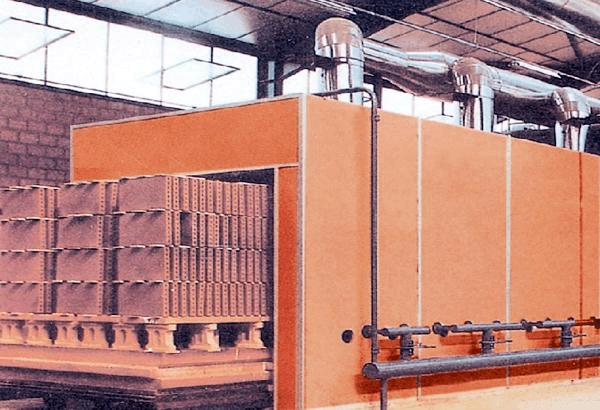
The kiln consists of two connected sections: a drying section and a roasting section.
- Drying section – Equipped with double doors, it uses waste heat from the roasting zone to dehydrate green bricks. High-oxygen flue gas is extracted and sent to the reburning system, while the dried bricks proceed to the roasting chamber.
- Roasting section – Also double-gated for stable airflow. Kiln cars pass sequentially through preheating, firing, insulation, and cooling zones. The dual-seal car design prevents air leakage, ensuring uniform temperature distribution.
Because the entire kiln is prefabricated, it can be disassembled into standard components and reinstalled elsewhere if needed. Damaged wall panels can be swapped out without stopping production—simply remove the faulty module and insert a replacement.
Performance Comparison: Prefabricated vs. Conventional Tunnel Kilns
| Aspect | Conventional Tunnel Kiln | Prefabricated (Mobile Rotary) Tunnel Kiln |
| Fuel flexibility | Fixed to one fuel type | Can burn multiple fuels (solid, liquid, and gas) without structural changes |
| Sealing quality | Depends on worker skill | Factory made modules with precise tolerances |
| Insulation efficiency | Heat loss baseline | Only 24.3% of conventional kilns’ heat loss |
| Construction time | 70–80 days, 50 skilled workers | 30–40 days, 20 general workers |
| Movability | Permanent structure | Detachable and relocatable |
| Maintenance | Requires cooldown and shutdown | Hot swap damaged panels |
Why Choose a Mobile Rotary Tunnel Kiln?
For brickmaking enterprises aiming to improve economic returns and working conditions, the mobile rotary tunnel kiln offers tangible benefits:
- Lower labor costs—Automation reduces operator fatigue and headcount.
- Faster return on investment—Shorter construction time means earlier production.
- Adaptability – Use the same kiln for different projects or raw material sources.
- Environmental compliance – Reusing systems and efficient insulation help meet emission targets.
- Scalability – Add or remove modules to match production capacity.
Our prefabricated tunnel kiln has been recognized by experts in the wall material industry for its advanced design and energy-saving concepts. It is suitable for firing standard bricks, hollow bricks, insulation bricks, and other new wall materials using a wide range of solid wastes.
Get Started Today
Understanding what a mobile rotary tunnel kiln is is the first step toward upgrading your brickmaking operation. Our team can provide detailed specifications, layout drawings, and a customized quotation based on your production volume and raw material characteristics. Visit our official website to explore the Prefabricated Tunnel Kiln product page, request a sample proposal, or schedule a technical consultation. Invest in a kiln that moves with your business—contact us now.