
How Rotary Kiln Temperature Affects Wall Material Quality

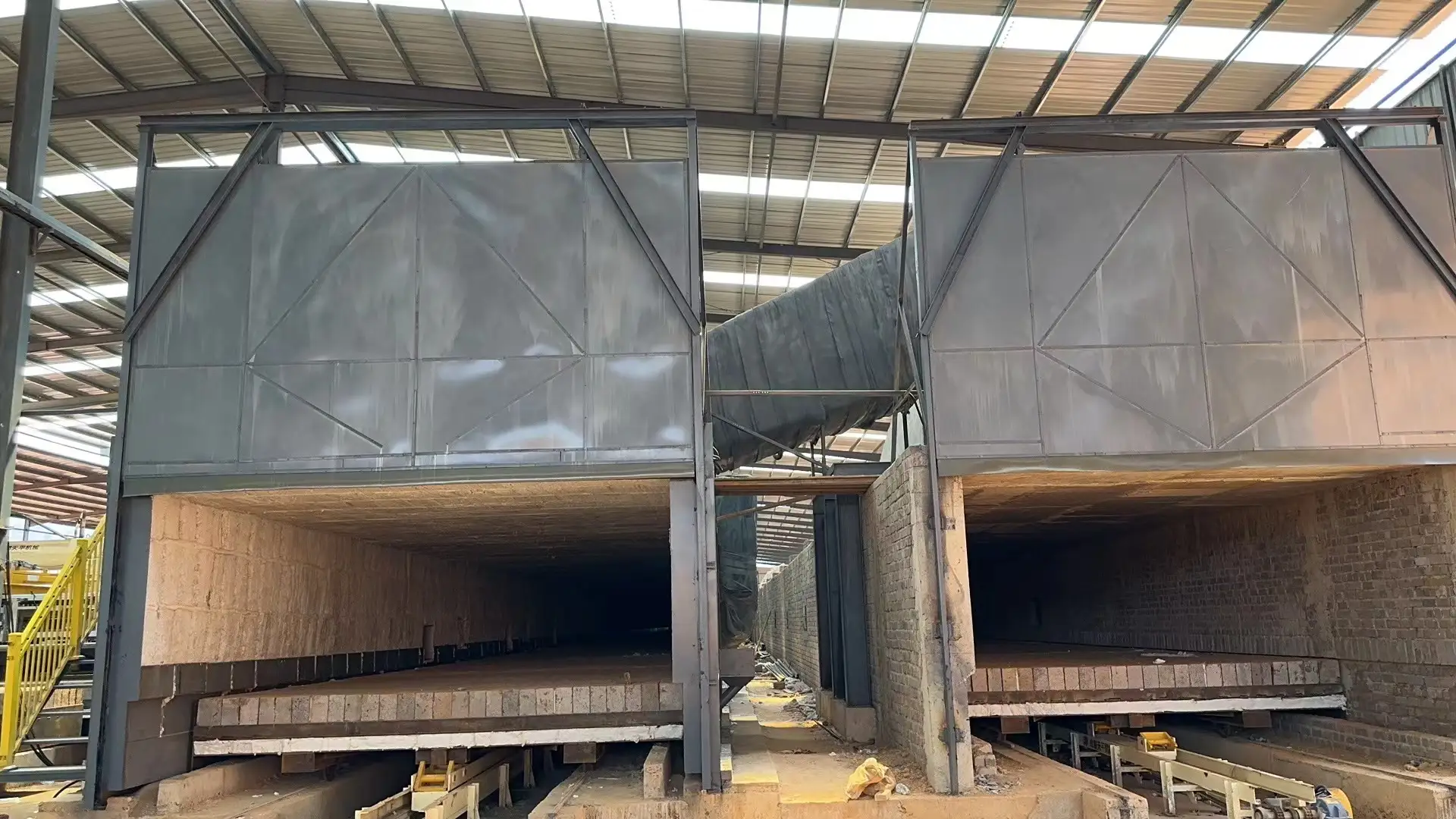
In the production of high-performance construction materials—such as ceramsite, expanded clay, and specialized bricks—the rotary kiln acts as the thermal heart of the manufacturing process. For engineers and plant managers, understanding how rotary kiln temperature dictates the final physical properties of wall materials is essential for maintaining structural integrity and minimizing waste.
Thermal processing is not merely about heating a raw substance; it is a controlled mineralogical transformation. The precise management of the thermal profile within the kiln determines the phase changes, chemical reactions, and physical bonding that ultimately define the quality of the finished product.
The Role of Thermal Energy in Mineralogical Transformation
Wall materials typically undergo several distinct stages within a rotary kiln, each requiring a specific temperature window. These stages include drying, pre-heating, calcination, and sintering.
During the calcination phase, raw materials like clay or shale release chemically bound water and organic matter. As the temperature rises toward the sintering point—often between 1,100°C and 1,350°C for lightweight aggregates—the material begins to soften. This “pyro-plastic” state is where the magic of expansion and densification occurs. If the rotary kiln temperature fluctuates by even 20 degrees outside the target range, the internal pore structure of the wall material can collapse or fail to form, leading to a brittle or overweight product.
Why Temperature Control Matters in Wall Material Production
Temperature is one of the most critical factors in rotary kiln operation. It directly influences the physical and chemical changes that occur during the firing process, ultimately determining the quality of finished wall materials.
If the kiln temperature is too low, raw materials may not be fully calcined or sintered, resulting in weak products with poor durability. On the other hand, excessive temperatures can cause over-burning, deformation, cracking, or unnecessary energy consumption.
Maintaining a stable and well-controlled temperature profile helps manufacturers achieve consistent product quality, improve production efficiency, and reduce material waste.
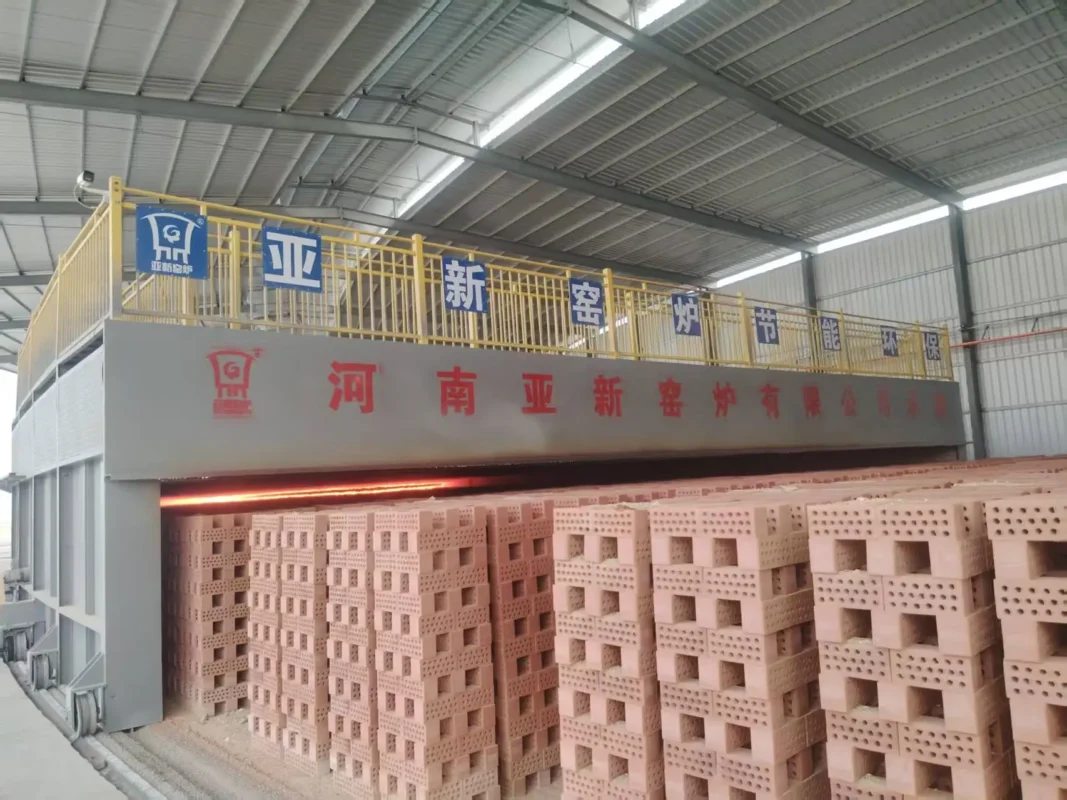
How Rotary Kiln Temperature Affects Wall Material Quality
Proper temperature control plays a key role in producing high-quality wall materials. Different firing temperatures can significantly affect the final product.
- Product Strength – Appropriate firing temperatures promote proper sintering, resulting in stronger and more durable wall materials.
- Dimensional Stability – Stable kiln temperatures help minimize shrinkage and deformation during production.
- Surface Appearance – Consistent heat distribution improves color uniformity and reduces surface defects.
- Material Density – Correct thermal conditions produce a more uniform internal structure, improving density and long-term performance.
- Production Consistency – Stable temperature profiles help reduce defective products and ensure consistent quality across production batches.
Key Quality Parameters Influenced by Temperature
The quality of wall materials is usually measured by three primary metrics: compressive strength, water absorption (porosity), and dimensional stability. Each of these is a direct byproduct of the kiln’s thermal environment.
- Compressive Strength: Higher temperatures generally promote better vitrification, where the minerals melt and fuse into a glass-like matrix. This increases the load-bearing capacity of the material. However, exceeding the optimal temperature can lead to “over-firing,” which causes internal melt-flow and structural warping.
- Porosity and Thermal Insulation: For lightweight wall materials, controlled expansion is vital. Proper kiln temperature control ensures that the gas-releasing agents within the raw material activate at the exact moment the surface becomes viscous enough to trap bubbles. This creates the cellular structure necessary for high-value thermal insulation.
- Color Consistency: In large-volume production, temperature uniformity across the kiln’s cross-section is the primary driver of aesthetic consistency. Oxidizing or reducing atmospheres, dictated by the burner temperature and air-fuel ratio, will alter the final hue of the bricks or aggregates.
The Impact of Improper Kiln Temperature Control
Inconsistent thermal profiles lead to a variety of manufacturing defects that can compromise a project’s safety or increase its operational expenditure (OPEX).
| Temperature Deviation | Physical Effect on Material | Resulting Quality Issue |
| Under-firing | Incomplete mineral fusion | High water absorption; low structural strength. |
| Over-firing | Excessive vitrification / melting | Warping; dimensional inaccuracy; brittle core. |
| Uneven Gradient | Thermal stress during cooling | Micro-cracks; surface spalling. |
| Rapid Ramp-up | Trapped moisture explosion | Internal voids; reduced density control. |
In large-scale manufacturing, “sampling delays” or “batch rejection” often stem from a failure to manage the cooling zone. If the material exits the high-heat zone and cools too rapidly, the sudden contraction can induce micro-cracks that are invisible to the naked eye but catastrophic under long-term structural load.
Technical Mechanisms for Precision Control
Modern industrial facilities rely on integrated automation to maintain thermal equilibrium. Kiln temperature control is achieved through a synergy of burner management, airflow regulation, and material residence time.
- Thermocouple Placement: Sensors are strategically placed along the kiln length to monitor the pre-heating, transition, and burning zones.
- Infrared Pyrometry: Because the material is in constant rotation, non-contact infrared sensors are used to measure the actual surface temperature of the product, rather than just the kiln’s atmosphere.
- PLC-Based Automation: In Industry 4.0 environments, Programmable Logic Controllers (PLCs) adjust the fuel injection and fan speed in real-time to counteract fluctuations in raw material moisture content or ambient outdoor temperatures.
For those overseeing OEM projects, the design of the kiln itself is a critical variable. Advanced rotary kiln engineering solutions focus on optimizing the refractory lining and internal lifter geometry. High-quality refractories prevent heat loss through the shell, while precision-engineered lifters ensure that the material is showered through the hot gas stream uniformly, eliminating “cold spots” in the bed.
Practical Limitations and Manufacturing
From an engineering perspective, perfect temperature control is a theoretical ideal. Real-world manufacturing involves managing tolerances. For instance, automotive-grade wall materials or high-rise construction blocks typically require a thermal variance of less than ±1.5% in the sintering zone.
Experienced manufacturing consultants understand that the “thermal inertia” of a large rotary kiln makes rapid adjustments difficult. Therefore, the focus is often on “steady-state” operation. Any interruption in the feed rate or a sudden change in fuel quality can take hours to stabilize, during which time the material quality remains at risk. This is why professional procurement consultants prioritize kilns with high-capacity heat recovery systems and multi-channel burners that offer finer control over flame shape and heat distribution.
FAQ
What is the “sintering window” in wall material production?
The sintering window is the specific temperature range where a material transitions from a solid to a partially liquid state to allow fusion without total melting. For most clay-based wall materials, this window is relatively narrow, often between 1,150°C and 1,250°C.
How does humidity in raw materials affect kiln temperature?
High moisture content requires more thermal energy in the drying zone. If the burner does not compensate for this, the temperature in the subsequent calcination zone will drop, resulting in “under-fired” materials with poor strength.
Why is the cooling rate as important as the peak temperature?
Cooling dictates the “tempering” of the glass phase within the material. If cooled too quickly, the material becomes brittle due to internal thermal stresses. If cooled too slowly, it may lose its required hardness.
How often should kiln sensors be calibrated?
In 24/7 industrial production, thermocouples should be checked weekly and calibrated quarterly. Drift in temperature readings is the leading cause of “invisible” quality degradation in wall material batches.
Can I use any fuel type for rotary kilns?
While many kilns are multi-fuel (coal, gas, oil), the fuel type affects the flame temperature and the atmosphere. Natural gas provides the cleanest control, while coal requires sophisticated filtration to ensure ash does not contaminate the surface quality of the wall material.
Why is rotary kiln temperature important?
It directly affects material calcination, product strength, dimensional stability, and overall production quality.
What happens if the kiln temperature is too high?
Excessive temperatures may cause over-burning, deformation, cracking, increased energy consumption, and reduced product quality.
Can low kiln temperatures affect wall materials?
Yes. Insufficient temperatures may result in incomplete calcination, producing weaker and less durable wall materials.
How can manufacturers maintain stable kiln temperatures?
Using reliable temperature monitoring systems, proper burner control, and regular kiln maintenance helps ensure stable operating conditions and consistent product quality.
Reference Sources
- ASTM C155: Standard Classification of Insulating Firebrick (Critical for Kiln Refractory Standards). ASTM.org
- ISO 13577: Industrial furnaces and associated processing equipment — Safety (Part 4: Oxygen-fuel firing). ISO.org
- ACerS (The American Ceramic Society): Research papers on the thermal vitrification of structural clay products.
- IEEE Industrial Applications Society: Standards for PLC and automation in heavy machinery and thermal processing.
- NIST (National Institute of Standards and Technology): Guidelines for high-temperature measurement and pyrometry accuracy.
Summary :
Master rotary kiln temperature to ensure wall material strength. Learn how kiln temperature control affects vitrification and B2B ROI.