
Rotary Kiln Operation Guide: Working Principle, Process Steps & Maintenance Tips

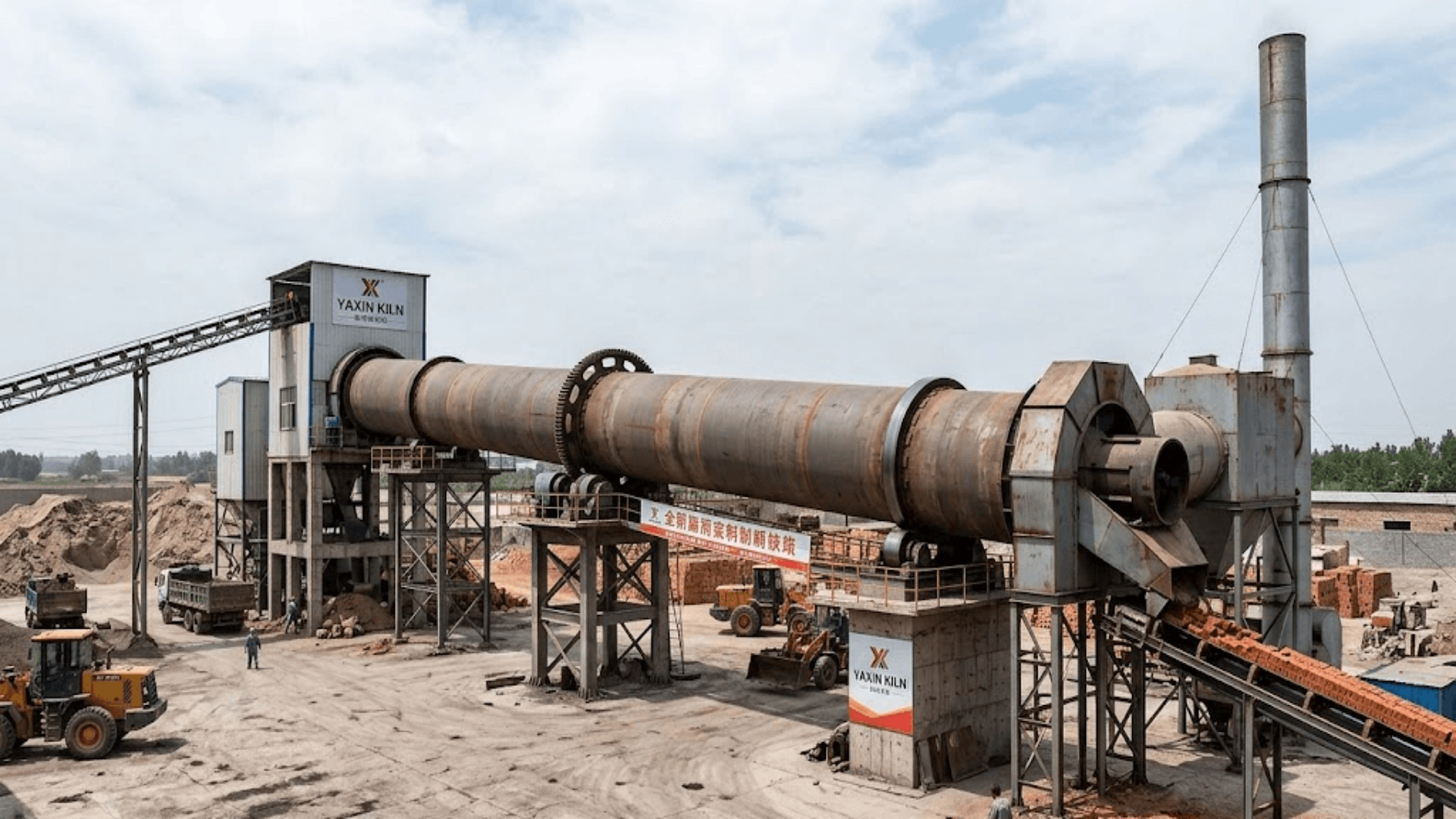
A rotary kiln is the thermal heart of many industrial processes, from cement manufacturing to hazardous waste incineration. Operating this massive, rotating pressure vessel requires more than just ignition; it demands a deep understanding of thermodynamics, material science, and mechanical engineering. Precise control of the heating curve and rotational speed is the only way to ensure structural integrity and product quality.
This rotary kiln operation guide outlines the critical phases of managing a kiln system. Whether you are an OEM project manager or a site engineer, adhering to these kiln operation steps is vital for preventing refractory failure and optimizing fuel consumption.
Before operating a rotary kiln, it is important to understand how a rotary kiln works.
Phase 1: Pre-Operational Technical Audits
Before introducing heat or material, the mechanical and electrical systems must be verified. A failure in the cooling system or lubrication during operation can lead to catastrophic shell deformation.
- Lubrication Systems: Verify that the girth gear and support roller bearings have adequate high-temperature grease or oil flow.
- Cooling Water Integrity: Ensure the cooling jackets for the kiln head and tail are pressurized and leak-free.
- Drive Mechanism Test: Perform a “jog” start of the main motor to check for unusual vibrations or misalignments in the transmission.
- Safety Interlocks: Confirm that the emergency stop and high-temperature alarms are communicative with the PLC/SCADA system.
Phase 2: The Start-up and Heating Sequence
The most critical part of the kiln operation steps is the heating curve. Rapid temperature spikes cause “thermal shock,” leading to refractory spalling—where the internal bricks crack and fall out.
- Low-Flame Preheating: Initiate the burner at its lowest setting. The goal is to remove moisture from the refractory lining slowly.
- Controlled Temperature Ascent: Typically, engineers aim for a rise of 25°C to 50°C per hour, depending on the brick type.
- Kiln Rotation (Turning): As the kiln heats, it must be rotated intermittently (e.g., 1/4 turn every 15 minutes) to prevent the shell from “sagging” due to uneven thermal expansion.
- Target Temperature Reach: Once the internal atmosphere reaches the required processing temperature, the kiln is transitioned to continuous slow rotation.
Phase 3: Steady-State Feeding and Control
Once the kiln is thermally stable, material feeding begins. In large-volume production, consistency is the primary KPI for any rotary kiln system.
| Operational Variable | Impact on Process | Technical Adjustment |
| Feed Rate | Retention time and product quality | Synchronized with rotational speed (RPM) |
| Rotational Speed | Material bed depth and mixing | Adjusted via VFD (Variable Frequency Drive) |
| Draft Pressure | Combustion efficiency and heat flow | Managed by the Induced Draft (ID) fan |
| Fuel-to-Air Ratio | Flame shape and NOx emissions | Controlled via automated burner management |
In high-performance manufacturing, operators monitor the “burning zone” temperature via infrared pyrometers. If the temperature drops, simply increasing fuel is not always the answer; often, the feed rate or rotation speed must be adjusted to maintain the correct “bed fill” percentage.
Phase 4: Monitoring Mechanical and Thermal Gradients
During continuous operation, the kiln shell’s exterior temperature provides clues to the health of the internal refractory. “Hot spots” on the shell indicate areas where the lining has thinned.
Manufacturing consultants emphasize the use of “shell scanners.” These devices map the temperature profile of the entire kiln length. If a localized area exceeds 400°C, it signals an immediate need for technical intervention or a scheduled maintenance stop. Furthermore, the alignment of the support rollers must be checked to ensure the kiln is not “riding” too hard against the thrust rollers.
Phase 5: Safe Shutdown Protocols
Shutting down a kiln is as dangerous as starting one. If the rotation stops while the shell is still white-hot, the kiln can warp under its own weight, a condition known as “bowing.”
- Cease Feeding: Gradually reduce and then stop the material input while maintaining rotation.
- Burner Extinction: Flame is extinguished, but the ID fan continues to pull air to facilitate cooling.
- Auxiliary Drive Rotation: Use the auxiliary motor to keep the kiln turning slowly as it cools. Turning must continue until the shell temperature drops below 100°C.
- Refractory Inspection: Once cool, engineers enter the kiln to audit the lining for wear, coating buildup, or brick loss.

Key Operating Parameters of Rotary Kiln
Successful rotary kiln operation depends on accurate control of several key operating parameters. Maintaining the correct temperature, rotation speed, material feeding rate, and residence time is essential to achieve stable production, improve energy efficiency, and ensure consistent product quality.
Different applications, such as cement production, lime calcination, and mineral processing, require different operating conditions. Operators should adjust parameters according to raw material characteristics, kiln design, and production requirements.
Temperature Control
Temperature is one of the most critical parameters in rotary kiln operation. The heating profile inside the kiln directly affects the chemical reactions, material transformation, and final product quality.
The required operating temperature varies depending on the application:
Cement Rotary Kiln
For cement clinker production, the burning zone temperature is typically maintained at approximately 1,300–1,450°C. Proper temperature control ensures effective clinker formation while preventing excessive fuel consumption or material overheating.
Lime Rotary Kiln
Lime calcination generally requires temperatures around 900–1,200°C. Maintaining a stable temperature helps achieve complete decomposition of limestone while minimizing energy waste.
Mineral Processing Rotary Kiln
For mineral applications, operating temperatures depend on the specific material and processing requirements. Temperature control must be carefully adjusted to achieve the desired chemical and physical properties.
How to Control Rotary Kiln Temperature
Operators typically monitor and adjust temperature through:
- Fuel supply adjustment
- Burner position optimization
- Airflow regulation
- Material feeding control
- Heat recovery system management
Stable temperature distribution helps improve product consistency and reduce operational problems.
Common Rotary Kiln Problems and Solutions
| Question | Reason | Solution |
|---|---|---|
| Uneven calcination | Temperature fluctuation | Adjust fuel supply |
| Material buildup | Improper temperature | Check operating conditions |
| High fuel consumption | Heat loss | Improve insulation |
FAQ
What is the “Golden Rule” of rotary kiln operation?
“Never heat or cool faster than the refractory can expand or contract.” Adhering to the manufacturer’s specific heating curve is the only way to protect the massive investment in the kiln’s lining.
Why does the kiln need to rotate during heating?
Without rotation, the top of the kiln shell expands faster than the bottom, which is shielded by the material or cooler air. This uneven expansion causes the kiln to bend, potentially damaging the drive gears and rollers.
How is the retention time calculated?
Retention time is determined by the kiln’s length, diameter, slope (pitch), and rotational speed. Operators adjust the RPM to ensure the material stays in the heat long enough for the necessary chemical reactions to occur.
What are the signs of a failing kiln seal?
A failing seal at the kiln head or tail usually results in “false air” infiltration. This leads to increased fuel consumption, unstable draft pressure, and a visible drop in the burning zone temperature.
Can I use any fuel in a rotary kiln?
Most modern kilns are “multi-fuel,” capable of burning coal, natural gas, or oil. However, switching fuels requires re-calibrating the burner’s flame shape to ensure it doesn’t impinge directly on the refractory bricks.
Reference Sources
- ISO 13577: Industrial furnaces and associated processing equipment — Safety. ISO.org
- ASTM C113: Standard Test Method for Reheat Change of Refractory Brick. ASTM.org
- ACerS (The American Ceramic Society): Technical papers on thermal processing and kiln alignment logic. Ceramics.org
- IEEE Industrial Applications Society: Standards for electrical drives and PLC integration in heavy machinery.
- SGS Certification: Safety and efficiency benchmarks for industrial thermal vessels.
Executive Summary
Follow this rotary kiln operation guide for safe start-up, feeding, and shutdown steps to maximize refractory life and thermal efficiency.